It was the kind of blunt intervention that Donald J. Trump’s allies call straight talk and his critics call diplomatic arson. But when the former American president reportedly pressed Prime Minister Anthony Albanese of Australia to step down over policy disagreements, he crossed a line that even some of his staunchest supporters found difficult to defend.
The stunning exchange, first reported by officials familiar with private communications, has ignited a firestorm across both capitals. According to multiple sources, Mr. Trump used a recent interaction to suggest that Mr. Albanese’s economic agenda was so fundamentally at odds with American interests that the Australian leader should consider resigning.
The response from Canberra was swift, public, and unflinching.
Australian officials, speaking on the record, forcefully rejected what they characterized as an unprecedented breach of diplomatic protocol. “Australia is a sovereign nation,” one senior government source told reporters. “Our prime minister answers to the Australian people and to no other leader, no matter how powerful their country may be.”
At the heart of the dispute are diverging policy trajectories. Mr. Albanese’s Labor government has pursued an increasingly independent economic strategy, including ambitious climate legislation, technology transfer restrictions, and trade diversification efforts — including closer ties with Southeast Asian partners — that some in Washington view with suspicion.
Mr. Trump, never one to mask his displeasure, appears to have concluded that private diplomacy was insufficient. His reported demand that Mr. Albanese step down represents a radical escalation in the kind of pressure typically reserved for adversaries, not allies.
“This is not how you treat a partner in the ANZUS alliance,” said Dr. Helena Chen, a professor of international relations at the Australian National University, referring to the trilateral security pact between Australia, New Zealand and the United States. “The United States has always respected Australia’s right to elect its own leaders and set its own course. To suggest otherwise is to undermine the very foundation of the relationship.”
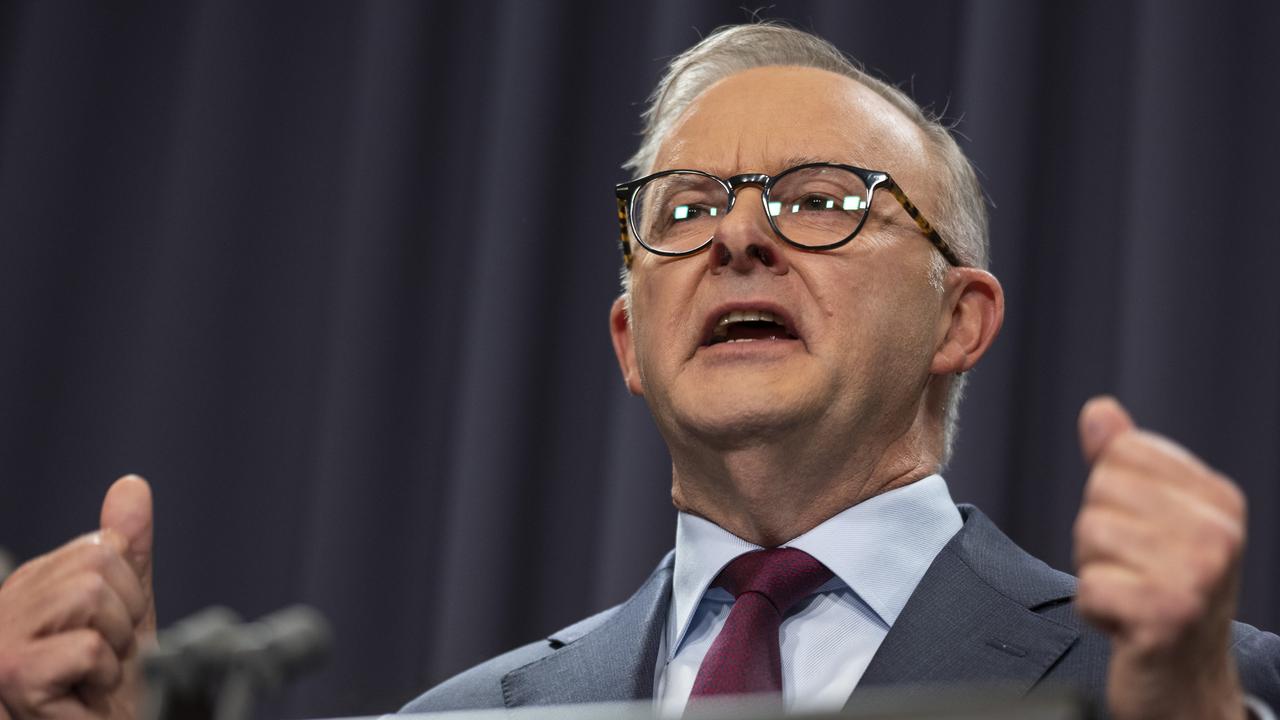
The political fallout was immediate. In Washington, Democrats called the reported demand “appalling” and “deeply damaging” to American credibility. Even some Republicans, while reluctant to criticize Mr. Trump directly, expressed discomfort with the idea of demanding a foreign leader’s resignation.
“We have differences with allies all the time,” said one former Republican State Department official, speaking on condition of anonymity. “You work through them. You don’t demand that the other country’s prime minister pack up and leave. That’s not leadership. That’s bullying.”
In Australia, the reaction was more unified. Mr. Albanese’s political opponents, including the conservative opposition, rejected Mr. Trump’s intervention even as they continued to criticize the prime minister’s domestic policies.
“Whatever you think of Albanese’s economic record, he was elected by Australians,” said one opposition frontbencher. “No American president gets to undo that.”

Mr. Albanese himself addressed the controversy with characteristic restraint. In brief remarks to reporters, he declined to engage directly with Mr. Trump’s reported remarks but made his position clear. “Australia’s economic future will be determined by Australians,” he said. “That is not negotiable.”
The incident has raised uncomfortable questions about the stability of the U.S.-Australia alliance, long considered one of the most reliable partnerships in the Indo-Pacific. While defense and intelligence cooperation remains deep, economic tensions have been quietly accumulating.
Australia’s decision to prioritize climate action, its cautious approach to technology sharing with certain American partners, and its efforts to reduce reliance on any single trading partner have all caused friction. What is new is the willingness of an American president to demand a change in Australian leadership.
Diplomatic historians note that while the United States has sometimes pressured allied governments behind closed doors — backing coups, influencing elections, or withdrawing support from troublesome leaders — doing so openly and publicly against a close democratic ally is virtually without precedent.
“The United States has a long and not always honorable history of interfering in foreign politics,” said Professor Geoffrey Lawson, a historian of American diplomacy at the University of Sydney. “But usually it comes with a fig leaf of deniability. This is different. This is a former president telling an allied prime minister, to his face, to resign. That changes the game.”
For now, the immediate crisis appears contained. Australian officials have signaled that they will not escalate further, choosing instead to reaffirm their commitment to the alliance while quietly reinforcing their sovereign right to independent policy.
But the damage may already be done. Trust between allies, once broken, is difficult to fully restore. And when one partner believes the other is willing to demand its leader’s removal, cooperation on everything from intelligence sharing to trade negotiations becomes more complicated.
As one Australian official put it, speaking anonymously to avoid further inflaming tensions: “We are friends. We have always been friends. But friendship requires respect. And respect means accepting that the other person gets to make their own choices.”
Whether the Trump team understands that distinction remains an open question. For the moment, Canberra is watching, waiting, and quietly preparing for a future in which even the closest allies can no longer take each other for granted.






