Hecklers, “Affordability,” and a Familiar Script: Inside Trump’s Tense Iowa Rally
President Donald Trump arrived in suburban Des Moines this week with a tightly defined message: inflation is beaten, prices are falling, and Democrats are trying to rebrand their failures under a new buzzword. But the rally in Clive, Iowa—meant to showcase economic victory and kick off a midterm push—kept sliding into something else: a noisy, stop-and-start performance shaped as much by hecklers and viral clips as by policy claims.
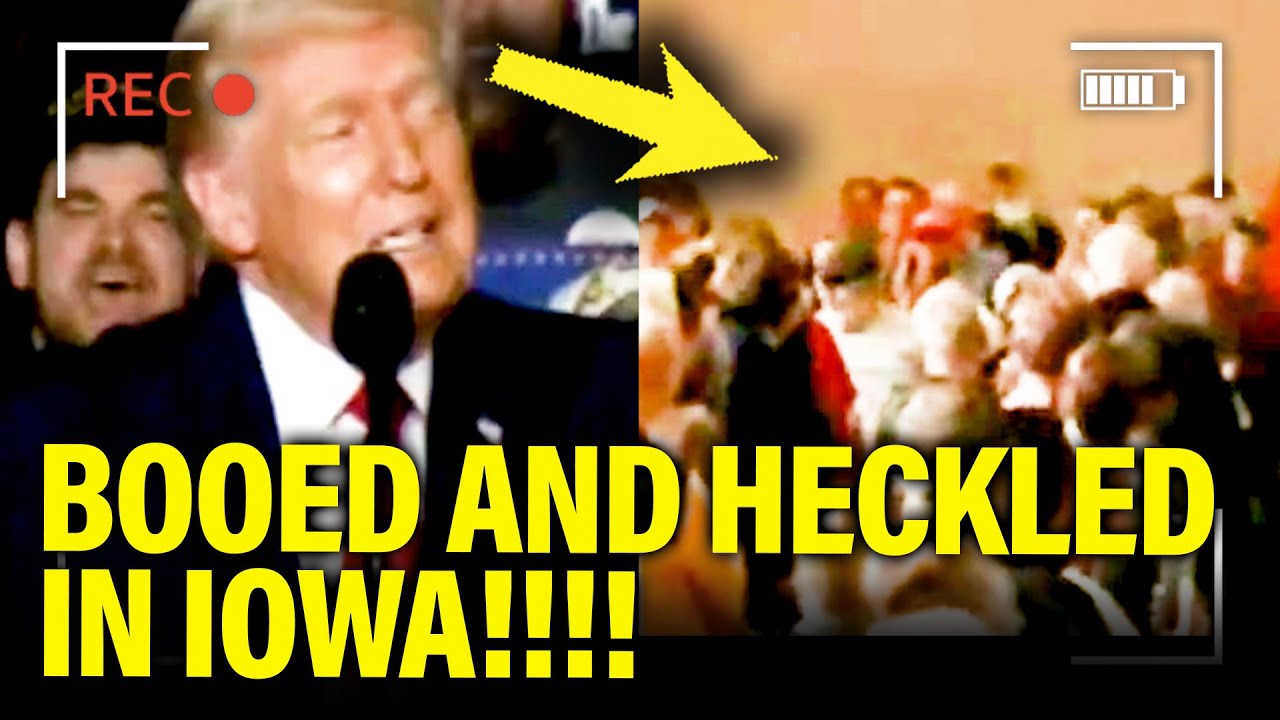
The event, held Tuesday, January 27, featured a president eager to sell a story of “fixed” prices and a country back on track, while repeatedly jabbing at political opponents and the press. It also included confrontations with protesters, moments of off-script commentary, and sweeping assertions about consumer costs that have already been challenged by fact-checkers and economic data.
A rally built for the midterms—interrupted by the room
Trump’s Iowa appearance was framed as an opening act for the 2026 midterm cycle, with the White House and allied candidates looking to make affordability, immigration, and cultural grievance a single fused argument: Democrats made life expensive; Republicans restored order.
Yet in the rally footage circulating online, Trump repeatedly breaks from prepared remarks to address disruptions in the crowd. In clips highlighted by outlets and social accounts that routinely amplify his public stumbles, he is shown lashing out at protesters, describing them as “paid agitators” and “sickos,” and claiming they are part of an organized effort rather than spontaneous dissent.
That language is not new. It’s a pattern Trump has used for years: dismiss dissent as manufactured, accuse opponents of funding disruption, and turn the confrontation into evidence of persecution—an approach that can energize supporters even as it heightens tension in the room.
“Affordability” as a political prop
In Iowa, Trump also returned to a line he has workshopped in recent months: that Democrats “invented” the word affordability and that the term is fading because prices are “coming down so much.” In December, he was reported as calling “affordability” a “Democrat scam,” even after earlier campaign rhetoric cast him as an “Affordability President.”
The political utility is obvious. “Affordability” lets Democrats name a real anxiety—housing, groceries, and utilities still straining budgets—without leaning solely on the technical definition of inflation, which can fall even as prices remain high. Trump, by contrast, has sought to treat the public’s cost-of-living frustration as either a media invention or a problem already solved. The Financial Times reported last month on Trump dismissing the affordability crisis as a “hoax,” even as the same coverage noted persistent cost pressures in key categories like shelter and electricity.
The gap between inflation rates and lived experience has become a central fault line of this political era: one side says the trend is improving; the other says the baseline is still punishing. Trump’s rhetorical move in Iowa was to collapse that distinction—suggesting that lower inflation means “everything” is affordable again.
The egg-and-gas story, and the fact-check problem
Trump’s rally pitch leaned heavily on price snapshots—especially gasoline and eggs—presented as proof that his administration has reversed the cost surge quickly. But independent fact-checkers have repeatedly cautioned that Trump’s claims about dramatic price drops often mix wholesale and retail figures, cherry-pick anecdotes, or conflict with available data.
FactCheck.org, for instance, reviewed Trump’s repeated assurances that egg and gasoline prices had plunged, noting that retail egg prices were still elevated in the most recent public data they assessed at the time, and that claims of sub-$2 gas “in several states” were not supported by the figures they cited.
PolitiFact similarly found that while wholesale egg prices had fallen sharply over a given period, retail prices—what consumers actually pay—often lag behind, complicating sweeping claims of immediate relief.
That nuance rarely survives the rally format. A campaign speech is built for certainty: “I fixed it,” not “it depends on which index you use.” And in the social-media afterlife of a rally, the sharpest lines travel farthest.
Viral moments: hecklers, flattery, and the politics of performance
Beyond economics, the Iowa event produced the kinds of moments that reliably go viral: Trump praising a woman in the audience as “beautiful,” joking about what he can and can’t say, and telling an anecdote about a supporter hugging him and leaving makeup on his suit—small personal asides that function as crowd reset buttons after tension spikes.
These moments are easy to dismiss as sideshow, but they are part of the strategy: soften conflict with humor, reclaim control after disruption, and keep the room oriented around personality. It’s the same method Trump often uses when a policy claim draws pushback or when an exchange goes sideways.
The interview backdrop: Will Cain, ABC, and the Minneapolis killing
The rally’s online traction also blended into a separate media thread: Trump’s recent interview with Will Cain, excerpts of which are circulating across platforms, including a posted video segment that shows Trump attacking “ABC fake news” and dismissing a reporter as someone who “hasn’t asked me a good question in years.”
More consequentially, that interview period overlaps with national outrage over the fatal shooting of Alex Pretti, a 37-year-old ICU nurse, during an encounter involving federal immigration agents in Minneapolis. Major outlets have reported on conflicting narratives between initial official statements and video evidence, with Reuters documenting a broader pattern in which early claims by immigration officials in several cases were later contradicted by footage or court records.
Associated Press coverage described Pretti as a caregiver mourned by community members, while noting sharp disputes over whether he posed an immediate threat and how the encounter unfolded. The Washington Post reported intensifying scrutiny of the federal response and investigations, with video playing a central role in the public’s assessment. Time Magazine noted that calls for a transparent investigation have come from both Republicans and Democrats, signaling the political sensitivity of the case.
In that climate, Trump’s comments—criticizing Pretti for carrying a gun while disputing claims that he acted as an “assassin”—land in a volatile intersection of immigration enforcement, public trust, and Second Amendment politics.

What Iowa revealed
Taken together, the Iowa rally was less a clean economic victory lap than a snapshot of Trump’s governing-and-campaigning style in 2026: maximal confidence, maximal grievance, and an insistence that perception itself is a battlefield.
He says prices are falling fast; critics point to lingering household strain and argue he is overselling progress. He blames disruptions on “paid agitators”; opponents say the heckling reflects genuine anger and skepticism. He frames “affordability” as a Democratic trick; Democrats say it’s the most honest word for what voters feel.
And in the background, the country is watching video—of rallies, of interviews, of confrontations with federal agents—often reaching conclusions before investigations are complete or data is fully in. That dynamic may be the defining feature of this political moment: not just what happens, but what is clipped, captioned, and believed.






