Carney’s Wall Street Outreach Sparks Renewed Debate Over Canada’s Economic Strategy Amid Strained U.S. Relations
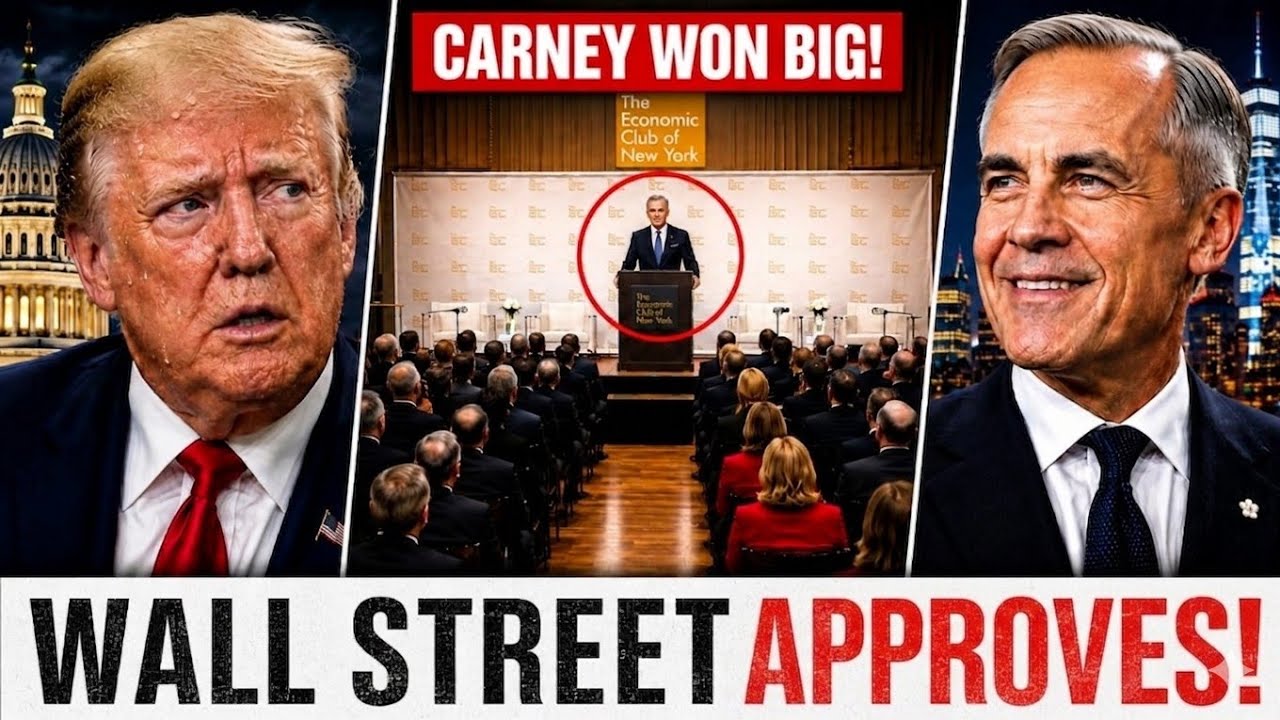
As Ottawa continues to navigate a challenging period in Canada–United States relations, Prime Minister Mark Carney has placed economic diplomacy at the centre of his government’s agenda. His recent visit to New York City, where he met directly with leading investors, chief executives, entrepreneurs, and financial managers, has prompted renewed debate across Canada’s political landscape about how the country should position itself during a period of growing uncertainty in North American trade and investment relations.
Rather than focusing on traditional political engagement in Washington, Carney chose to spend May 27 and 28 meeting with influential figures in the financial sector. The decision immediately attracted attention because it signalled a different approach to managing Canada’s economic interests at a time when bilateral relations with the United States have faced mounting challenges linked to tariffs and broader policy disputes.
The trip came as Canada faces growing scrutiny in Ottawa over how it plans to sustain economic growth while managing an increasingly unpredictable international environment. With a mandatory review of the continental trade agreement approaching and tensions continuing to shape political discussions, Carney’s decision to speak directly to capital markets carried significance well beyond a routine investment mission.
During his address to the Economic Club of New York, the Prime Minister outlined an economic vision centred on expanding international partnerships and strengthening Canada’s resilience. He argued that a stronger and more independent Canada would also serve the interests of the United States, framing economic cooperation as mutually beneficial despite recent political tensions.
Carney offered a carefully measured response to concerns surrounding the bilateral relationship. Rather than portraying Canada as seeking concessions from Washington, he presented the country as a stable and attractive destination for investment. His message emphasized economic fundamentals, institutional reliability, and long-term growth opportunities.
The Prime Minister acknowledged that trade relations had been undermined by tariff disputes and suggested that the broader relationship required a reset. That admission attracted attention because it reflected a candid assessment of current realities while simultaneously reinforcing his argument that economic cooperation could continue through private-sector engagement.
The centrepiece of the government’s presentation was a commitment to support approximately one trillion dollars in investment over the next five years. According to the plan described during the visit, public investments and incentives would work alongside private and institutional capital to expand infrastructure, energy projects, transportation networks, data systems, and defence-related industries.
The government’s approach relies heavily on co-investment models intended to reduce risk for investors. Officials argue that public participation can encourage larger commitments from pension funds, sovereign wealth funds, and major institutional investors seeking stable long-term opportunities.


Supporters of the strategy point to several economic indicators highlighted during the New York meetings. Canada continues to maintain a AAA credit rating, relatively low debt levels compared with other G7 economies, and a banking system frequently regarded as among the safest in the world. Those factors form a central part of the government’s investment narrative.
Carney also emphasized sectors that are expected to play a major role in future economic growth. Energy production, critical minerals, artificial intelligence, advanced computing, and digital infrastructure were all presented as areas where Canada could attract substantial domestic and international investment.
The Prime Minister argued that Canada’s extensive network of free trade agreements provides businesses with access to markets across multiple continents. Government officials have increasingly highlighted those agreements as a competitive advantage at a time when global supply chains are being reshaped by geopolitical tensions and changing trade patterns.
A key element of the broader plan is the Canada Strong Fund, a proposed sovereign wealth-style investment vehicle designed to support major projects alongside private-sector partners. Advocates say the fund demonstrates long-term government commitment and could help unlock investment that might otherwise remain on the sidelines.
Critics, however, have questioned whether the strategy will produce results that differ significantly from previous industrial policies. Some observers cited concerns that earlier government efforts to direct investment through subsidies and incentives produced mixed outcomes, including setbacks involving electric vehicle and battery manufacturing projects.
Those concerns have been reinforced by statistics showing declines in business investment per worker over the previous decade and significant capital outflows from Canada during the same period. Such figures have raised broader concerns about government accountability and whether policy reforms will be sufficient to reverse longer-term trends.
The government has responded by highlighting new regulatory initiatives intended to accelerate project approvals. It has also pointed to recent agreements involving Alberta and the energy sector as evidence that Ottawa is attempting to balance environmental objectives with investment competitiveness.
At the same time, energy executives have generally expressed cautious optimism. While some industry leaders welcomed efforts to streamline approvals and reduce uncertainty, they also noted that competition from the United States remains intense, particularly in sectors where American incentives continue to attract significant investment.
The broader political significance of the trip extends beyond economics. By engaging directly with financial leaders rather than prioritizing high-profile political meetings, Carney highlighted an alternative pathway for advancing Canadian interests. The approach reflects his background as a former central banker and his long-standing familiarity with global financial institutions.
His actions also come against the backdrop of ongoing tensions in Canada–U.S. relations. The temporary suspension of established bilateral defence cooperation mechanisms and continuing trade disputes have highlighted widening divisions within the broader policy relationship, creating uncertainty for governments and businesses alike.
For many observers, the New York visit represented an attempt to build a constituency of American investors and corporate leaders with a direct stake in Canada’s economic success. Such a strategy could provide additional stability for the bilateral relationship by strengthening commercial ties even when political disagreements emerge.
The trip also underscored Carney’s efforts to position Canada as an independent voice within an evolving global economy. His remarks concerning international financial governance and broader multilateral cooperation suggested a desire to expand Canada’s influence beyond the traditional framework of Canada–U.S. relations.
Whether the government’s ambitious investment targets are ultimately achieved remains uncertain. Success will depend on regulatory execution, investor confidence, global economic conditions, and the future direction of trade negotiations with the United States. For now, however, Carney’s Wall Street initiative has become a significant focal point in discussions about Canada’s economic future, and the debate remains unresolved within Canada’s broader political landscape.






