Europe’s Revolt Against FIFA?
Legal Challenges, Player Backlash and a Growing Battle Over the Future of World Football
For decades, FIFA has promoted a simple message to the world: football unites people. From World Cup opening ceremonies to presidential speeches, the governing body has consistently portrayed itself as the guardian of a sport capable of transcending borders, politics and conflict.
Yet as the countdown to the 2026 FIFA World Cup enters its final days, a different story is unfolding behind the scenes.
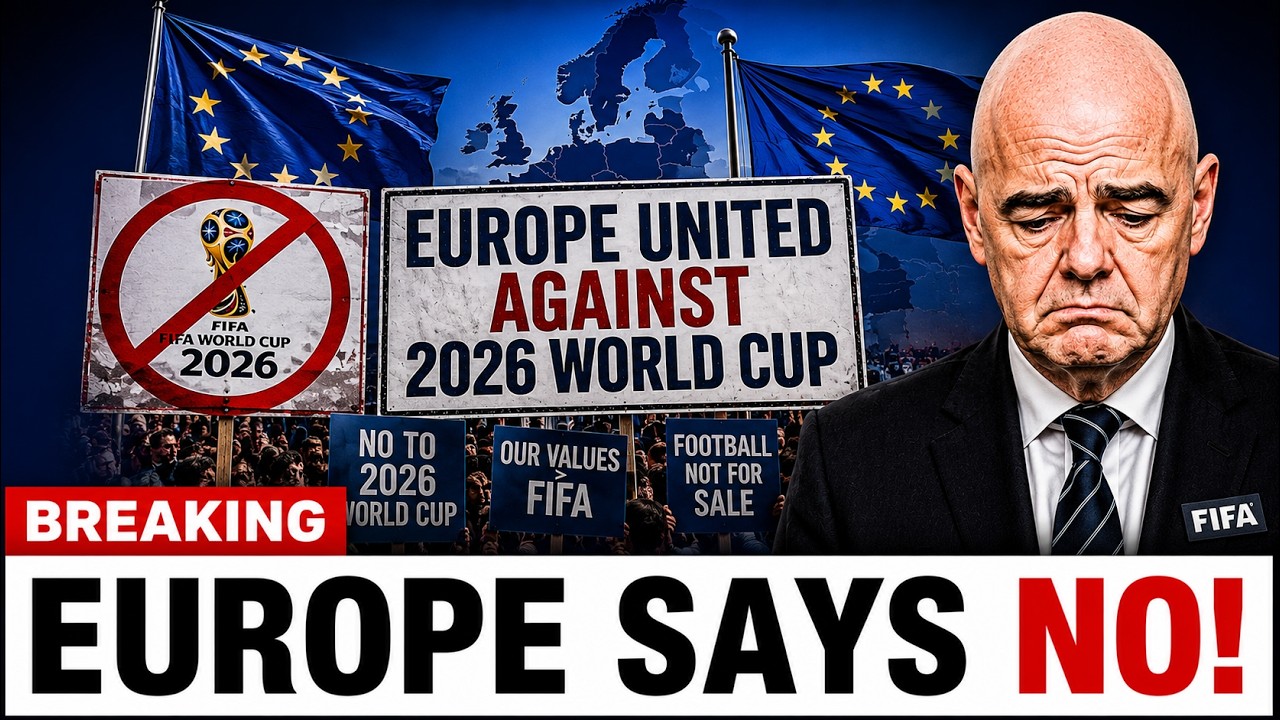
Across Europe, football institutions are mounting an unprecedented challenge to FIFA’s authority. What began as concerns over scheduling and player welfare has evolved into a broader confrontation over governance, accountability and power within the world’s most popular sport.
The conflict is no longer limited to media criticism or fan frustration. It has entered courtrooms, regulatory agencies and labour rights institutions.
And for FIFA, that may represent a far greater threat than any boycott campaign.
The centrepiece of the dispute is a formal complaint submitted to the European Commission by FIFPRO Europe and the European Leagues.
Together, these organizations represent professional football players and domestic competitions across the continent. Their complaint argues that FIFA’s recent expansion of major tournaments may violate European competition law.

At the heart of the argument lies a fundamental question.
Can FIFA simultaneously regulate global football while also organizing the competitions that generate billions of dollars in revenue for the organization itself?
Critics argue that the answer is increasingly becoming no.
The 2026 World Cup will feature 48 national teams instead of 32, making it the largest tournament in the competition’s history.
The expansion increases the number of matches from 64 to 104, creating additional broadcasting opportunities, sponsorship revenue and commercial partnerships.
For FIFA, the tournament represents a major financial success.
For many players and leagues, however, it represents something else entirely.
An already overloaded calendar pushed to its limits.
Supporters of the complaint argue that FIFA has repeatedly expanded competitions without meaningful consultation with domestic leagues, clubs and player representatives.
They claim the governing body is making decisions that benefit its own commercial interests while transferring the physical burden to athletes and football organizations around the world.
The criticism has become particularly intense in Spain.

Officials connected to La Liga have accused FIFA of disregarding the economic and sporting consequences of its decisions.
According to league representatives, domestic competitions are increasingly forced to adapt to schedules created by international governing bodies that face little accountability.
The concerns extend well beyond Spain.
Football administrators across Europe have warned that fixture congestion is becoming one of the most serious challenges facing the modern game.
Every additional international tournament creates pressure on domestic calendars.
Every new competition reduces recovery time for players.
And every added match increases injury risk.
Those concerns received additional legal momentum earlier this year.
In March, the French National Union of Professional Footballers achieved a significant milestone when its complaint under the European Social Charter was formally declared admissible by the European Committee of Social Rights.
The decision does not determine guilt.
However, it allows the case to proceed for full examination, creating a potentially historic legal precedent for professional sport.
The complaint focuses on player welfare.
Specifically, it questions whether existing protections are sufficient to safeguard athletes from excessive workloads.
For many observers, this issue represents the most compelling argument against FIFA’s expansion strategy.
Modern footballers are expected to perform at extraordinary physical levels.
Elite players regularly compete for club and country across multiple competitions while maintaining peak performance throughout the year.
As the calendar expands, concerns about long-term health continue to grow.
The debate gained international attention when Manchester City midfielder Rodri publicly suggested that players were approaching a breaking point.
His warning resonated throughout football.
Not because it came from a union representative or executive, but because it came directly from one of the sport’s biggest stars.
For player advocates, Rodri’s comments symbolized a growing disconnect between those making decisions and those living with the consequences.
The controversy does not end with scheduling.
Another dispute emerged when France expressed concerns regarding its World Cup travel itinerary.
The national team argued that movement between host cities could create unnecessary logistical challenges during the tournament.
Critics quickly dismissed the complaint.
Many observers pointed out that the distances involved are relatively modest compared with travel routinely undertaken by professional sports teams across North America.
Nevertheless, the discussion highlighted a broader reality.
European football organizations are increasingly willing to challenge FIFA publicly.
What once occurred behind closed doors is now unfolding in full view of the global audience.
Perhaps the most politically sensitive issue involves allegations of double standards.
Several commentators have questioned why football authorities reacted so swiftly to certain international conflicts while appearing less vocal regarding other controversies affecting World Cup participants and supporters.
The debate intensified following concerns surrounding visa restrictions affecting fans from several qualified nations.
Critics argue that principles should be applied consistently regardless of geography or political circumstances.
Supporters of FIFA reject that characterization and maintain that complex diplomatic issues often fall beyond the organization’s direct control.
Regardless of where one stands, the perception of inconsistency has become an increasingly influential part of the conversation.
That perception matters.
Global institutions depend not only on authority but also on legitimacy.
When stakeholders begin questioning fairness, trust can erode rapidly.
What makes the current challenge particularly significant is the source.
Previous controversies often emerged from politicians, journalists or external investigators.
This time, the pressure is coming from within football itself.
Players.
Leagues.
Unions.
Administrators.
These are the groups that operate the sport every day.
Their collective criticism carries a different weight.
It suggests dissatisfaction is no longer isolated.
Instead, it may reflect a deeper structural disagreement about how football should be governed in the twenty-first century.
For FIFA, the timing is far from ideal.
The organization enters its most ambitious World Cup facing legal scrutiny, labour rights challenges and growing demands for reform.
Yet the tournament itself remains extraordinarily attractive.
Fans around the world are preparing for a historic competition featuring football’s biggest stars.
Television audiences are expected to reach record levels.
Sponsors remain heavily invested.

The matches will proceed.
The stadiums will be full.
The global spectacle will continue.
But beneath the celebration lies an unresolved question.
Who truly controls the future of football?
For decades, FIFA has occupied the commanding heights of the sport.
Its influence has shaped tournaments, calendars and commercial strategies across every continent.
Now that influence faces increasing resistance from institutions that believe the balance of power has shifted too far.
Whether the legal challenges succeed remains uncertain.
Regulatory investigations often take years.
Labour rights proceedings move slowly.
Meaningful reforms rarely emerge overnight.
Yet the significance of these actions may extend beyond any individual ruling.
Together, they form a coordinated effort to redefine accountability in global football.
The battle unfolding ahead of the 2026 World Cup is therefore about more than schedules or travel plans.
It is about governance.
It is about power.
And ultimately, it is about who the game belongs to.
As millions of fans prepare to watch football’s greatest tournament, another contest is already underway behind the scenes.
Its outcome may shape the sport long after the final whistle of the 2026 World Cup.






