WASHINGTON — A routine morning at the Kennedy Center turned into a national political spectacle after construction crews were seen removing signage bearing President Donald Trump’s name from a prominent area of the building, setting off hours of confusion, speculation, and fierce public debate.
The removal operation began shortly after sunrise, according to witnesses who were arriving at the cultural institution for scheduled events.

Workers in safety vests surrounded the area while maintenance vehicles blocked portions of a nearby entrance. At first, few observers paid attention. Many assumed the activity was part of a renovation project that had been underway for several weeks.
That assumption changed when photographs began appearing online.
Within minutes, images showing workers carefully dismantling displays connected to Trump’s name spread across social media platforms. By midmorning, the photographs had accumulated millions of views, transforming what initially appeared to be a routine construction task into one of the most talked-about political stories in the country.
Videos recorded by onlookers showed crews removing plaques, signage, and display materials while security personnel maintained a perimeter around the work site. Although the footage revealed little about the reasons behind the operation, it was enough to ignite widespread speculation.
Political commentators quickly divided into opposing camps.
Some argued the removal represented a symbolic break between the institution and Trump. Others insisted the action was being misinterpreted and was likely connected to an internal administrative decision or redesign project.
The Kennedy Center declined to provide immediate details, issuing only a brief statement acknowledging that maintenance activities were taking place on the property.
The lack of explanation only intensified public interest.
By lunchtime, major political figures were being asked about the incident during interviews and press appearances. Several lawmakers said they had no knowledge of the decision, while others urged patience until official information became available.
Meanwhile, online discussions exploded.
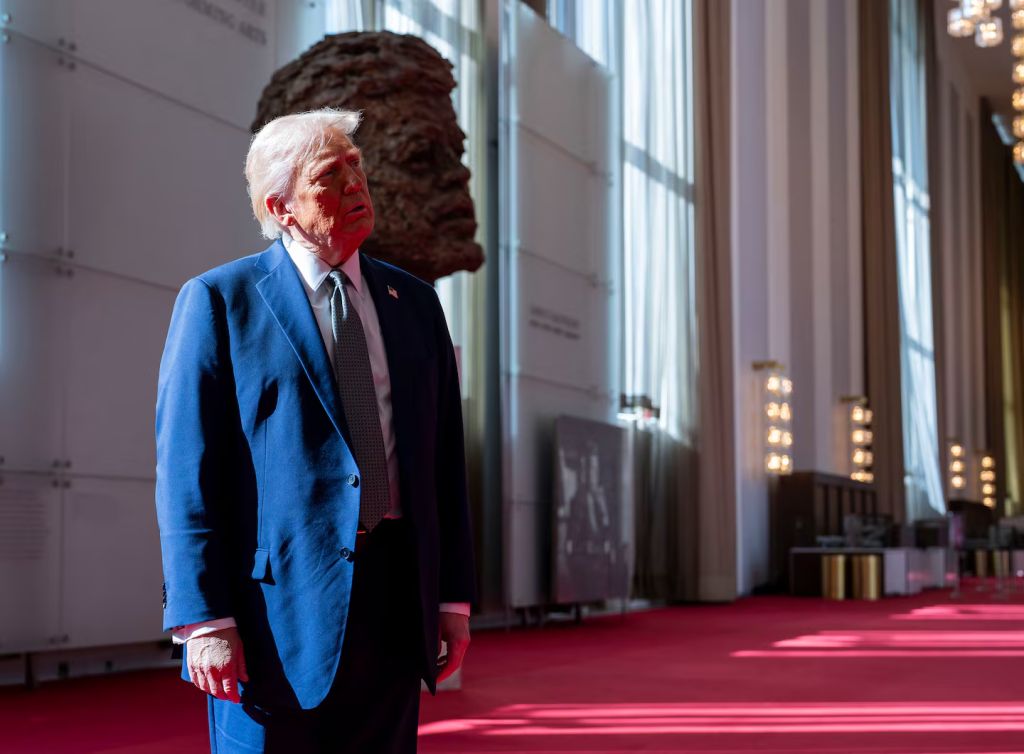
Supporters of Trump characterized the removal as politically motivated and accused unnamed officials of attempting to erase his legacy. Critics argued that institutions should retain the authority to determine how historical displays are presented and updated.
The debate rapidly expanded beyond the original event.
Questions emerged about who had authorized the decision, when the decision had been made, and whether senior political figures had been consulted beforehand. Commentators began examining timelines, previous administrative actions, and public statements in an effort to understand what had happened behind the scenes.
Political strategist Rebecca Lawson described the situation as a textbook example of how symbolism can dominate modern political discourse.
“In today’s media environment, perception often moves faster than facts,” she said during a televised discussion. “A single image can create a national narrative before anyone fully understands the underlying circumstances.”
That dynamic was evident throughout the afternoon.
As reporters gathered outside the Kennedy Center, additional photographs surfaced showing workers loading dismantled materials into transport vehicles. The images fueled another round of speculation, with some observers claiming the operation appeared too coordinated to be routine maintenance.
Others disagreed.
Several facilities-management experts interviewed by local media noted that large institutions frequently replace displays, signage, and commemorative materials as part of renovation projects. They cautioned against drawing sweeping political conclusions from limited visual evidence.
Still, the controversy continued to grow.
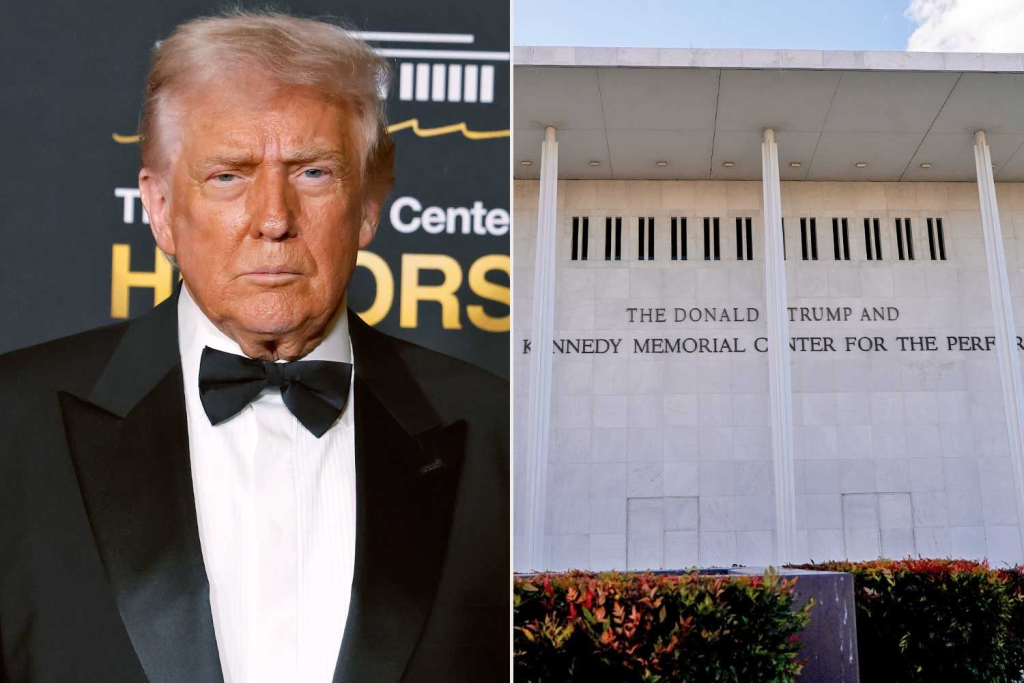
Hashtags related to Trump and the Kennedy Center dominated social-media trends for much of the day. Prominent commentators from across the political spectrum weighed in, often reaching dramatically different conclusions based on the same limited information.
The situation became even more intense when reports emerged that internal meetings were being held among senior administrators.
Although details of those discussions remained private, the reports generated fresh speculation about whether the removal had broader institutional implications.
Outside the Kennedy Center, a small crowd gathered by late afternoon.
Some carried signs supporting Trump. Others expressed approval of the reported changes. Television crews documented the scene as demonstrators debated the meaning of the event and the broader cultural issues it appeared to represent.
For many observers, the controversy reflected a larger national conversation about history, recognition, and public institutions.
Questions surrounding who is honored, how legacies are remembered, and who controls public narratives have become increasingly prominent in recent years. The Kennedy Center incident appeared to touch all of those themes simultaneously.
Political historian David Mercer said the public reaction revealed how deeply symbolic decisions can resonate.
“People are not simply reacting to a sign,” Mercer explained. “They are reacting to what they believe the sign represents. That’s why these debates often become much larger than the physical object involved.”
As evening approached, pressure mounted on officials to provide a more detailed explanation.
Journalists repeatedly requested clarification regarding the scope of the project, the reasoning behind it, and the decision-making process that led to the removal.
Rumors continued to circulate throughout Washington.
Some claimed the action had been planned for months. Others suggested it was approved only recently. None of those accounts could be independently verified, but they contributed to an atmosphere of uncertainty that kept the story at the center of public attention.
Inside political circles, reactions varied considerably.

Some advisers reportedly viewed the controversy as an unnecessary distraction. Others believed it could energize supporters and become a rallying point in future political messaging.
Campaign strategists from both parties closely monitored public reaction as polling firms rushed to measure voter sentiment.
The results were mixed.
While many Americans viewed the controversy as significant, others expressed frustration that attention was being devoted to symbolic disputes instead of policy issues. Even so, the story continued to dominate news coverage.
Late in the evening, new footage emerged showing workers completing the final stages of the removal process. The operation appeared orderly and professional, though it did little to answer the fundamental questions surrounding the decision.
Observers noted that the images carried a powerful visual impact.
A display that had once been visible to visitors was gone.
Whether the change would ultimately be remembered as a routine administrative action or a major political flashpoint remained uncertain.
What was clear, however, was that the event had already entered the national conversation.
Political analysts predicted that debates over the incident would continue for days, if not weeks. Commentators prepared competing narratives. Supporters and critics reinforced existing positions. Social-media users dissected every available photograph and video frame.
In many ways, the controversy illustrated the speed at which modern political stories develop.
A few workers performing a task at a cultural institution had become the focus of a nationwide debate involving symbolism, power, legacy, and public memory.
By nightfall, the Kennedy Center remained under intense public scrutiny.
Visitors paused to photograph the area where the signage had once stood. Reporters continued filing updates. Political figures prepared statements. Online discussions showed little sign of slowing down.
And although many questions remained unanswered, one conclusion was difficult to dispute:
A routine construction project had become one of the most closely watched stories in Washington, transforming an ordinary workday into a political drama that captured the attention of the entire nation.