Midnight Crisis: Netanyahu Rushed to Hospital as Iran Launches Fresh Strikes – Israel Braced for All-Out Escalation
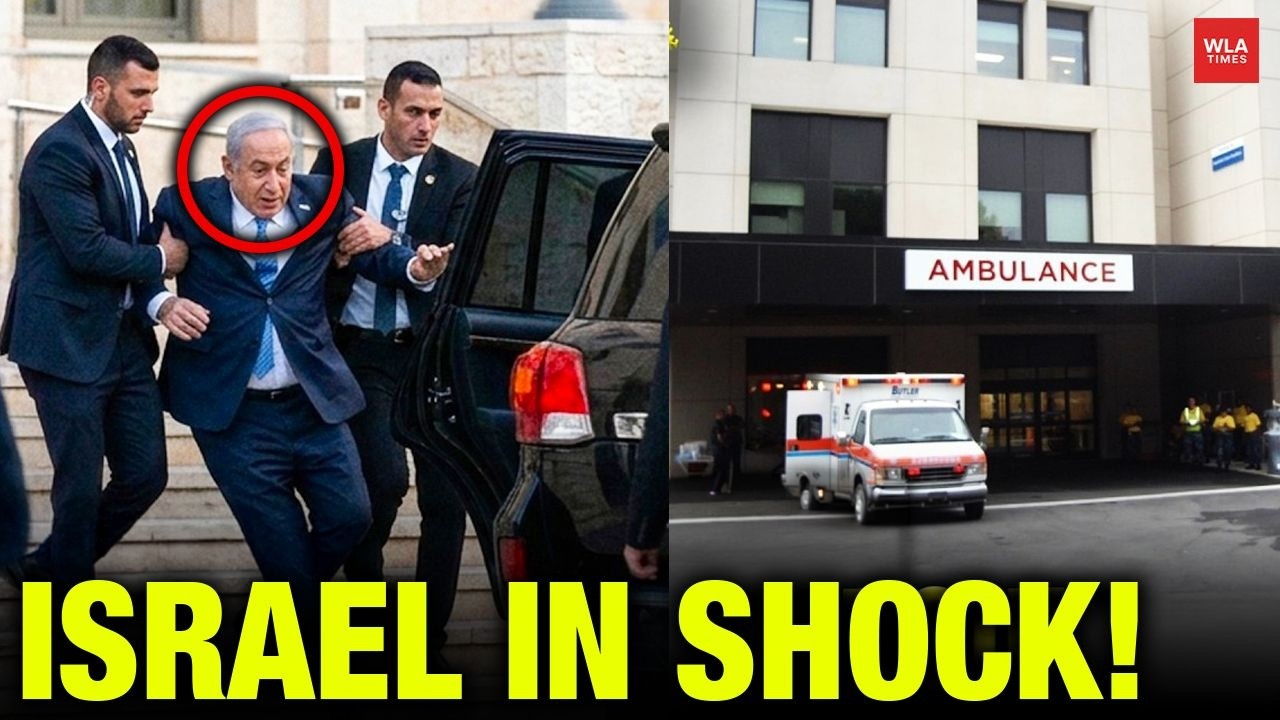
In a night of high drama that has sent shockwaves through the Middle East, Israeli Prime Minister Benjamin Netanyahu was urgently rushed to Hadassah Ein Kerem Medical Center in Jerusalem at approximately 11:00 p.m. The timing could not be more explosive. Just hours earlier, Iranian forces claimed direct engagement with American aircraft and naval assets near the Strait of Hormuz, marking one of the most serious breaches of the fragile ceasefire since it began in April. While officials insist the hospital visit was for routine dental treatment, the late-night secrecy, combined with Netanyahu’s well-documented history of serious health issues, has ignited intense speculation and concern across Israel and beyond.
This is not just another medical footnote in a wartime leader’s life. It is a moment loaded with political, strategic, and human tension. As explosions echoed across southern Iran and U.S. Central Command confirmed fresh strikes, Israel’s longest-serving prime minister found himself in a hospital bed at the very same facility where he previously underwent treatment for a malignant prostate tumor. The official explanation arrived only after Hebrew media broke the story, following a familiar pattern that has repeatedly left the Israeli public questioning what they are truly being told.
Netanyahu’s office issued a brief statement describing the visit as routine dental work. No doctors spoke publicly. No images were released. No detailed medical bulletin followed. For a 76-year-old leader steering Israel through one of its most dangerous periods in decades, the minimal disclosure has only fueled anxiety. This is the same hospital where Netanyahu received radiation treatment for prostate cancer earlier this year – a diagnosis his office revealed only after treatment was completed, citing fears that Iran would exploit it as propaganda.
The pattern is unmistakable. In 2023, what began as reports of dehydration ended with a pacemaker implantation. In 2024, hernia surgery and additional prostate procedures followed similar delayed announcements. Each time, information emerged under pressure rather than proactively. Each time, the full picture proved more serious than the initial statement suggested. Critics argue this approach has created a dangerous credibility vacuum, especially during wartime when the health of the central decision-maker carries enormous national security implications.
While Netanyahu was reportedly receiving treatment, the region was erupting in fresh violence. U.S. Central Command announced defensive strikes on missile sites and boats near Bandar-e-Jask, claiming the targets were preparing threats against maritime traffic. Iran’s response was swift and defiant. The Islamic Revolutionary Guard Corps (IRGC) claimed it engaged American aircraft and shot down a U.S. drone. Iranian state media reported explosions rocking multiple sites in southern Iran and confirmed at least four IRGC personnel killed in the exchanges. Tehran’s Foreign Ministry condemned the U.S. actions as “aggressive and unjustified,” promising that the strikes would not go unanswered.
The confrontation centered on the strategically vital Strait of Hormuz, through which roughly one-fifth of the world’s oil supply flows daily. Any disruption here sends immediate ripples through global energy markets. Reports of explosions, aerial engagements, and naval activity painted a picture of a ceasefire that exists in name only. While diplomats in distant capitals continue speaking of possible extensions and financial relief packages, the battlefield tells a different story – one of active hostilities, retaliatory strikes, and mounting risks.
Secretary of State Marco Rubio, speaking from India, insisted that a deal with Iran remained possible, describing a draft framework that includes a temporary truce, reopening of the Strait, and limited sanctions relief. Yet these optimistic words clash sharply with the reality of Iranian threats, downed drones, and direct military engagements. The gap between diplomatic rhetoric and on-the-ground combat has rarely been wider.
For Israel, the developments carry particular weight. Netanyahu remains the dominant figure in wartime decision-making. Questions about his health inevitably raise concerns about continuity of command, strategic clarity, and the ability to respond decisively if Iran widens its attacks to include Israeli targets. Israeli media has grown increasingly bold in scrutinizing these health disclosures. The Times of Israel and other outlets noted that the public learned of the hospital visit through press reporting rather than official transparency, forcing the Prime Minister’s office into a reactive statement.
This credibility gap did not emerge in isolation. It stems from repeated instances where vital information about the Prime Minister’s condition was withheld until external pressure made disclosure unavoidable. Online speculation has surged during the war, with viral clips and unverified claims circulating widely. While many extreme theories lack evidence and should be treated cautiously, the underlying distrust is rooted in something very real: an official communication strategy that prioritizes control over openness.
At 76 years old, Netanyahu has endured a string of significant medical episodes over the past two years – pacemaker implantation, hernia surgery, prostate issues, and radiation treatment for cancer. These are not minor ailments for a leader managing multiple fronts simultaneously. The health of a wartime prime minister is not merely a private matter. It becomes a question of governance, national resilience, and strategic stability. If critical decisions about ceasefire extensions, responses to Iranian escalation, or coordination with the United States are being made under clouded medical circumstances, the Israeli public has a legitimate right to clearer information.
The broader regional picture remains deeply unstable. Iran’s Supreme Leader’s inner circle, including statements attributed to Mojtaba Khamenei, has warned that Middle Eastern nations will no longer serve as “shields” for American bases. This rhetoric directly challenges Gulf states hosting U.S. forces and signals Tehran’s willingness to expand the conflict geographically. Kuwait’s recent involvement in intercepting projectiles aimed at U.S. assets further illustrates how the fighting is spilling across borders.
Meanwhile, the Strait of Hormuz has transformed into a high-stakes flashpoint. Iranian forces claim to have enforced transit rules through warning shots and interceptions. U.S. strikes target what Washington describes as imminent threats. Each exchange risks miscalculation that could spiral into full-scale confrontation. Oil prices have reacted nervously to every new report, reflecting global fears of supply disruptions that could drive energy costs even higher worldwide.
Inside Israel, the combination of external threats and internal uncertainty about leadership creates a volatile atmosphere. Parents, soldiers, and ordinary citizens watch developments with growing unease. The war has already stretched Israeli society. Questions about the Prime Minister’s fitness only add another layer of tension at a moment when unity and decisive leadership are most needed.
Supporters of Netanyahu argue that the focus on his health distracts from the real enemy – Iranian aggression and its proxies. They maintain that the dental treatment explanation should be accepted at face value and that speculation weakens national resolve. Critics counter that transparency builds trust, especially when the leader holds such concentrated power over war and peace decisions.
As Thursday night unfolded, the convergence of events felt almost cinematic: Iranian missiles and drones in the Gulf, U.S. retaliatory strikes, diplomatic statements from afar, and Israel’s prime minister quietly entering a hospital under cover of darkness. The ceasefire announced on April 8th now appears more like a fragile pause button than a genuine de-escalation. Military operations continue under its umbrella, casualties mount, and tensions show no signs of easing.
The coming days will be critical. Will Netanyahu’s office provide more substantive updates about his condition? How will Israel coordinate with the United States amid these fresh clashes? Can diplomats salvage any meaningful truce before another round of major escalation erupts?
For now, one thing is certain: the region stands on a knife-edge. Iran has demonstrated its willingness to strike back forcefully. Israel remains on high alert. And at the center of it all, a 76-year-old leader with a history of serious health challenges was receiving medical attention at the exact moment when bold decision-making may be required most urgently.
The Israeli people, long accustomed to living with uncertainty, deserve straight answers during these perilous times. Whether those answers will come remains to be seen. What is clear is that the convergence of health concerns at home and military escalation abroad has created one of the most tense nights in recent memory – a night that may signal even greater storms ahead.
The war is far from over. The questions surrounding leadership and transparency are only growing louder. And the Middle East, as always, refuses to let anyone look away.