
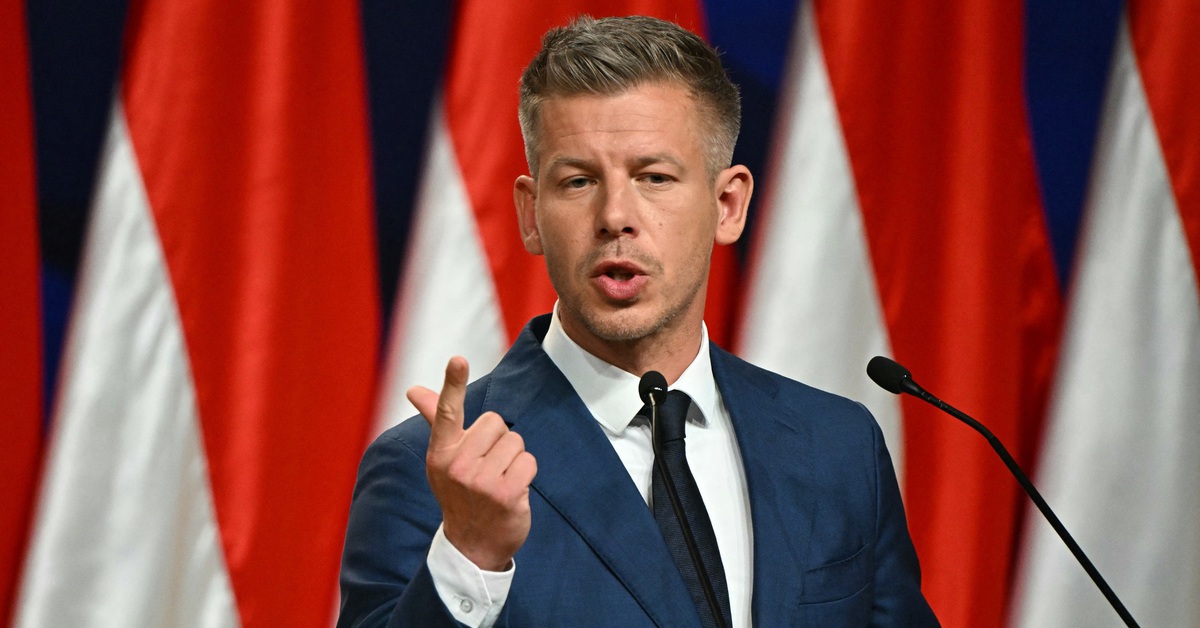
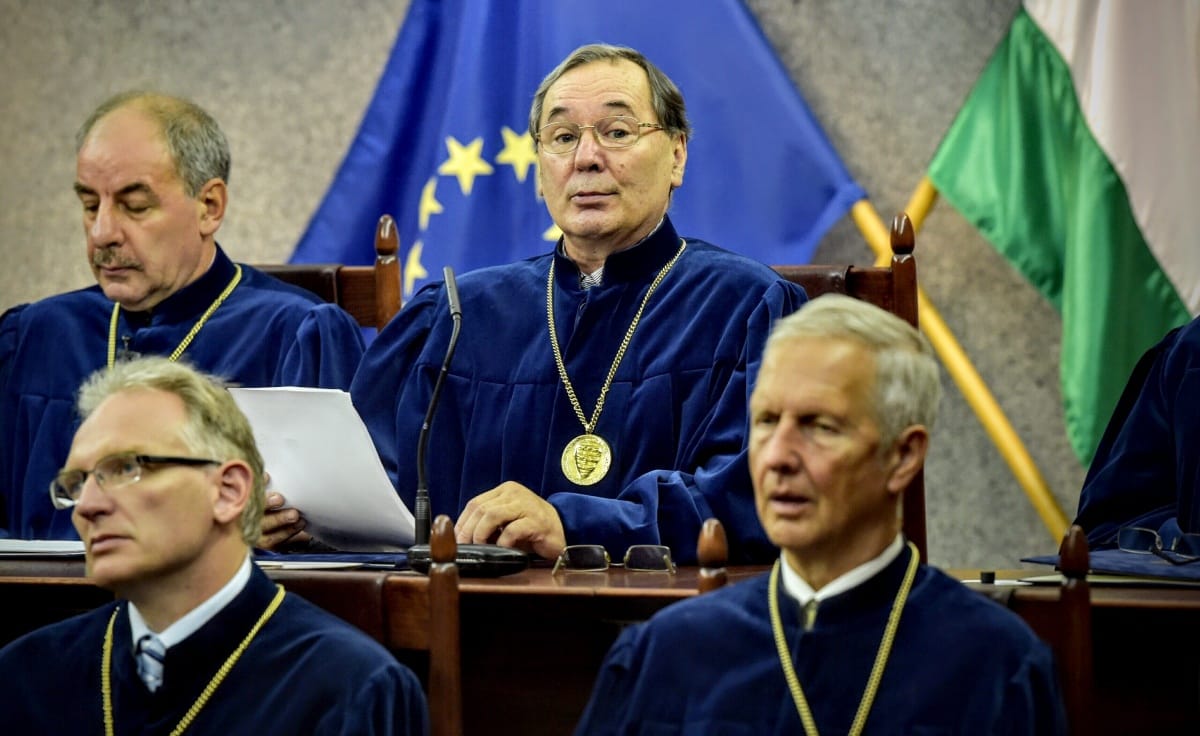
Budapest – Hungary’s political turmoil has reached a new level after constitutional scholar and former Constitutional Court judge Béla Pokol launched a sharp criticism of opposition leader Péter Magyar, one of the most influential figures challenging the current government.
Pokol’s remarks have sent shockwaves through Hungary’s political and legal circles, drawing attention to what he describes as a constitutional red line that may reshape the country’s political landscape in the months ahead.
At the center of the controversy is the question of how far political criticism can go before it begins to undermine the institutions of the state. According to Pokol, Magyar and his Tisza Party have intensified attacks against Hungary’s highest public offices, particularly the presidency, in a manner that could threaten constitutional stability.
Political observers note that Pokol’s arguments are not merely academic. Some believe they could form the basis of a broader legal strategy that may eventually place significant pressure on Magyar’s political movement.
The Presidency as a Constitutional Cornerstone
Under Hungary’s Constitution, the President serves as a symbol of national unity and safeguards the democratic functioning of state institutions. Pokol argues that the office enjoys special legal and constitutional protections precisely because of its role in maintaining political stability.
In recent months, Péter Magyar and his supporters have repeatedly called on the President to resign. While critics view these demands as a legitimate form of democratic pressure, Pokol warns that there is a fine line between political criticism and attempts to systematically delegitimize key state institutions.
“The presidency should not become a partisan battlefield,” one legal source close to the debate reportedly stated.
Within legal circles, concerns have emerged that sustained campaigns aimed at undermining constitutional offices could eventually raise questions about potential public-law violations.
Rumors of a Broader Legal Strategy
Speculation has intensified in Budapest regarding possible legal and political responses being discussed behind the scenes.
Although government officials deny that extraordinary measures are under consideration, reports suggest that legal experts have been examining the broader implications of political campaigns targeting state institutions. According to these accounts, discussions include issues such as political accountability, parliamentary immunity, campaign financing, and the protection of public office holders.
If authorities were ever to conclude that certain political campaigns crossed legal boundaries, the consequences could be significant.
Some analysts believe the ultimate goal would be to restrict Magyar’s political influence or even isolate him politically. Others argue such actions could establish a precedent affecting the wider opposition movement.
Could the Conflict Escalate Further?
The growing confrontation has raised concerns among political experts about the possibility of a deeper institutional crisis.
Supporters of Péter Magyar insist that demanding resignations and criticizing public officials are fundamental democratic rights. They accuse the government of using legal arguments to intimidate political opponents.
Government supporters counter that continuous attacks on state institutions risk creating a permanent climate of political instability, potentially affecting governance and public confidence.
As tensions rise, constitutional legitimacy itself has become one of the dominant topics in Hungary’s political debate. Many observers warn that prolonged institutional conflict could create uncertainty extending beyond politics and into the economy.
The Battle Over Information
The media has become another major battleground in this dispute.
Government-aligned outlets have portrayed Pokol’s comments as a decisive turning point that could mark the end of what some call the “Péter Magyar era.” Independent media organizations, however, caution against politically motivated interpretations of constitutional law and urge restraint before drawing dramatic conclusions.
The struggle over public perception highlights how information has become one of the most powerful weapons in Hungary’s increasingly polarized political environment.
Critics fear that attempts to suppress debate or limit public discussion could deepen social divisions rather than resolve them. For both sides, the challenge remains balancing political conflict with respect for democratic institutions and the rule of law.
A Defining Moment for Péter Magyar
For Péter Magyar, the situation may represent the greatest test of his political career so far.
Should Pokol’s constitutional arguments gain traction within political or legal institutions, Magyar could face challenges extending far beyond electoral politics. Maintaining public support may not be enough; he could also find himself defending his position in legal and constitutional forums.
History suggests that political battles fought through legal channels rarely end quickly or peacefully. The stakes are now larger than any single politician. The broader question is whether Hungary’s political system can continue to function within constitutional boundaries or whether escalating polarization will place increasing strain on democratic institutions.
The coming weeks may determine whether Béla Pokol’s warning truly signals the end of Péter Magyar’s rise—or merely the beginning of an even more intense chapter in Hungary’s political drama.






