Job Losses, Trade Pressures and Growing Economic Questions Put Ottawa Under Renewed Scrutiny
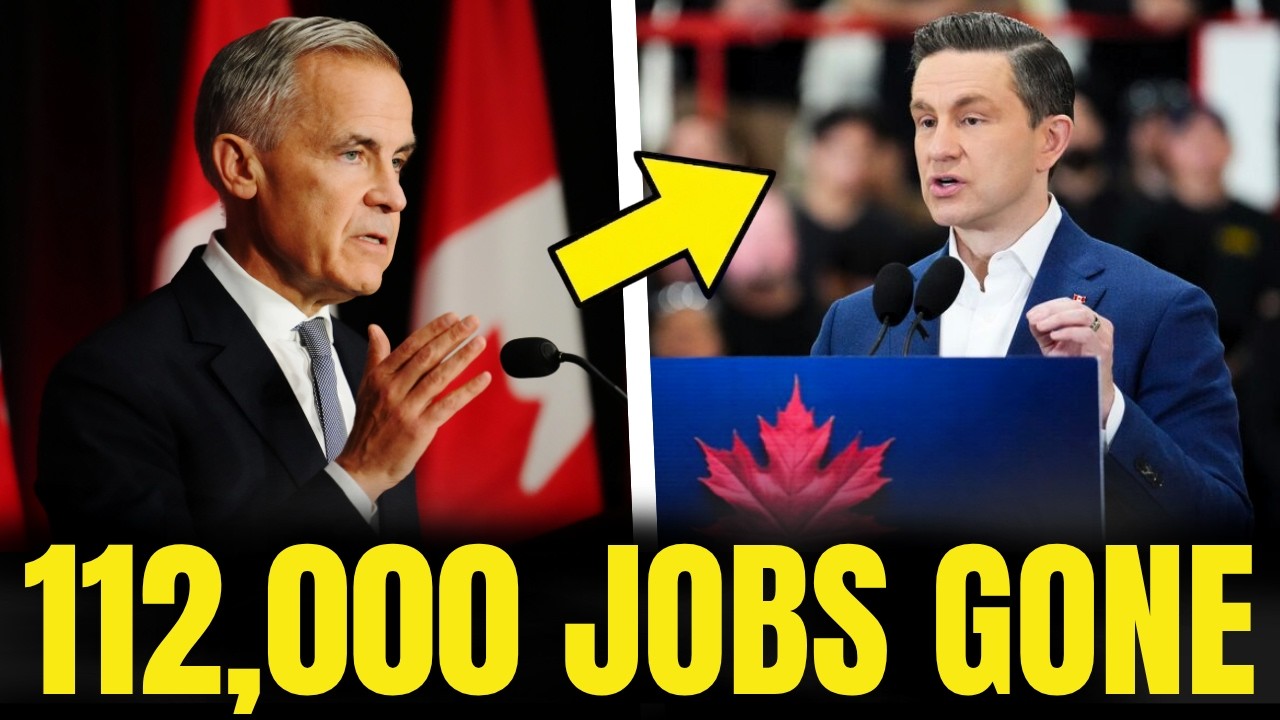
The state of Canada’s labour market has become a growing focus of political debate after a series of manufacturing layoffs, plant disruptions, and national employment figures raised fresh concerns about economic resilience. At the centre of the discussion is the federal government led by Mark Carney, which has faced growing scrutiny in Ottawa over its response to trade tensions and employment losses affecting several key industrial regions.
Recent developments in communities such as Oshawa, Windsor, and Sault Ste. Marie have drawn national attention as workers and local leaders assess the implications of announced layoffs and production slowdowns. The issue has resonated beyond the manufacturing sector, prompting renewed debate across Canada’s political landscape about competitiveness, trade policy, and long-term economic strategy.
According to the transcript, concerns intensified after notices affecting workers at General Motors operations in Oshawa and production interruptions at Stellantis facilities in Windsor and Brampton. Labour representatives argued that trade tensions and tariff-related uncertainty have contributed to instability at a time when many communities remain heavily dependent on manufacturing employment.
For many workers, the debate is less about macroeconomic indicators and more about household security. The transcript highlights concerns from union officials who warned that reductions in production schedules can have ripple effects throughout local economies, affecting suppliers, retailers, restaurants, and service providers that depend on industrial employment.
The automotive sector remains one of Canada’s most significant export industries, supporting tens of thousands of direct jobs and many more throughout the broader supply chain. As a result, developments affecting major assembly plants frequently become national political issues, particularly when they coincide with broader economic uncertainty.
Statistics cited in the transcript indicate that Canada experienced employment losses during three of the first four months of the year, with a cumulative decline of approximately 112,000 positions and an unemployment rate reaching 6.9 per cent. Those figures quickly became part of a wider political discussion regarding the effectiveness of current economic policies and the government’s approach to protecting employment.
Opposition critics and industry observers have argued that the employment data raise broader concerns about government accountability and Canada’s ability to retain industrial investment. Some have suggested that the movement of production capacity toward the United States reflects structural challenges that require a more comprehensive policy response.
The transcript also points to regional disparities. Quebec reportedly experienced some of the largest employment declines, while manufacturing centres in Ontario continued to face uncertainty linked to evolving North American trade conditions. These developments have highlighted widening divisions within Parliament over how aggressively Ottawa should respond to external economic pressures.
Supporters of the government, however, have emphasized that Canada is operating within a highly volatile international environment shaped by shifting trade policies and changing investment patterns. They argue that many of the pressures affecting Canadian industries originate outside Ottawa’s direct control and are linked to broader North American economic trends.
Federal officials have pointed to measures intended to support affected industries, including targeted assistance programs and efforts to maintain competitiveness during a period of heightened international uncertainty. The government has generally maintained that protecting Canadian jobs remains a central objective of its economic agenda.


The political challenge for Ottawa is that economic statistics often translate into personal experiences long before broader indicators improve. Rising concerns about affordability, employment security, and regional economic performance have amplified public attention on labour market data and government decision-making.
The transcript argues that communities dependent on manufacturing are particularly vulnerable when production shifts occur across borders. In that context, employment numbers have become a symbol of broader concerns about Canada’s position within an increasingly competitive North American economy.
Trade policy has emerged as another major point of contention. Critics cited in the transcript contend that Canada has not secured outcomes comparable to those achieved by some other trading partners in negotiations involving the United States. Those arguments have intensified scrutiny of Ottawa’s broader economic strategy.
At the same time, government supporters maintain that international negotiations remain complex and that long-term outcomes should not be judged solely on short-term employment fluctuations. They argue that policy decisions must balance immediate labour market concerns with broader economic and diplomatic considerations.
Beyond the employment figures, the transcript references growing regional frustrations, including political movements in Alberta advocating greater provincial autonomy. While separate from labour market data, such developments illustrate how economic concerns can intersect with broader questions about federal-provincial relations.
The combination of job losses, manufacturing uncertainty, and regional political tensions has created a challenging environment for policymakers. As economic concerns become more visible in communities across the country, federal leaders have come under increasing political pressure to demonstrate that existing strategies can deliver measurable results.
Business groups, labour organizations, and economic analysts continue to debate the extent to which current challenges reflect cyclical economic conditions versus longer-term structural shifts. That distinction is likely to remain central to future discussions in Ottawa and across provincial capitals.
Many economists note that labour market performance often serves as one of the most important indicators of public confidence. Employment trends can influence consumer spending, business investment, and ultimately electoral sentiment, making them a critical area of focus for governments of any political stripe.
For Prime Minister Carney and his government, the months ahead may prove significant as policymakers attempt to address concerns raised by workers, industry stakeholders, and provincial leaders. Whether recent employment losses represent a temporary setback or a deeper economic challenge remains a matter of debate.
The broader political significance of the issue lies in its impact on public perceptions of economic stewardship. As Canadians assess developments in manufacturing communities and national labour market trends, questions surrounding competitiveness, investment, and trade policy are likely to remain at the forefront of public discussion.
As Parliament returns to continued debate over economic priorities, employment data will remain a key measure against which government performance is evaluated. For now, the issue remains politically contentious and continues to evolve.






