The Australian federal budget for 2026–2027 has become the center of an escalating political and economic debate, following sharp criticism from former Victorian Liberal Party president Michael Kroger. Speaking on Sky News Australia’s Paul Murray Live on May 27, 2026, Kroger accused the Labor government of crafting unfair tax policy that favors large technology companies while neglecting small businesses across the country.
His comments have intensified scrutiny over the government’s proposed tax adjustments, particularly those involving capital gains tax and targeted exemptions for certain industries.
In a strongly worded appearance, Kroger urged the government to “back down on a number of things” before the budget proceeds to a critical vote in the House of Representatives later this week. His remarks suggest mounting political pressure within Australia’s business and policy circles as lawmakers prepare for what is expected to be a contentious parliamentary session.
At the center of Kroger’s criticism is a proposed tax carve-out for the technology sector. According to him, the policy creates an uneven playing field that privileges Big Tech firms over smaller enterprises that lack comparable lobbying power or financial influence.
“You can’t exempt the tech industry and not every other small business; that would be ridiculous,” Kroger stated during the broadcast, emphasizing what he sees as a fundamental inconsistency in the government’s economic strategy.

His comments quickly circulated across political commentary platforms, igniting debate about whether Australia’s tax system is becoming increasingly skewed in favor of multinational corporations.
Kroger also took aim at the government’s broader economic leadership, arguing that key decision-makers lack practical experience in running businesses. He suggested that this gap in real-world experience is reflected in what he describes as poorly calibrated policy decisions.
In his view, the issue is not merely ideological but structural, rooted in a disconnect between policymakers and the commercial realities faced by entrepreneurs and small business owners.
The debate over the 2026–2027 budget has already been tense, with disagreements emerging over capital gains tax reforms and proposed support measures for businesses. Kroger’s intervention adds further political pressure at a sensitive moment, as the government seeks to secure parliamentary approval for its fiscal agenda.
According to political observers, the budget is shaping up to be one of the most contested in recent years, with both opposition figures and business leaders expressing concern about its long-term economic implications.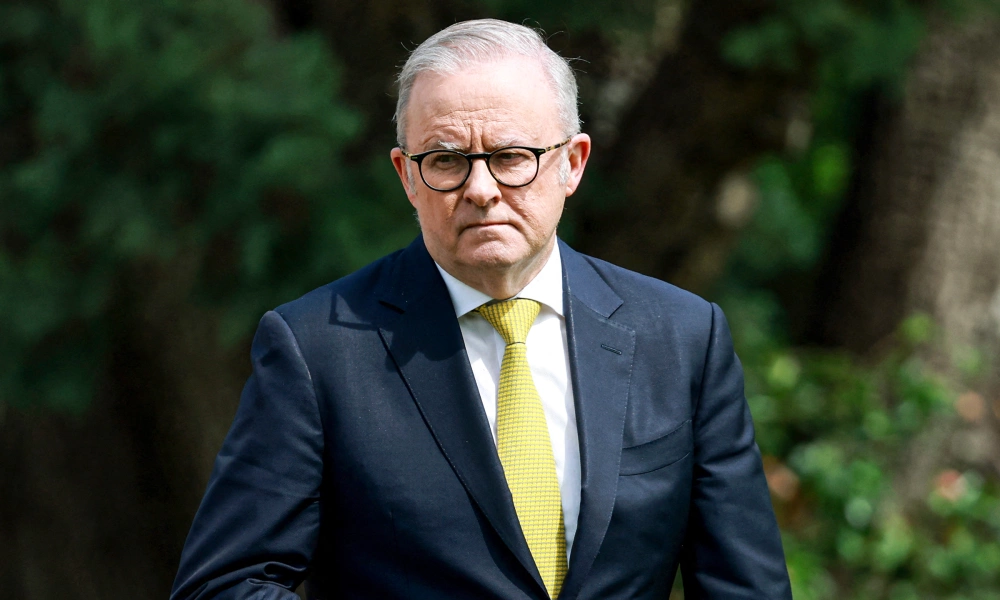
Kroger argued that the government is likely to be forced into concessions before the final vote. He predicted that further adjustments may also be made in subsequent parliamentary sessions as economic and political pressure builds.
This expectation of compromise reflects a broader reality in Australian politics, where budget measures often undergo significant revision during negotiations between parties and stakeholders.
The controversy surrounding the tech industry exemption has become a focal point in wider discussions about fairness in taxation. Critics of the policy argue that preferential treatment for large digital firms undermines the principle of equal treatment for all businesses, particularly in a period of economic uncertainty.
Supporters of the government, however, are expected to defend the measure as part of a strategy to maintain competitiveness in a rapidly evolving global technology market.
Kroger’s remarks also highlight a recurring tension in economic policymaking: the balance between encouraging innovation and ensuring equitable treatment across different sectors of the economy.
While large technology companies often argue that tailored tax treatment supports investment and job creation, small business advocates frequently warn that such policies risk deepening structural inequalities.
The former Liberal Party president’s comments are likely to resonate strongly with small business groups, many of whom have long argued that they face disproportionate regulatory and tax burdens compared to multinational corporations.
At the same time, his intervention may also fuel partisan debate, as government supporters push back against claims that the budget unfairly favors specific industries.
Political analysts suggest that Kroger’s remarks reflect broader ideological divisions within Australian economic discourse, particularly around the role of government in regulating markets and distributing tax burdens.
As the parliamentary vote approaches, attention is expected to intensify on the details of the budget and any potential amendments introduced in response to criticism from both opposition figures and industry stakeholders.
For the Labor government, the challenge will be to maintain fiscal credibility while addressing concerns about fairness and economic competitiveness.
For critics like Kroger, the issue is not only about specific tax measures but about the broader philosophy underpinning government policy.
The outcome of this debate will likely have lasting implications for Australia’s economic direction, particularly in how it balances innovation-driven growth with support for traditional small businesses.
As the political battle unfolds, the 2026–2027 budget is emerging as a defining moment in Australia’s ongoing debate over taxation, fairness, and the role of government in shaping the economy.






