Quebec Job Losses Intensify Political Debate as Ottawa Faces Questions Over Economic Response
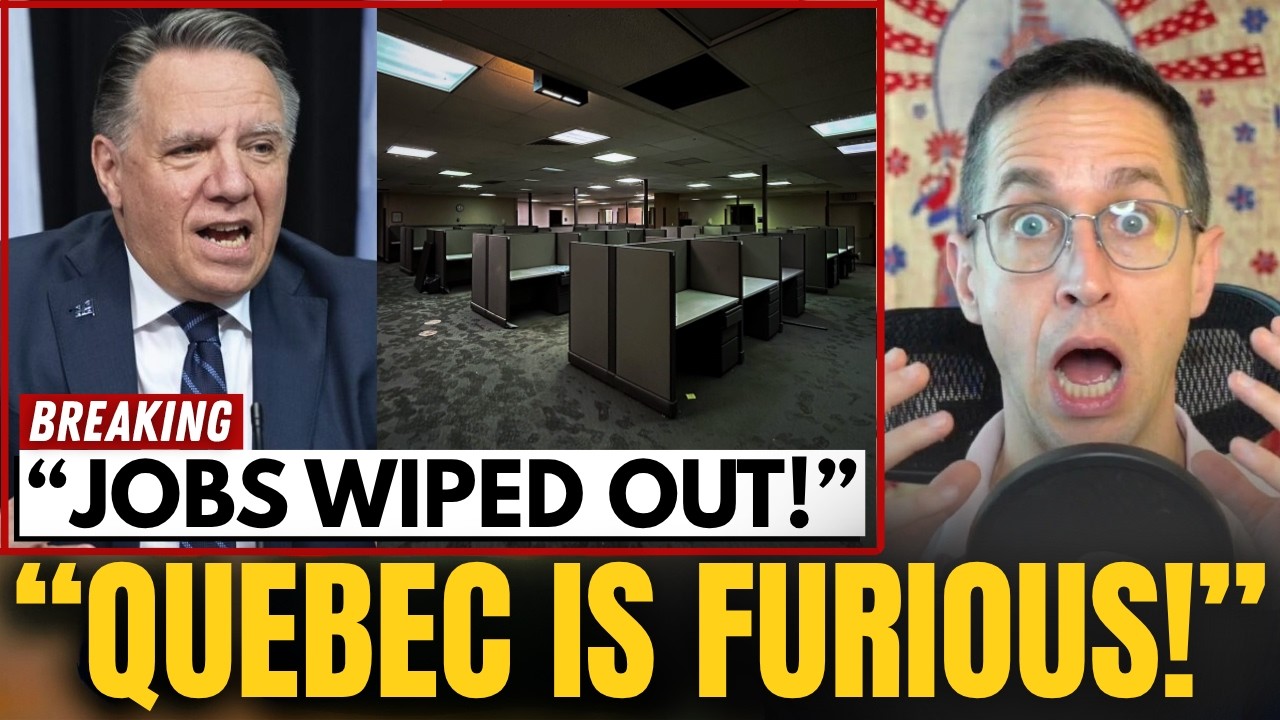
Canada’s economic outlook has come under renewed scrutiny following a series of factory closures and significant employment losses in Quebec, developments that have placed the federal government and Prime Minister Mark Carney at the centre of a growing political debate. The discussion has gained national attention as communities across the province confront the consequences of manufacturing layoffs, weakening industrial activity, and rising unemployment.
The issue gained urgency after the closure of South Shore Furniture facilities in Saint-Croix and Coaticook, where workers were informed that decades of manufacturing activity were coming to an end. According to the transcript, declining sales, American tariffs, and competitive pressures from imported products were cited among the factors contributing to the shutdowns.
For many residents of Saint-Croix, a community of roughly 2,700 people, the closure represented more than the loss of a workplace. As one of the town’s major employers, the factory played a significant role in the local economy, making the announcement a matter of broader regional concern.
Only days later, another Quebec furniture manufacturer, Bestar in Lac-Mégantic, announced that it was entering bankruptcy proceedings. The company’s parent organization stated it could no longer meet interest payment obligations, resulting in further uncertainty for employees and surrounding communities.
Beyond the factory closures, labour representatives argued that the developments reflected a wider trend affecting multiple sectors across Quebec. The transcript cites comments from Daniel Cloutier, who suggested that repeated closures across industries pointed to structural challenges rather than isolated business failures.
The broader context extends beyond furniture manufacturing. The transcript references earlier developments involving Dorel, Prepac, and Groupe Remabec, each associated with production reductions, facility closures, or workforce cuts. Together, these examples have contributed to concerns about the long-term health of parts of Quebec’s industrial sector.
Statistics Canada figures cited in the transcript added to the debate. Quebec reportedly lost 43,300 jobs in April alone, while manufacturing, construction, wholesale trade, and retail trade all recorded declines. The figures quickly became a focal point for opposition criticism and economic analysis.
Those employment numbers prompted renewed debate across Canada’s political landscape because they arrived amid ongoing discussions about economic competitiveness, trade pressures, and the federal government’s strategy for supporting affected industries.
The transcript further notes that manufacturing employment fell by 11,100 positions during the month, while construction employment declined by 8,800. Regions dependent on resource extraction and industrial production were reported to be among the hardest hit.
In particular, the Mauricie region experienced a substantial decline in employment over the previous year. Observers cited in the transcript argued that these figures highlighted the vulnerability of communities that rely heavily on manufacturing and forestry-related activity.


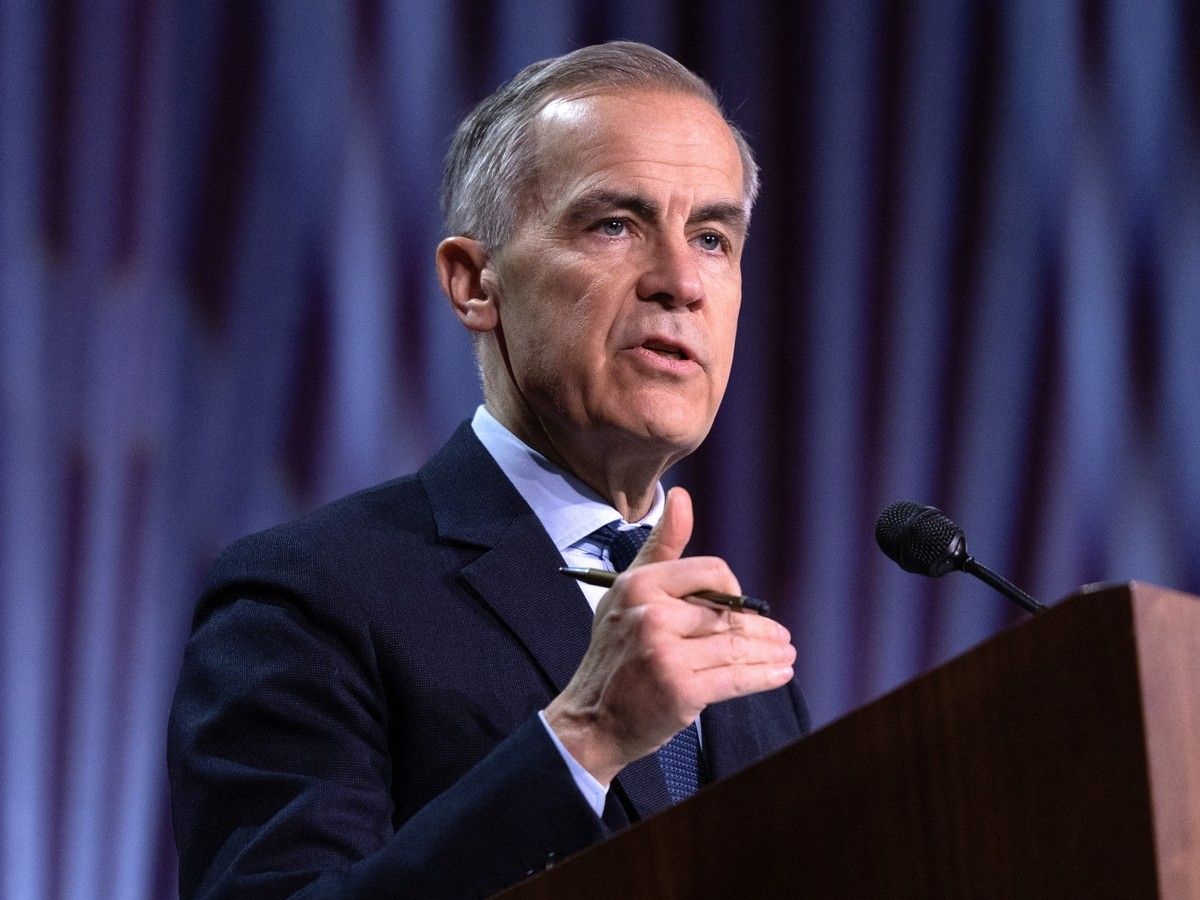
At the federal level, Ottawa announced a workforce tariff response package valued at $570 million over three years. According to the transcript, the program was designed to support up to 66,000 workers employed in industries considered vulnerable to trade-related disruptions.
However, critics questioned whether the scale of the response matched the scale of the challenge. The transcript contrasts the federal support target with reported provincial employment losses, arguing that Quebec’s job declines exceeded the number of workers the national program was designed to assist.
These comparisons placed the government under increased political pressure. Opponents argued that the federal response underestimated the severity of labour market disruptions, while supporters maintained that assistance programs were intended to provide transitional support rather than solve every economic challenge immediately.
Opposition leader Pierre Poilievre was cited in the transcript criticizing the government’s approach to international negotiations and economic management. His remarks focused on trade discussions and the pace of federal engagement with key economic issues.
The debate also highlighted widening divisions within Parliament regarding how Canada should respond to industrial disruption, foreign tariffs, and shifting global market conditions. Economic policy has increasingly become a central point of contention among federal political parties.
Labour organizations continued to raise concerns about the impact on workers and families. The transcript references comments from Lana Payne, who linked recent closures to broader pressures facing Canada’s industrial base.
In Montreal and beyond, the consequences of job losses extend beyond employment statistics. The transcript points to higher unemployment levels, declining opportunities in some regions, and growing uncertainty among households facing rising costs and changing labour market conditions.
Questions surrounding future trade negotiations also emerged as a significant political issue. The upcoming review period for the Canada-United States-Mexico Agreement was cited in the transcript as another factor likely to influence economic discussions in the months ahead.
Supporters of the government have argued that economic transitions often require time and that long-term investments may not produce immediate results. Critics, meanwhile, contend that workers and communities facing layoffs require more immediate and substantial support measures.
As the political debate continues, the available figures have intensified scrutiny of federal economic policy and raised broader concerns about government accountability. Whether current measures prove sufficient remains uncertain, but the employment losses documented in Quebec have ensured that the issue will remain a major topic in national politics. For now, the debate remains unresolved within Canada’s broader political landscape.






