Carney’s New York Move Shakes Washington as Rubio Faces Backlash
NEW YORK — In the span of 48 hours, two contrasting scenes unfolded on the global stage, each revealing fractures in traditional alliances and the growing premium placed on predictability in international relations.
In New York, Canadian Prime Minister Mark Carney delivered a confident address to investors, positioning Canada as a stable and attractive destination for capital amid global uncertainty. Meanwhile, in India, U.S. Secretary of State Marco Rubio found himself in an awkward exchange that quickly became a symbol of American diplomatic challenges.
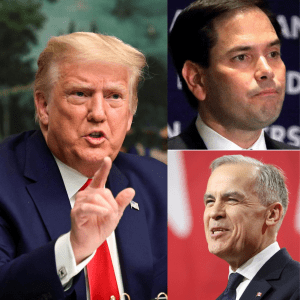
Carney’s Message of Strength
Speaking at the Economic Club of New York, Mr. Carney described a world undergoing a profound “rupture” driven by technological change and shifting American trade policies. Rather than dwelling on risks, he focused on Canada’s proactive response: building domestic strength while diversifying international partnerships.
“In a world where integration has been weaponized,” he said, “a country that can’t feed, fuel or defend itself is not truly sovereign.”
Tax Cuts and Investment Ambitions
Mr. Carney highlighted recent tax reductions on income, capital gains and new business investments, along with a “productivity super deduction” designed to make Canada the most competitive in the Group of 7 for new investment. He outlined plans to catalyze $1 trillion in investment over five years in energy, infrastructure and defense.
The prime minister emphasized Canada’s emergence as an energy superpower, with ambitious targets for liquefied natural gas exports and new pipelines to Asian markets.
Emphasis on Trust
A central theme of the speech was Canada’s most valuable asset: trust. Mr. Carney argued that in an era of volatility, Canada’s reputation as a reliable partner had become a strategic advantage.
He stressed that a stronger, more confident Canada would ultimately benefit the United States through integrated supply chains, energy exports and critical minerals cooperation.
Rubio’s Difficult Moment in India
While Mr. Carney projected stability in New York, Mr. Rubio faced a more challenging diplomatic environment in India. During a press interaction, he struggled to respond when asked about “racist comments” from the United States.
The exchange, which quickly went viral, highlighted ongoing sensitivities in U.S. foreign relations and perceptions of American political rhetoric abroad.
Connecting the Scenes
Though seemingly unrelated, the two events underscore a broader shift in how nations and investors assess reliability. Mr. Carney’s speech in the heart of American finance was not merely promotional — it was a subtle assertion of Canada’s growing autonomy and appeal as a predictable partner.
At the same time, Mr. Rubio’s discomfort in India reflected the reputational costs the United States continues to face on the world stage.
Investor Appeal
Mr. Carney’s message resonated with his audience of financiers and business leaders. By emphasizing tax competitiveness, regulatory reform and new international partnerships, he sought to reframe Canada as a destination for long-term capital in an uncertain world.
The timing was particularly notable, coming amid ongoing trade tensions between Canada and the United States.
Strategic Diversification
Mr. Carney has made diversification a cornerstone of his government’s approach. In recent months, Canada has pursued deeper ties with Europe, strengthened defense cooperation and expanded trade relationships across multiple continents.
The New York speech served as both an investor pitch and a signal that Canada is actively preparing for a less U.S.-centric economic future.
Broader Implications
The contrast between the two events illustrates a larger trend: countries and investors are increasingly prioritizing stability and predictability. In this environment, Canada is attempting to position itself as a reliable middle power, while the United States grapples with the diplomatic consequences of its domestic political climate.
Washington Watches Closely
U.S. officials have taken note of Mr. Carney’s activities. While the administration maintains that Canada remains a vital partner, Mr. Carney’s emphasis on strategic autonomy has created quiet unease in Washington.
The New York speech, delivered on American soil, carried an implicit message about Canada’s willingness to chart a more independent course.

Reputation as Currency
Trust, as Mr. Carney noted, has become one of the world’s most valuable commodities. Nations perceived as stable, predictable and principled are gaining an edge in attracting investment and forging partnerships.
Canada’s efforts to highlight these qualities stand in contrast to the perception challenges currently facing the United States on the global stage.
Political and Economic Context
Mr. Carney’s government faces domestic pressure to deliver results amid trade tensions and economic headwinds. His New York appearance was part of a broader strategy to reassure investors and project confidence.
Mr. Rubio’s trip to India, meanwhile, was intended to strengthen ties but instead drew attention to ongoing sensitivities around American political discourse.
A Shifting Landscape
The near-simultaneous events reflect a world in which traditional alliances are being tested and new calculations of self-interest are emerging. Middle powers like Canada are seeking greater autonomy, while established powers like the United States navigate reputational challenges.
Investor Sentiment
For the business leaders who heard Mr. Carney in New York, the speech offered a vision of Canada as a stable alternative in turbulent times. Whether that vision translates into tangible investment flows will be closely watched in the coming months.
Diplomatic Challenges
Mr. Rubio’s experience in India serves as a reminder that words and perceptions carry real diplomatic weight. As global competition intensifies, nations are paying closer attention not only to policy but to the tone and consistency of their partners.
Looking Ahead
The coming weeks will test both leaders’ approaches. Mr. Carney must demonstrate that Canada’s diversification strategy can deliver concrete benefits. Mr. Rubio and the Trump administration must work to repair and strengthen key relationships strained by recent rhetoric and policy decisions.
A Tale of Two Strategies
In New York and New Delhi, two different visions of international engagement were on display. One emphasized predictability and partnership. The other grappled with the consequences of uncertainty and perception.
As the global order continues to evolve, trust and reliability may prove to be the decisive factors in determining which nations thrive in the years ahead.






