In less than 48 hours, two separate political moments unfolded on opposite sides of the world—but together they exposed something deeper than routine diplomacy. They revealed a global economy increasingly shaped not by power alone, but by something far more fragile: trust.
Across New York and New Delhi, leaders spoke in different tones but faced the same underlying question—who can the world still rely on?


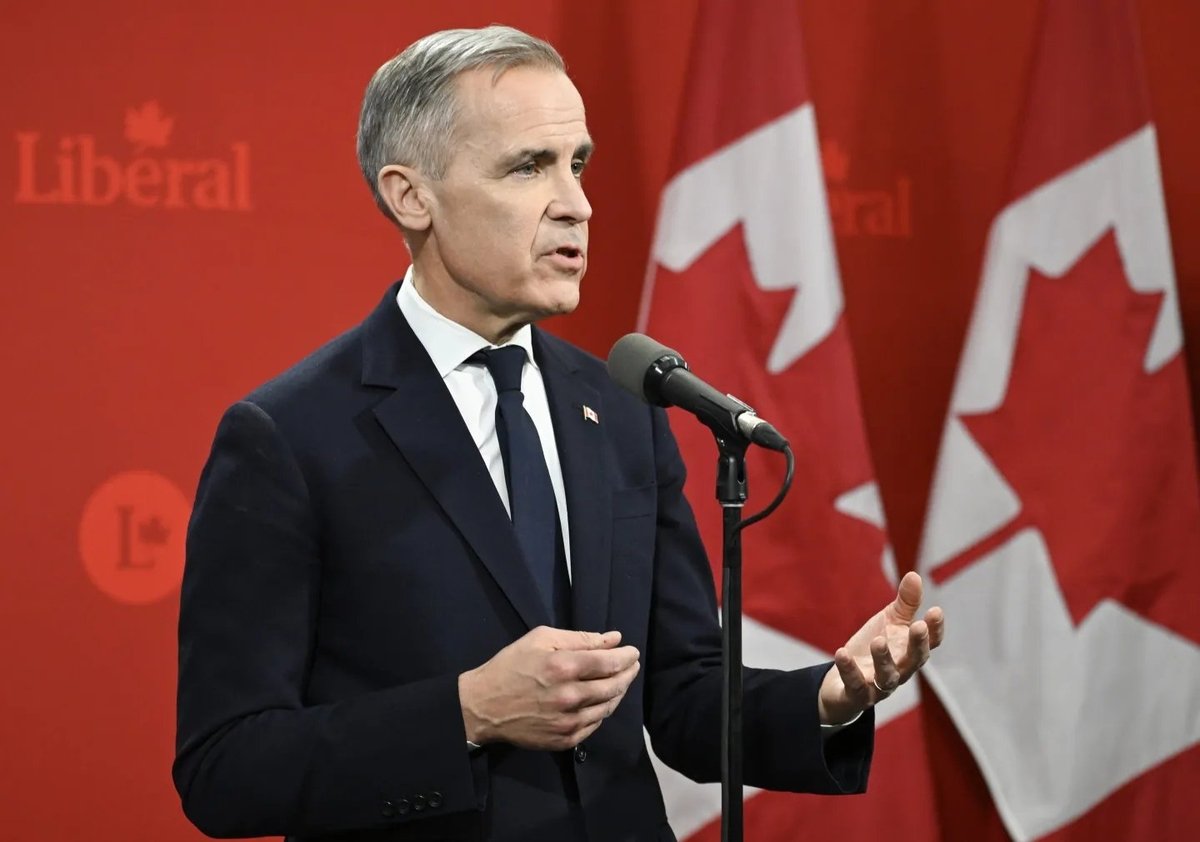
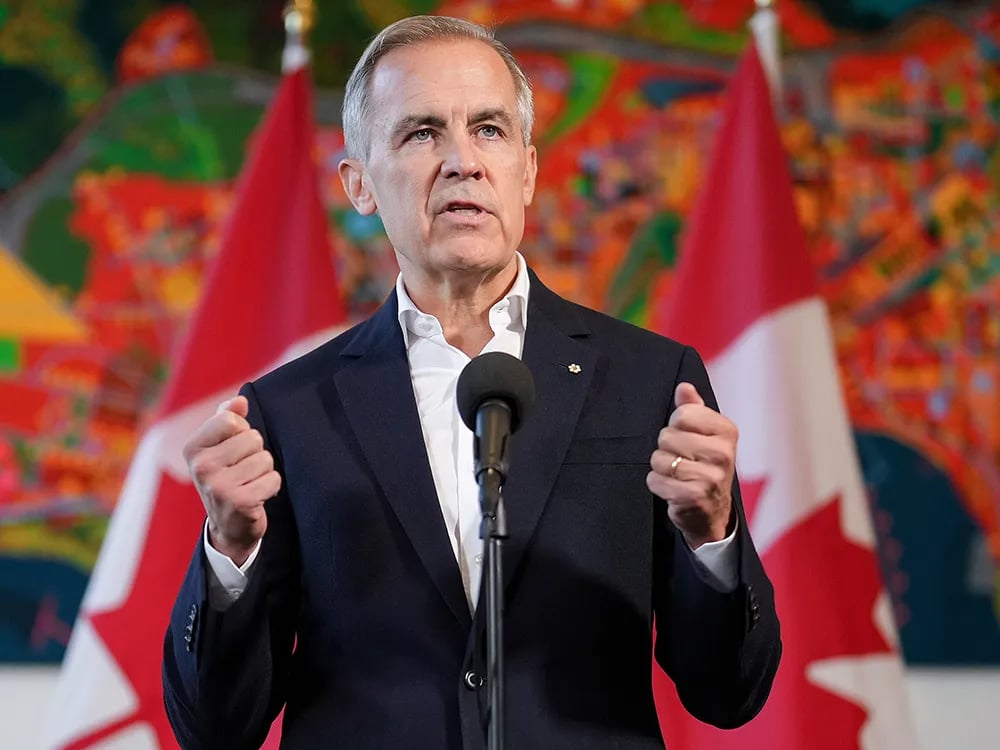
At the center of one story is Mark Carney, who addressed an influential audience in New York’s financial district. His message was not framed as political theatre, but as economic positioning. Canada, he argued, is no longer reacting to global uncertainty—it is preparing for it.
Carney’s tone was notably direct. He described the world as being in a state of “rupture,” a term that resonated in rooms filled with investors accustomed to stability narratives. But instead of warning of collapse, he pivoted toward readiness, suggesting that Canada is actively restructuring its economic identity.
What made the speech stand out was not only its content, but its audience. Speaking in the heart of American finance, Carney was effectively pitching Canada as a premium destination for long-term capital.
He emphasized tax reforms, investment incentives, and diversification strategies designed to reduce dependence on any single economic partner. The underlying message was clear: Canada is building resilience into its economic model.
But the most striking part of his argument came when he highlighted an intangible asset—trust. In a world of volatility, he suggested, trust may now be more valuable than natural resources or industrial capacity.
In Carney’s framing, Canada’s competitive advantage is not just commodities or geography, but predictability. For global investors, predictability translates directly into reduced risk—and reduced risk translates into capital inflow.
This repositioning places Canada in an unusual narrative space: not merely as a resource-rich economy, but as a “safe architecture” within a fractured global system.
At the same time, thousands of miles away, Marco Rubio was engaged in a diplomatic visit to India that unfolded far less smoothly than expected. Officially, the visit aimed to strengthen bilateral cooperation. Unofficially, it exposed lingering friction in the relationship.
During a press interaction, questions arose about controversial public comments and perceptions surrounding American political discourse. The exchange became tense and somewhat disjointed, with clarification attempts failing to fully resolve the issue.
What stood out was not a policy disagreement, but a communication breakdown. The moment reflected how quickly diplomatic narratives can shift when trust is questioned—even in a routine press setting.
In international relations, perception often travels faster than policy. And in this case, perception became the headline.
The contrast between Carney’s controlled economic messaging and Rubio’s unpredictable diplomatic moment created an unexpected parallel. Both were operating in different arenas, but both were navigating the same underlying challenge: credibility.
That is where the connection between these two stories becomes more significant.
The modern global system is no longer defined solely by alliances or trade agreements. It is increasingly shaped by how predictable each actor appears to others.
Investors are not just evaluating GDP growth or interest rates. They are evaluating governance stability, policy consistency, and institutional reliability.
Countries that can project stability are attracting capital. Countries that cannot are finding themselves under increased scrutiny.
Canada’s messaging fits neatly into this shift. By emphasizing trust and long-term planning, it is attempting to position itself as a counterweight to global volatility.

The implication is subtle but important: economic success is no longer just about growth rates, but about perceived reliability.
In this environment, even traditional power dynamics are being reinterpreted. The question is no longer simply who has influence—but who can sustain it without disruption.
For Canada, this represents both an opportunity and a risk. Positioning itself as a stable partner may attract investment, but it also raises expectations for consistency in policy execution.
For the United States, the challenge is more complex. As the central hub of global finance and diplomacy, it must balance internal political discourse with external perceptions of stability.
When moments like the Rubio exchange occur, they do not exist in isolation. They become part of a broader narrative about coherence and control.
Meanwhile, investors are watching all of it with increasing sensitivity. Capital is becoming more mobile, more cautious, and more responsive to signals that were once considered secondary.
Even language now matters. Words like “rupture,” “trust,” and “diversification” are no longer rhetorical flourishes—they are interpreted as indicators of strategic direction.
What emerges from these parallel events is not a single policy shift, but a broader transformation in how global credibility is constructed.
Trust, once assumed as a baseline in many alliances, is now something that must be actively produced, maintained, and demonstrated.
And that requirement applies equally to economic policy and diplomatic interaction.
Carney’s argument suggests that countries capable of maintaining internal coherence will be rewarded externally. Rubio’s moment illustrates how quickly that coherence can be questioned in real time.
Together, they point toward a global order in transition—one where influence is no longer just projected through strength, but through consistency.
The question moving forward is not simply which countries are rising or falling.
It is which ones can still be believed.






