A fiery late-night exchange on Sky News has reignited one of Australia’s most controversial cultural and political debates — and this time, it’s gone global.
Shadow Attorney-General Michaelia Cash launched a blistering attack on Australia’s Sex Discrimination laws after a tense Senate estimates hearing involving Sex Discrimination Commissioner Dr Anna Cody descended into confusion over one simple question:
Can a biological male become pregnant?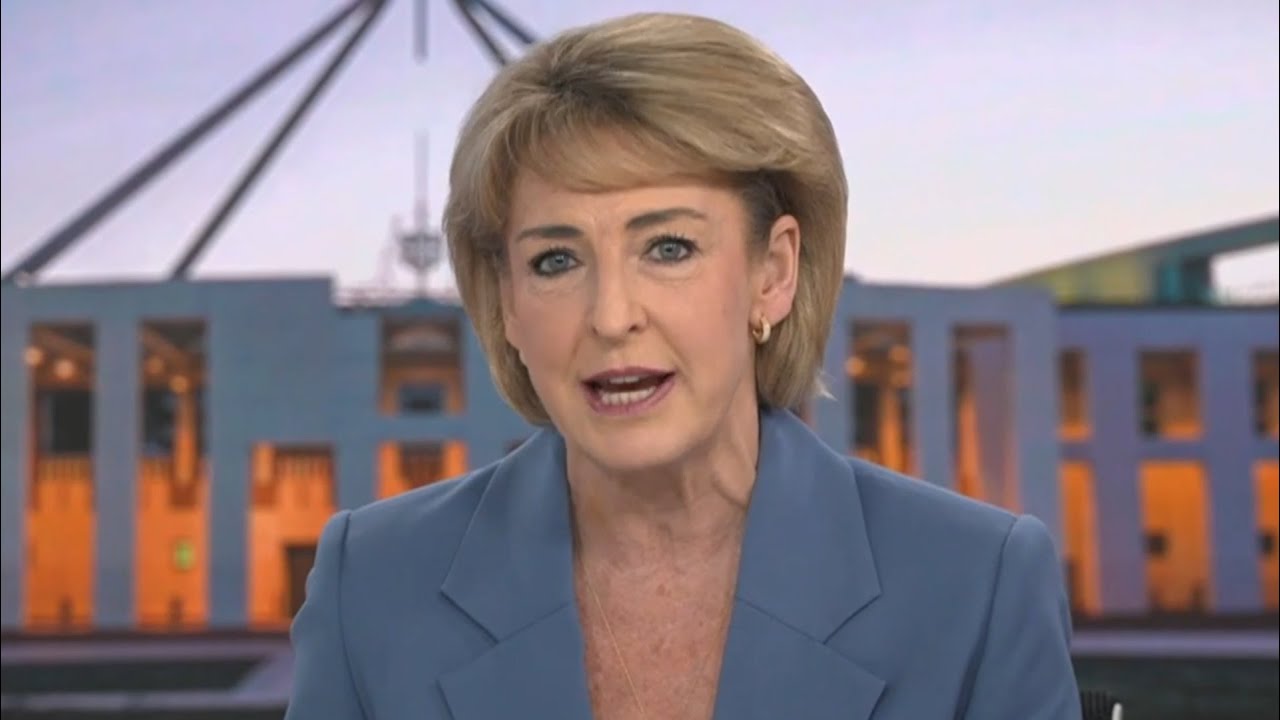
What followed has triggered outrage, disbelief, and fierce political debate across Australia and beyond.
During the discussion, Dr Cody argued that under Australia’s discrimination framework, a transgender woman could potentially claim discrimination protections related to “pregnancy” or “potential pregnancy” in employment settings.
The explanation immediately drew criticism from Cash, who repeatedly challenged the biological logic behind the argument.
The exchange quickly exploded online.
Critics described the conversation as surreal, while supporters of transgender inclusion defended the legal reasoning as being about discrimination protections rather than biological capability itself.
But for Cash and many conservatives, the issue represents something far larger — a clash between biological reality and ideological lawmaking.
Speaking afterward with Sky News host Peta Credlin, Cash mocked the discussion as something resembling “a Monty Python skit.”
“All right, let’s go to what I would regard as a Monty Python skit if it wasn’t so serious,” Credlin said as she introduced the segment.
The controversy centered on a hypothetical scenario presented by Dr Cody during estimates.
According to the commissioner, if a transgender woman applied for a job, expressed an intention to have children, and was rejected because the employer did not want to hire someone of “childbearing age,” that individual could potentially claim unlawful discrimination related to pregnancy.
Cash openly rejected the logic.
“I’m very confused,” she responded during the hearing.
“A biological male can’t become pregnant.”
Dr Cody maintained that discrimination law includes both pregnancy and “potential pregnancy,” and argued the issue was about unlawful treatment by employers.

But the explanation only intensified the backlash.
“How can you become potentially pregnant if you cannot become pregnant?” Cash asked repeatedly.
The exchange rapidly spread across social media platforms, attracting reactions from political commentators, activists, journalists, and public figures around the world.
Many viewers expressed disbelief that such a debate was even taking place at the highest levels of government.
Cash later escalated her criticism during her Sky News appearance with Credlin.
“Unless I missed that class at school, biological men cannot have babies,” she declared.
“They also can’t potentially have babies, no matter which way you cut it.”
Her comments immediately resonated with conservative audiences who argue modern gender policies have drifted too far from biological reality.
Cash also took aim at the salary and role of the Sex Discrimination Commissioner herself.
“I hate to tell the Sex Discrimination Commissioner, who is paid over $400,000 a year — top one percent of salary earners in Australia — that biological men cannot have babies,” she said.
“She wanted to argue last night that biological men, even if they consider themselves women, can have babies. Get over yourself.”
The remarks sparked immediate political reaction.
Supporters of Cash praised her for saying what they described as “common sense,” arguing that laws should reflect biological definitions of sex.
Others accused her of oversimplifying complex legal protections designed to prevent discrimination against transgender Australians.
For conservatives, however, the issue has become symbolic of what they see as ideological overreach inside government institutions.
Cash blamed the controversy on amendments made to Australia’s Sex Discrimination Act in 2013 during the final days of Julia Gillard’s prime ministership.
According to Cash, those changes opened the door to legal interpretations that now conflict with basic biology.
“All this stems from legal changes Julia Gillard made two days before she was rolled by Kevin Rudd,” Credlin argued during the segment.
Cash agreed, saying the current legal framework had become detached from ordinary Australians.
“Mom and dad Australia would have been sitting back last night saying, ‘Canberra has totally lost the plot. Canberra is crazy.’”
The Coalition has now signaled it intends to revisit the issue politically.
Cash pointed to comments from Shadow Treasurer Angus Taylor, who has promised that a future Coalition government would restore what he called “common sense” to federal law.
“We are going to be a government of common sense,” Cash said.
“Common sense tells you that sex is biological. Sex cannot change.”
She added that the Coalition would seek to amend the Sex Discrimination Act to ensure “biological reality” is clearly reflected in legislation.
“It’s not radical,” she insisted.
“It is common sense and nothing more.”
The debate has once again exposed the widening divide in Australia over gender identity, biological sex, and the role of law in defining both.
Advocates for transgender rights argue that discrimination protections are necessary to ensure equal treatment and dignity for all Australians, regardless of gender identity.
Critics counter that redefining legal language around sex and pregnancy creates confusion and undermines biological reality.
The issue has increasingly become a flashpoint in broader cultural battles playing out across Western democracies.
Public figures from overseas also weighed in after clips of the hearing circulated online.
According to Credlin, tennis legend Martina Navratilova commented critically on the exchange, describing it as evidence of growing ideological extremism around gender debates.
The controversy comes amid rising international scrutiny over how governments, schools, sporting bodies, and workplaces handle issues related to sex and gender identity.
In recent years, debates over transgender participation in women’s sports, access to female-only spaces, and gender terminology have intensified worldwide.
Australia is now finding itself directly in the center of that global conversation.
For supporters of Cash, the debate is ultimately about defending objective truth.
For critics, it is about ensuring protections for vulnerable communities.
But regardless of where Australians stand politically, one thing is certain:
The explosive exchange between Michaelia Cash and Anna Cody has ignited a national conversation that is far from over.






