
In the span of a single week, two major aviation announcements emerged from opposite sides of the world.
One generated headlines, political applause, and dramatic declarations of economic victory.
The other generated contracts, manufacturing commitments, and years of guaranteed industrial work.
Together, the two stories have sparked a growing debate about what real economic power actually looks like in the modern world.
Is it the ability to dominate headlines and create political spectacle?
Or is it the ability to secure stable, long-term agreements that quietly reshape industries behind the scenes?
The contrast could not have been clearer.

During a high-profile appearance in Beijing, Donald Trump announced what sounded like a monumental breakthrough: a deal involving 200 Boeing aircraft, with suggestions that even larger orders could follow in the future.
The announcement was immediately framed by supporters as proof of Trump’s influence in global business and international trade.
At first glance, it looked like a massive victory for American manufacturing.
Two hundred jets.
Billions of dollars.
Aviation dominance.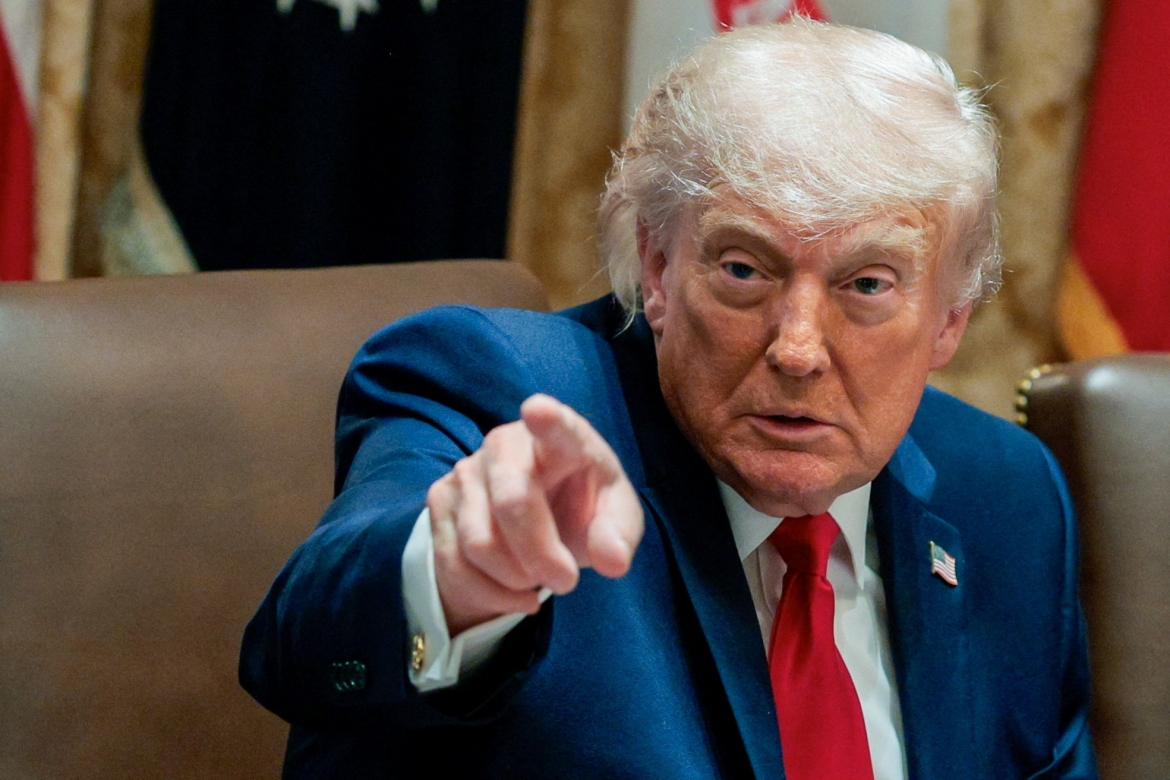
But almost immediately, analysts and investors began asking difficult questions.
What aircraft models were included?
Who exactly were the buyers?
Were financing terms finalized?
What were the delivery schedules?
And perhaps most importantly: was there actually a binding contract at all?
Those unanswered questions quickly changed the market’s reaction.
Instead of surging upward, Boeing’s stock reportedly slipped following the announcement.
For financial observers, the message was clear.
In global aviation, headlines alone are not enough.
The market wanted details.
It wanted certainty.
It wanted signatures.
And while political attention remained focused on Trump’s Beijing declaration, another aviation story was quietly unfolding thousands of kilometers away in Canada.
In Mirabel, Quebec, Airbus secured a firm order from AirAsia for 150 A220 aircraft — a deal with immediate industrial consequences and long-term economic impact.
Unlike the Beijing announcement, the Canadian agreement came with specifics.
The aircraft models were confirmed.
The production plans were established.
The timelines were outlined.
The economic implications were measurable.
Most importantly, the planes will be built in Canada.
That single detail transformed the announcement from a symbolic headline into a powerful industrial commitment.
The Airbus A220 program has already become one of Canada’s most strategically important aerospace projects.
Built primarily in Mirabel, the aircraft represents a rare example of high-value advanced manufacturing with deep supply-chain integration across the country.
Thousands of jobs depend directly or indirectly on the program.
Engineers.
Machinists.
Suppliers.
Logistics operators.
Technology firms.
Training specialists.
And with an order as large as AirAsia’s, the ripple effects could extend for years.
For many analysts, this is where the difference between political theater and economic substance becomes impossible to ignore.
One announcement generated excitement.
The other generated guaranteed work.
One relied heavily on public spectacle.
The other relied on signed commitments.
One produced uncertainty.
The other produced industrial stability.
That contrast has triggered broader conversations about the future of economic leadership, not just in North America but globally.
In recent years, political figures around the world have increasingly embraced headline-driven economics — massive announcements designed to dominate media cycles and project strength.
But investors and industries often operate according to a different logic entirely.
Factories do not run on speeches.
Workers are not paid with press conferences.
Supply chains are not secured through political branding alone.
They depend on contracts, timelines, financing structures, and long-term production guarantees.
That is why the Airbus-AirAsia deal attracted such serious attention within aerospace and financial circles.
Unlike speculative agreements or politically framed declarations, the A220 order directly strengthens manufacturing continuity inside Canada.
It also reinforces Canada’s growing role in the global aerospace sector at a time when international supply chains are being restructured amid geopolitical uncertainty.
Some analysts now argue that the Mirabel agreement represents something larger than a simple aircraft sale.
It may signal a gradual shift in how countries define economic influence in the twenty-first century.
For decades, economic prestige was often associated with scale, dominance, and public visibility.
Biggest deals.
Biggest announcements.
Biggest numbers.
But increasingly, governments and industries are beginning to value resilience over spectacle.
Reliability over noise.
Execution over branding.
From that perspective, the AirAsia agreement may carry more long-term significance than far louder political announcements elsewhere.
The deal also highlights Canada’s unique position in global manufacturing.
Although often overshadowed by larger economies, Canada has quietly developed highly specialized industrial sectors with international relevance.
Aerospace remains one of the clearest examples.
The country has built a reputation not simply through political messaging, but through technical expertise, workforce reliability, and production quality.
That reputation matters deeply in aviation, where delays, uncertainty, and supply-chain disruptions can cost companies billions.
For Airbus, securing long-term confidence in the A220 program strengthens its ability to compete globally against Boeing in the narrow-body aircraft market.
For Canada, it reinforces the country’s role as more than just a resource economy.
And for workers in Quebec and across the broader aerospace sector, it provides something increasingly rare in modern industry: predictability.
Meanwhile, the Boeing announcement continues to face scrutiny.
Some observers caution that the deal may still materialize into something substantial.
Others note that international aircraft negotiations are often intentionally vague in early stages.
But the market reaction itself revealed an important truth.
Investors are becoming more cautious about separating political messaging from economic reality.
The world has entered an era where announcements alone no longer guarantee confidence.
Evidence matters.
Contracts matter.
Execution matters.
That may ultimately be the biggest lesson from this week’s two aviation stories.
In Beijing, the world witnessed the power of political spectacle.
In Mirabel, it witnessed the power of industrial certainty.
One captured attention instantly.
The other may shape jobs, production, and economic stability for years.
And in the long run, history often remembers the agreements that were actually built — not merely the headlines that briefly dominated the news cycle.






