By XAMXAM
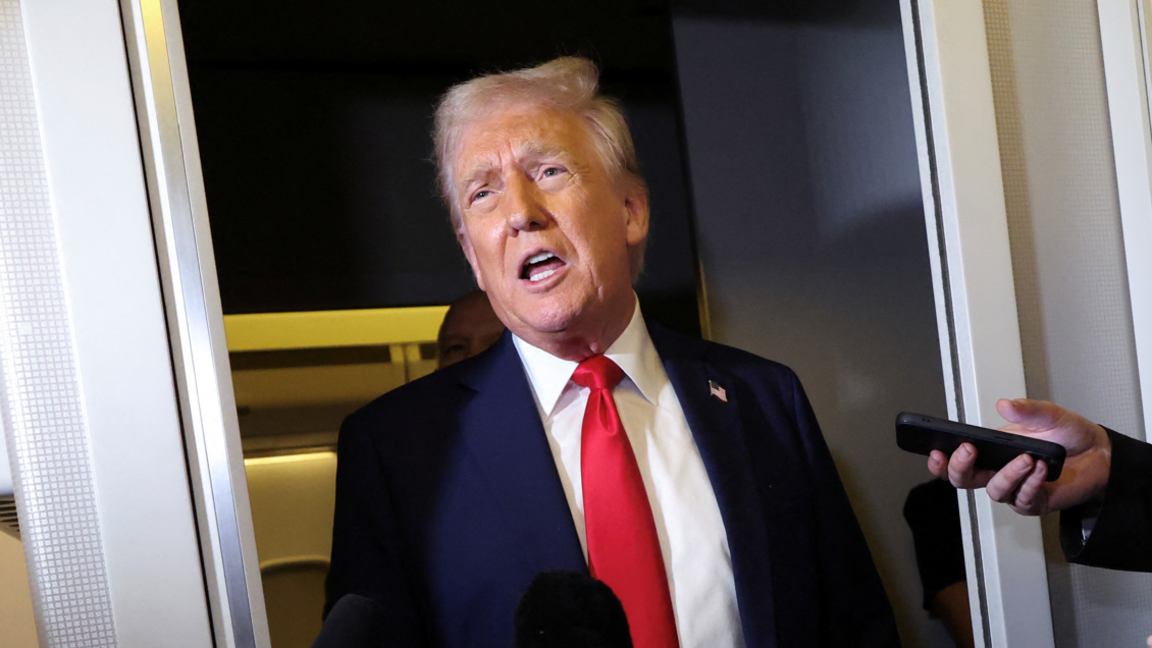
WASHINGTON — A series of public statements by Donald Trump suggesting readiness for military confrontation has prompted an unusually visible recalibration among U.S. partners, with several governments signaling limits to cooperation even as they stop short of a formal break.
The shift, unfolding across the Middle East, Europe, and North America, reflects growing unease over Washington’s tone and tactics rather than a unified rejection of U.S. leadership. Still, diplomats and analysts say the pattern is unmistakable: allies are hedging, diversifying relationships, and, in some cases, preparing contingency plans that assume American unpredictability.
Middle East Partners Draw Clear Lines
The most consequential signals have come from the Persian Gulf. Saudi Arabia and the United Arab Emirates, long key security partners of the United States, have publicly emphasized that their airspace would not be available for a U.S. attack on Iran absent clear international authorization. The statements followed comments from Mr. Trump indicating that military options were “on the table” if Tehran failed to reach a deal.
While neither Riyadh nor Abu Dhabi questioned the strategic partnership outright, the emphasis on sovereignty and restraint marked a departure from past crises, when quiet cooperation was often assumed. Regional analysts noted that both countries have invested heavily in de-escalation channels with Iran in recent years, driven by economic diversification agendas and a desire to insulate themselves from regional shocks.
Iranian officials responded by warning that any limited strike would be treated as the beginning of a wider war — language that underscored the risks of miscalculation even as diplomatic backchannels remain open.
Europe Looks East — and Elsewhere
In Europe, the reaction has been more subtle but no less significant. Keir Starmer, who has sought to maintain close ties with Washington, recently traveled to Beijing, framing engagement with China as a matter of national interest. The visit, the first by a British leader in several years, was widely read as a signal that London is broadening its diplomatic options amid uncertainty over U.S. policy direction.
European Union officials, for their part, have accelerated trade talks with India, describing a potential agreement as a strategic hedge in a more fragmented global economy. Though not explicitly linked to Washington, the timing has reinforced perceptions that Europe is preparing for a less predictable transatlantic relationship.
At the same time, European leaders have pushed back publicly against comments by Mr. Trump that appeared to minimize NATO allies’ sacrifices in Afghanistan. Canadian officials, in particular, highlighted their country’s role after the invocation of Article 5 following the September 11 attacks, emphasizing that alliance commitments are measured in lives as well as statements.
Canada’s Assertive Turn
Canada has emerged as one of the clearest examples of recalibration rather than rupture. Mark Carney has publicly affirmed the alliance with the United States while simultaneously deepening economic and security ties with Asia, including China and South Korea.
Ottawa has framed these moves as pragmatic, not punitive. Still, Canadian officials have been blunt in rejecting the idea that their country will automatically align with U.S. trade or military initiatives, particularly when tariffs or unilateral actions are involved. Recent announcements of cooperation with South Korean manufacturers and expanded Arctic engagement have reinforced the message that Canada is building redundancy into its foreign policy.
Syria, Russia, and Shifting Alignments
Elsewhere, developments in Syria have added to the sense of drift. Syria’s interim leadership has engaged Moscow in talks aimed at strengthening ties with Russia, even as Washington reassesses its role in the region. The optics — a renewed embrace of Moscow at a moment of heightened U.S.–Russia tension — have fueled criticism that American influence is waning in theaters where it once dominated.
U.S. officials caution against overinterpreting such moves, noting that regional actors often pursue parallel relationships without abandoning existing ones. Still, the symbolism has resonated at a moment when allies are publicly emphasizing independence.
Markets, Trade, and the Cost of Uncertainty
Beyond diplomacy, economic indicators have amplified concerns. Currency markets have shown volatility amid tariff threats and shifting trade relationships, while multinational firms have accelerated investment decisions in Asia and Europe. Economists warn that the cumulative effect of uncertainty — rather than any single policy — could erode the United States’ long-standing advantage as a predictable anchor of the global system.
“This is less about one confrontation than about expectations,” said one international trade expert. “When partners can’t model U.S. behavior with confidence, they build alternatives.”
War Talk vs. War Reality
Despite the dramatic headlines, U.S. officials insist that no immediate military action has been authorized and that diplomatic options remain active. Defense planners emphasize that large-scale operations would require extensive coordination and congressional engagement, neither of which has been announced.
Yet the rhetoric itself has consequences. Former diplomats note that repeated public threats narrow diplomatic space, embolden hard-liners abroad, and pressure allies to clarify positions sooner than they might otherwise choose.
A World Adjusting, Not Abandoning
For now, the evidence points less to a wholesale abandonment of the United States than to a world adjusting to perceived volatility at its center. Allies continue to cooperate with Washington on intelligence, defense, and trade, but with clearer red lines and more visible hedges.
Whether that adjustment hardens into lasting realignment may depend on what comes next: sustained diplomacy or further escalation; predictability or surprise. In the meantime, the message from many capitals is cautious but unmistakable — partnership, yes, but not at any price, and not without choices.
As one European official put it privately, “We are not turning our backs. We are turning on the lights.”