Canada has made its most assertive Arctic move in decades, sending a clear warning to Washington that sovereignty is no longer just a legal argument—it is now a physical reality. Speaking after announcing $7 billion in funding for new Arctic icebreakers, Prime Minister Mark Carney bluntly stated that control is defined by presence, not paper claims. The message was unmistakable: the era of the United States treating the Northwest Passage as an “international highway” is coming to an end.
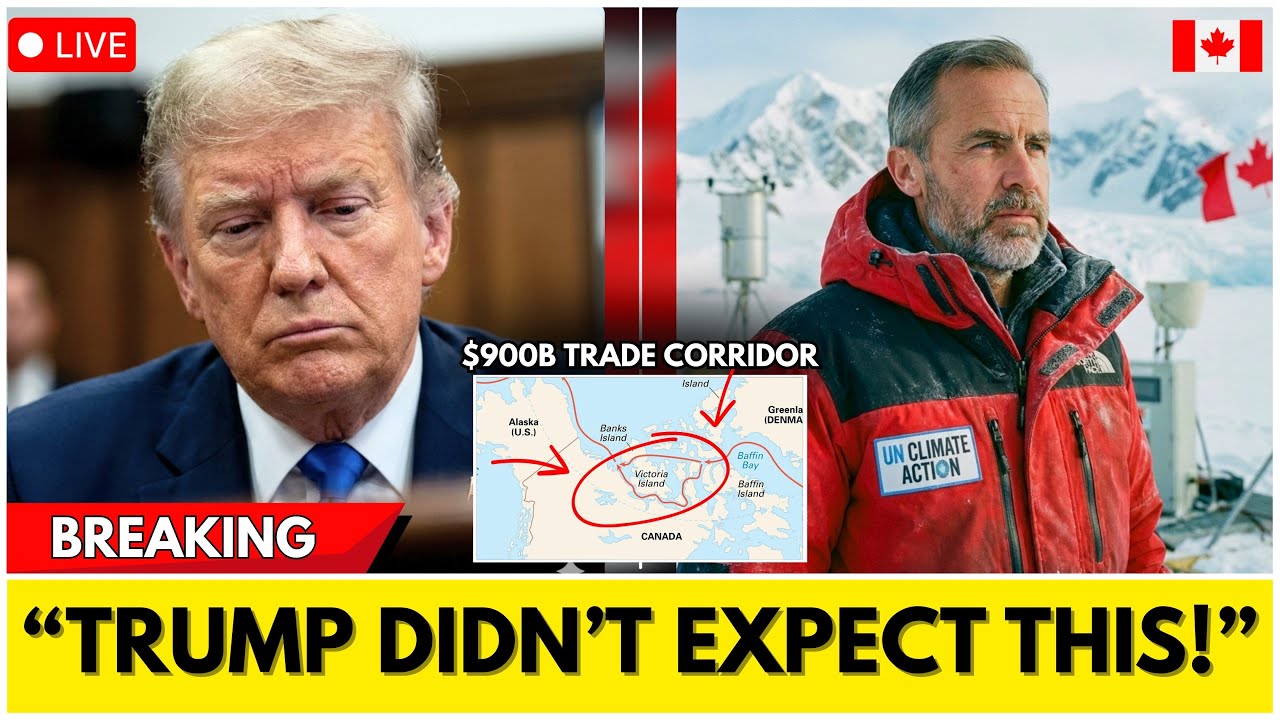
For more than 70 years, the U.S. has rejected Canada’s claim that the Northwest Passage constitutes internal Canadian waters. American ships and submarines transited the route without permission, backed by the simple reality that Canada lacked the infrastructure to stop them. With minimal ports, limited icebreaking capacity, and almost no year-round military presence, Ottawa’s sovereignty claims were easy for Washington, Moscow, and Beijing to ignore.
That equation changed dramatically after Donald Trump escalated economic threats against Canada, floated annexation rhetoric, and imposed aggressive trade measures. Instead of forcing submission, Trump’s pressure pushed Ottawa to act. Carney identified the Arctic as both a vulnerability and an opportunity: a rapidly opening shipping corridor that could slash thousands of kilometers off Asia-Europe routes and unlock access to vast reserves of critical minerals essential for energy, defense, and technology.
The Northwest Passage is no longer a frozen fantasy. Climate change has turned it into a viable trade route, with experts projecting seasonal ice-free conditions by the 2030s. By mid-century, year-round navigation with icebreaker support is plausible. Even a modest share of global shipping—2 to 5 percent—could translate into hundreds of billions of dollars annually. More importantly, Arctic ports and icebreaker escorts make Canada’s mineral wealth economically accessible for the first time.
Carney’s strategy focuses on turning sovereignty into enforceable fact. Investments include upgrading the Port of Churchill, expanding northern airports and roads, deploying advanced surveillance systems, and commissioning polar-class icebreakers capable of operating year-round. Once Canada can patrol, service, inspect, and regulate vessels, ships will comply with Canadian rules regardless of Washington’s legal objections. De facto control, not diplomatic debate, will define reality.
The irony is stark. By insisting the passage is international waters, the U.S. strengthens the very precedent China and Russia could exploit. Canada’s Arctic build-up ultimately enhances North American security, but it also reduces American leverage. Trump sought to pressure an ally into compliance; instead, he triggered the largest Arctic infrastructure expansion in Canadian history. As the ice melts and the ports rise, one truth is becoming unavoidable: in the Arctic, Canada is no longer asking for recognition—it is enforcing it.






