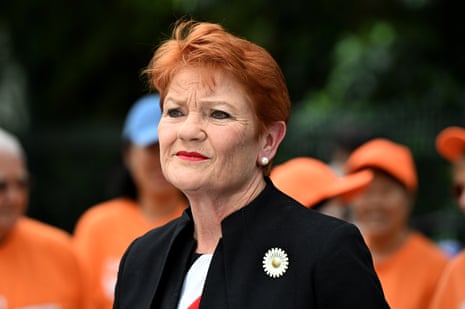
Pauline Hanson has reignited one of the biggest political debates in Australia after declaring she is ready to become Prime Minister and revealing she is considering a run for a seat in the House of Representatives.
The comments immediately sparked fierce reactions.
Supporters described the move as proof that One Nation is gaining momentum.
Critics dismissed the idea as political grandstanding.
But the strongest reaction may not actually be about Pauline Hanson herself.
It may be about why more Australians are becoming willing to listen to politicians outside the traditional political system.

Pauline Hanson’s latest comments have reignited debate about voter frustration, political trust and the changing mood of Australian politics.
Hanson said she would not rule out becoming Prime Minister and suggested she is considering a move into the lower house, a necessary step for anyone seeking to seriously pursue Australia’s top political position.
The declaration immediately drew national attention.
Not because Australia suddenly expects a One Nation government tomorrow.
But because the political environment now looks very different from the one Hanson faced years ago.
Cost-of-living pressure remains intense.
Housing affordability continues dominating public discussion.
Many households feel financially squeezed.
Trust in political institutions has become increasingly fragile.
That combination creates fertile ground for outsider political movements.
And that may be the real reason Hanson’s comments are attracting so much attention.
For decades, One Nation largely operated outside the political mainstream.
The party generated controversy.
It influenced national debates.
But few people seriously discussed the possibility of it becoming a major governing force.
That conversation has started changing.
Not necessarily because Australians suddenly agree on everything Hanson says.
But because frustration with the major parties has continued growing.
That frustration is now becoming one of the most important forces in Australian politics.
Many voters increasingly feel neither side is offering solutions that match the scale of the pressures they are facing.
Housing costs remain high.
Rents remain under pressure.
Migration debates continue dominating headlines.
Household budgets remain stretched.
Against that backdrop, politicians positioning themselves as alternatives often find a more receptive audience.
That is the space Hanson has spent years trying to occupy.

Her supporters argue she speaks openly about issues many Australians believe major parties avoid.
Her critics argue she remains one of the most divisive political figures in modern Australian history.
Neither side appears willing to shift.
That divide helps explain why stories involving Hanson continue generating strong reactions.
People are rarely neutral about Pauline Hanson.
And emotionally charged political figures often attract attention far beyond their actual parliamentary numbers.
The bigger political challenge sits elsewhere.
Major parties are now being forced to confront why outsider movements continue attracting support.
Because support for alternative parties rarely grows in isolation.
It usually reflects dissatisfaction already building inside the electorate.
That dissatisfaction can emerge from many different pressures.
Economic concerns.
Cultural debates.
Immigration arguments.
Questions about political trust.
Questions about representation.
When those pressures begin overlapping, voters often start looking beyond traditional political options.
That is why Hanson’s comments have become about much more than personal ambition.
The discussion has quickly evolved into a broader conversation about where Australian politics may be heading next.
Some analysts argue Australia is entering a period where support for minor parties and independents could continue growing.
Others believe frustration will eventually settle and voters will return to the major parties.
For now, nobody can say with certainty which direction the country will move.
What is clear is that public frustration remains a powerful political force.
And politicians who tap into that frustration often attract attention regardless of whether critics consider their goals realistic.
That is exactly what Hanson’s latest comments have done.
The declaration has reignited discussion about leadership, trust and political alternatives.
Supporters see an opportunity for disruption.
Critics see a warning sign.
Either way, the reaction reveals something important about the current political mood.
Australians are increasingly willing to question the political status quo.
And once voters begin seriously exploring alternatives, major parties often face a much harder task rebuilding confidence.
That may ultimately be the bigger story here.
Not whether Pauline Hanson becomes Prime Minister.
But why the idea no longer sounds impossible to some frustrated voters.
Because when outsider political figures start gaining attention, it often reflects a deeper search for answers taking place across the electorate itself.
And that search appears far from over.






