Canada’s Energy Expansion Sparks New Debate Over Economic Growth, Energy Security, and Environmental Commitments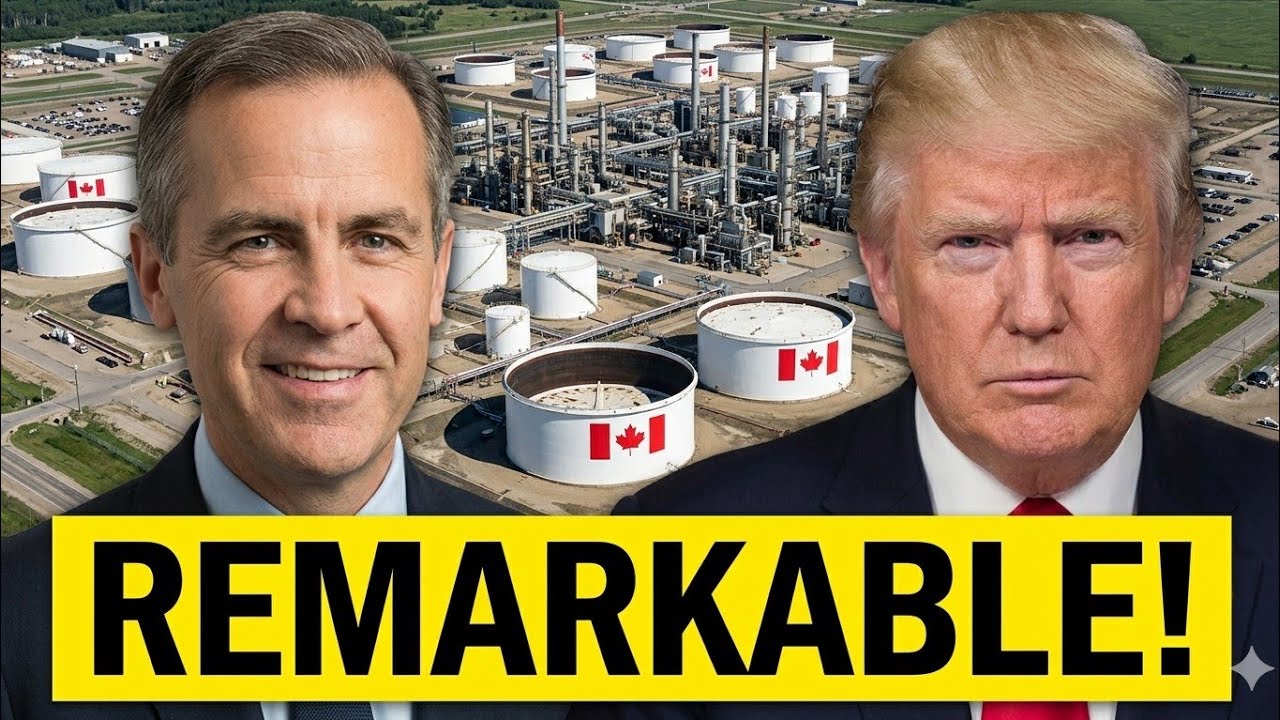
Canada’s energy sector has become the focus of renewed national attention as production from Alberta’s oil sands continues to expand, placing the country among the world’s largest oil producers. The discussion has intensified amid growing interest in energy security, export diversification, and long-term economic development, while also raising questions about environmental policy and Canada’s transition toward lower-emission energy systems.
The central issue highlighted in recent discussions is the scale of Canada’s oil sands resources and the role they now play in both the national economy and international energy markets. Located primarily in northeastern Alberta, the oil sands contain the vast majority of Canada’s proven oil reserves and have become a cornerstone of the country’s resource economy.
According to figures referenced in the transcript, Canada holds approximately 163 billion barrels of proven oil reserves, placing it among the leading reserve holders globally. More than 95 per cent of those reserves are associated with the oil sands, a resource base that has transformed Alberta into one of North America’s most significant energy-producing regions.
In recent years, production levels have continued to climb. The transcript notes that Canadian crude oil production averaged more than five million barrels per day in 2024, establishing a new annual record. Output remained elevated through 2025, reinforcing Canada’s position as one of the four largest oil-producing countries in the world.
The growth has been driven not only by resource availability but also by advances in extraction technologies. Industry operators have increasingly relied on both open-pit mining and steam-assisted gravity drainage methods to access bitumen deposits, allowing production to expand beyond what many analysts once considered feasible.
At the same time, major energy companies have continued investing heavily in long-term development. Firms such as Canadian Natural Resources Limited, Suncor Energy, Cenovus Energy, and Imperial Oil have all announced expansion plans or production increases aimed at sustaining growth throughout the coming decade.
The discussion has also been shaped by infrastructure developments that have altered Canada’s access to global markets. For years, producers faced limitations because most exports were directed south into the United States, often resulting in discounted prices for Canadian crude.
A major turning point came with the expansion of the Trans Mountain pipeline system. The project substantially increased export capacity to Canada’s Pacific coast, providing producers with greater access to Asian markets and reducing dependence on a single export destination.


The transcript argues that the expanded pipeline network has already narrowed the price gap between Western Canadian crude and benchmark U.S. oil prices. As a result, producers have reportedly gained billions of dollars in additional revenue while strengthening Canada’s position in international energy trade.
Economic impacts have become a major part of the national conversation. Energy products were identified in the transcript as Canada’s largest export category, with the oil and gas sector contributing tens of billions of dollars annually to national economic output. Alberta, in particular, remains heavily dependent on resource revenues generated by energy production.
Supporters of continued expansion argue that oil sands development contributes significantly to employment, government revenues, and economic growth. The transcript highlights the industry’s role in supporting hundreds of thousands of direct and indirect jobs while generating substantial royalty payments that help finance public services.
The debate extends beyond economics. Canada’s role as a major supplier of crude oil to the United States has become increasingly important in discussions about continental energy security. The transcript notes that Canada now supplies a majority share of U.S. crude oil imports, reflecting a major shift away from dependence on overseas suppliers.
Environmental concerns, however, continue to occupy a central place in public policy discussions. Oil sands production remains one of the country’s largest industrial sources of greenhouse gas emissions, creating tension between economic development goals and Canada’s climate commitments.
Industry leaders have responded by promoting emissions-reduction initiatives through the Pathways Alliance, a coalition representing most oil sands producers. The alliance has proposed large-scale carbon capture and storage projects intended to reduce emissions while allowing production to continue expanding.
Critics and independent researchers cited in the transcript have questioned whether these objectives can be achieved within the proposed timelines. Those concerns have prompted renewed debate across Canada’s political landscape regarding the balance between environmental responsibility and economic competitiveness.
The discussion also intersects with federal politics. Prime Minister Mark Carney has faced growing scrutiny in Ottawa over how Canada should manage its energy future while pursuing emissions-reduction commitments. The competing priorities have highlighted widening divisions within Parliament and among provincial governments.
Some provinces view expanded energy development as essential to economic prosperity, while others emphasize the urgency of accelerating decarbonization efforts. These differing perspectives continue to shape national conversations surrounding resource development and infrastructure investment.
Observers note that Canada’s energy strategy increasingly carries international implications. With exports reaching markets in Asia as well as the United States, decisions made in Alberta now influence broader discussions about global supply chains, trade relationships, and long-term energy security.
The transcript further suggests that future production growth could require additional pipeline infrastructure if current forecasts materialize. Industry projections referenced in the discussion anticipate continued increases in oil sands output through 2030 and beyond, potentially creating new debates over transportation capacity and environmental approvals.
At the same time, supporters of expansion argue that Canada’s large reserve base provides long-term stability unmatched by many competing producers. They contend that oil sands facilities offer decades of production potential and remain economically viable even during periods of lower commodity prices.
As the debate continues, policymakers, industry leaders, environmental advocates, and investors face difficult questions about Canada’s future direction. The discussion encompasses not only resource development but also broader issues of economic resilience, climate policy, technological innovation, and Canada’s position within the global energy system.
Whether future governments prioritize accelerated production, stronger emissions targets, or a combination of both, the conversation surrounding Alberta’s oil sands is likely to remain at the centre of Canada’s political and economic agenda. For now, the debate remains unresolved within Canada’s broader political landscape.






