Trump BLINDSIDED as Ex-Fed Chair CONFRONTS HIM!!
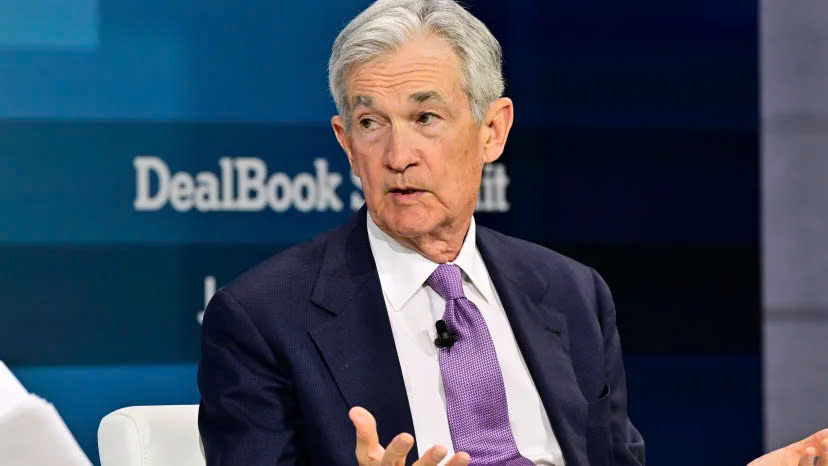
WASHINGTON — Jerome Powell, the former chair of the Federal Reserve, delivered a pointed defense of the central bank’s independence in a speech this week, accepting an award for courage in the face of political pressure from President Donald J. Trump.
The address, given as Mr. Powell received the John F. Kennedy Profile in Courage Award, offered a rare public rebuke of the administration’s efforts to influence monetary policy.
Resisting Political Interference
Mr. Powell, who stepped down as Fed chair in May but remains a governor until 2028, explained his decision to stay on the board. He said recent actions by the Trump administration left him no choice but to continue serving to safeguard the institution’s integrity.
The former chair emphasized that the Federal Reserve must make decisions based solely on economic data and its dual mandate of price stability and maximum employment, without regard for political preferences.
Award for Standing Firm
The Kennedy family and associated institutions honored Mr. Powell for resisting what they described as unprecedented attempts to undermine the Fed. The award recognizes individuals who have shown courage in public service, often against powerful opposition.
In his remarks, Mr. Powell highlighted the long tradition of insulating monetary policy from short-term political pressure, a practice followed by advanced economies worldwide.
Trump’s Attacks
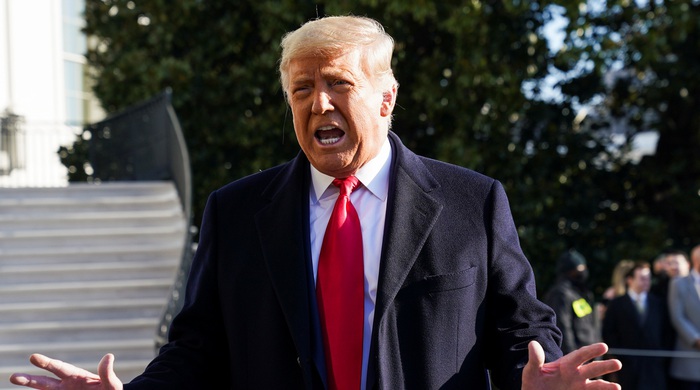
The speech came after months of public criticism from Mr. Trump, who repeatedly attacked Mr. Powell, calling for his removal and accusing him of harming the economy. The president also pursued investigations into the Fed, including cost overruns on a building renovation.
Mr. Powell responded directly in a video statement earlier this year, warning that such actions threatened the Fed’s ability to serve the public without fear or favor.
Broader Context
The conflict intensified after Mr. Trump nominated Kevin Warsh as the new Fed chair. Mr. Powell’s decision to remain on the board has prevented the administration from immediately gaining a majority on the seven-member Board of Governors.
Legal challenges have also arisen over attempts to remove other governors, including Lisa Cook, with courts intervening in some cases.
Defending Institutional Norms
In his award acceptance speech, Mr. Powell stressed that the Fed’s credibility depends on its perceived independence. He warned that allowing political interference would erode public trust and damage the economy over time.
He noted that administrations of both parties have historically respected the Fed’s autonomy, even when they disagreed with its decisions.
Public Service and Principle
Mr. Powell framed his choice to stay as a matter of principle. He said public service sometimes requires standing firm against threats, and that he intended to fulfill the term to which the Senate had confirmed him.
The speech was modest in tone but firm in substance, drawing applause from an audience that included elected officials and civic leaders.
Reactions in Washington
The White House has not issued an official response to the speech. However, allies of the president have continued to criticize Mr. Powell, portraying him as resistant to necessary economic adjustments.
Some Republican lawmakers have supported Mr. Trump’s push for greater influence over the Fed, arguing that current policy settings are harming growth.
Democratic Praise
Democrats and institutionalists have praised Mr. Powell’s stance. They view his resistance as a defense of democratic norms and the separation of powers in economic policymaking.
The Kennedy award itself has been seen by some as a symbolic rebuke of the administration’s approach to independent institutions.
Longer-Term Implications
The episode raises broader questions about the future independence of the Federal Reserve. Legal experts warn that repeated political attacks could deter qualified candidates from serving and weaken the institution’s effectiveness.
Mr. Powell’s decision to remain on the board ensures continuity but also prolongs the tension between the executive branch and the central bank.
Historical Parallel
The speech drew comparisons to past moments when Fed chairs faced political pressure. Mr. Powell referenced the long tradition of nonpartisan monetary policy and urged its preservation for future generations.
Economic Backdrop
The conflict occurs as the U.S. economy grapples with inflation, growth concerns and the effects of tariffs and global tensions. The Fed’s decisions on interest rates remain central to market stability.
Public Perception
Polls suggest many Americans value the Fed’s independence, even if they disagree with specific policy choices. Mr. Powell’s emphasis on serving the public rather than any political party resonated with institutional defenders.
Path Forward
As Mr. Powell continues his term as governor, the administration will likely pursue its preferred policies through nominations and public pressure. The outcome of these efforts could shape the Fed’s role for years to come.
For now, Mr. Powell’s speech serves as a clear statement: the independence of the Federal Reserve is not negotiable, even under intense political fire.






