Canberra woke under a heavy, almost uneasy silence — the kind that usually signals something is about to break.
By mid-morning, it had.
A controversial private member’s bill introduced by Senator Malcolm Roberts sent shockwaves through Parliament House, triggering one of the most polarising national debates Australia has seen in years.
Titled the “Preserving a Sharia-Free Australia Act”, the proposal immediately fractured political lines, split public opinion, and lit up media cycles across the country before most MPs had even finished their first coffee.
Inside Parliament House, the atmosphere shifted from routine procedure to something far more volatile — aides rushing, journalists crowding corridors, and political leaders scrambling to respond in real time.

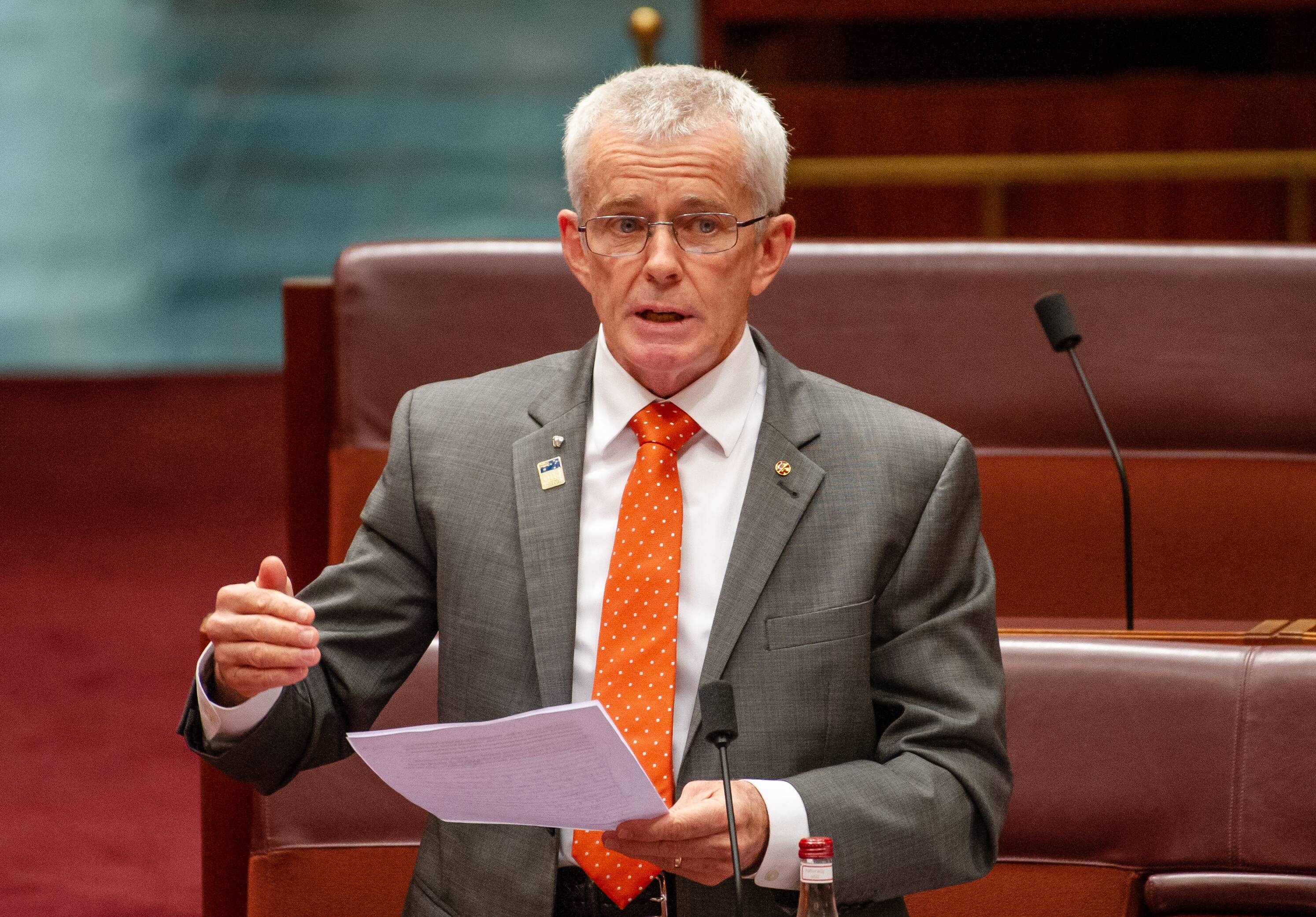
A Bill That Lit the Fuse
At its core, the bill proposes sweeping immigration and residency restrictions targeting individuals who “publicly advocate, endorse, or seek implementation of Sharia-based legal structures in conflict with Australian constitutional authority.”
It also includes provisions allowing visa refusal or deportation of non-citizens deemed to be promoting parallel legal systems rooted in religious doctrine.
To supporters, the language is direct and necessary. To critics, it is explosive — and dangerously broad.
Within hours of its release, legal scholars, civil liberties groups, and political commentators were already dissecting whether the proposal could survive constitutional scrutiny in the High Court.
Roberts Defends His Position
Standing before a wall of cameras and Australian flags, Senator Roberts made no attempt to soften the message.
“Australia has one law for all people,” he declared firmly. “We cannot permit any ideology — religious or otherwise — that seeks to undermine the supremacy of Australian law.”
His remarks ricocheted across television broadcasts and social media feeds within minutes, instantly turning the bill into a national talking point.
Supporters praised his stance as decisive and long overdue. Critics accused him of deliberately inflaming cultural tensions for political gain.
Streets Outside Parliament Turn Tense
As debate intensified inside the chamber, tensions spilled onto the lawns of Parliament House.
One side of the crowd waved national flags and held placards reading “One Nation, One Law.” Opposite them, counter-protesters accused lawmakers of targeting religious communities under the guise of national security.
The two groups shouted across police barriers as officers worked quickly to maintain separation, while Canberra’s typically calm civic space turned into a pressure cooker of competing narratives.


A Senate Chamber on Edge
Inside the Senate, debate quickly escalated into ideological confrontation.
Government-aligned senators framed the bill as a preventative security measure, arguing Australia must not repeat the mistakes seen in parts of Europe, where debates over integration and parallel communities have become deeply divisive.
“This is not about ordinary Muslims,” one senator insisted. “This is about extremist ideologies incompatible with liberal democracy.”
Opposition MPs pushed back immediately, accusing proponents of deliberately blurring the line between religious belief and extremism.
One described the legislation as “a constitutional hand grenade dressed up as national security policy.”
The phrase spread instantly across headlines and social media feeds.
Legal Alarm Bells Ring
The Australian Human Rights Commission issued a sharply worded warning, arguing the bill risked breaching anti-discrimination protections and international obligations.
Constitutional experts were equally divided.
Some argued Australia’s broad migration powers may allow such a law to proceed, at least in part. Others warned it would enter legally uncharted territory the moment it attempted to define acceptable religious belief under law.
Professor Elaine Mercer of the Australian National University described it as “a legal minefield dressed as policy.”
“The moment the state starts defining belief systems as acceptable or unacceptable,” she said, “the constitutional consequences become extremely complex.”
Communities React With Fear and Frustration
In Muslim communities across Australia, the reaction was immediate and emotional.
Community leaders stressed that most Australian Muslims live peacefully and fully within the framework of national law, but warned the bill risked casting suspicion over entire communities.
In western Sydney, an emergency community meeting stretched late into the evening as residents voiced concern over rising tension and online hostility.
“We are Australians,” one imam told reporters. “We obey Australian law. We contribute to this country. But today, many families feel like they are being treated as suspects because of their faith.”
Mosques in Sydney and Melbourne also reported increased security concerns amid rising online rhetoric.

International Ripples Begin
Outside Australia, the debate quickly drew attention.
Commentators in Britain, Canada, and Europe compared the proposal to past immigration crackdowns that triggered long-running debates over multiculturalism and national identity.
Some conservative figures overseas praised the move as a strong stance on sovereignty and law enforcement.
Human rights organisations, however, warned it could set a dangerous precedent in democratic nations already grappling with cultural division.
Diplomatic observers privately noted potential strain in Australia’s relations with several Muslim-majority countries across the Indo-Pacific region.
A Nation Split Down the Middle
By evening, Australia’s media landscape had become a battleground of competing narratives.
Conservative commentators framed Roberts as a politician finally willing to address difficult questions others avoid.
Progressive voices warned the country was sliding into identity-based politics with unpredictable consequences.
Polling released shortly after the announcement showed a sharply divided public: strong support in some regional and outer-suburban areas, but deep concern among younger Australians and urban professionals.
A Defiant Final Word
Despite mounting criticism, Roberts remained unmoved.
In a late-night interview, he rejected accusations of discrimination and insisted the bill was about ideology, not faith.
“If a belief system seeks to supersede Australian law,” he said, “Australians have every right to decide whether that ideology belongs here.”
The statement triggered another wave of online reaction — hashtags for and against the bill trending simultaneously across platforms.
A Political Moment That Won’t Fade
As midnight approached over Canberra, Parliament House stood illuminated — calm on the outside, but carrying the weight of a debate that had already escaped its walls.
Senior political figures privately acknowledged the bill may never pass in its current form. Amendments are expected. Legal challenges are almost certain.
But regardless of its legislative fate, one thing is already clear: the conversation it sparked will not disappear.
Australia now finds itself confronting a deeper question than immigration policy alone — a question about identity, cohesion, and the limits of pluralism in a rapidly changing nation.
And for now, there is no easy answer.






