Canada Is ABOUT TO BECOME a Top-5 LNG Exporter — Shell’s Decision Makes It Happen
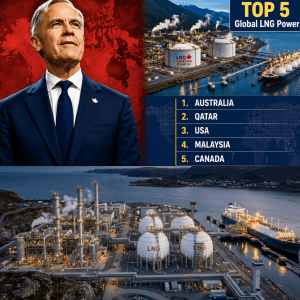
CALGARY — Canada stands on the cusp of a major transformation in global energy markets. Once a negligible player in liquefied natural gas exports, the country is now positioned to join the world’s top five LNG producers if a pivotal project expansion moves forward.
The development could reshape Canada’s economic role on the international stage and reduce its heavy dependence on the United States market.

Rapid Rise in LNG Exports
Just one year ago, Canada exported virtually no liquefied natural gas. Today, the country is already shipping cargoes to key Asian buyers including Japan, South Korea and China. The emergence as an exporter marks a significant shift for a nation long known primarily for pipeline deliveries to its southern neighbor.
Phase Two Project Critical
The potential leap to top-tier status hinges on LNG Canada’s proposed Phase Two expansion. If approved by the December 31 deadline, the project would dramatically increase export capacity. By the early 2030s, Canada could be exporting up to 50 million tonnes of LNG annually.
That volume would place the country alongside established giants such as the United States, Qatar and Australia in the global LNG rankings.
Economic Impact Substantial
The economic stakes are considerable. Industry estimates suggest the expanded capacity could generate approximately $40 billion in annual export revenue. The project promises thousands of construction and operational jobs, increased government royalties and broader economic benefits across British Columbia and beyond.
For a country seeking to diversify its energy exports, the timing appears advantageous. Global energy markets remain volatile, and buyers are actively seeking reliable, non-Russian sources of natural gas.
Strategic Diversification
Success in LNG exports would lessen Canada’s reliance on the United States, which has long absorbed the vast majority of its natural gas production. At a moment of persistent trade tensions with Washington, developing Asian markets offers a strategic hedge.
Prime Minister Mark Carney’s government has emphasized the importance of expanding non-U.S. trade relationships as part of a broader economic resilience strategy.
Shell’s Decision Looms Large
The immediate catalyst is an upcoming investment decision by Shell, the majority stakeholder in the LNG Canada consortium. Industry observers describe the choice as make-or-break for the Phase Two expansion.
Approval would signal strong corporate confidence in Canada’s regulatory environment and long-term global demand for its relatively low-carbon LNG.
Environmental and Indigenous Considerations
Significant hurdles remain. Environmental groups have raised concerns about greenhouse gas emissions associated with increased fossil fuel exports. Indigenous communities along proposed pipeline routes continue to demand meaningful consultation and consent.
The federal and provincial governments face pressure to balance economic ambitions with climate commitments and reconciliation obligations.
Global Market Context
Canada’s potential rise comes as the world grapples with energy security challenges. Europe continues seeking alternatives to Russian gas, while Asian economies maintain strong demand for LNG to support economic growth and cleaner power generation.
Canadian LNG, produced with relatively lower emissions intensity than some competitors, could appeal to buyers under increasing carbon border adjustment pressures.
Infrastructure and Regulatory Path
The LNG Canada facility in Kitimat, British Columbia, already represents one of North America’s largest energy investments. Phase Two would add new liquefaction trains and supporting infrastructure.
Regulatory approvals, including environmental assessments and Indigenous impact benefit agreements, must be secured before construction can begin.
Job Creation Potential
Proponents highlight the project’s ability to create high-paying jobs in regions seeking economic diversification. Engineering, construction and long-term operations roles could provide stable employment for thousands of workers.
British Columbia officials have positioned the development as a cornerstone of the province’s future prosperity.
Revenue for Public Services
Increased government revenues from LNG exports could help fund public services, infrastructure and social programs. In an era of fiscal pressures, such income streams are viewed by some policymakers as critical for long-term planning.

Risks and Uncertainties
Global LNG prices remain subject to geopolitical shocks and shifts in demand. A slowdown in Asian economic growth or accelerated renewable energy adoption could alter project economics.
Market analysts caution that over-reliance on any single export strategy carries inherent risks.
Canada’s Energy Transition Role
The LNG expansion debate reflects broader tensions in Canada’s energy future. While critics argue it prolongs dependence on fossil fuels, supporters view it as a pragmatic bridge fuel that can displace dirtier coal power in Asia while Canada develops its renewable potential.
Political Dimensions
The decision carries significant political weight. Federal and provincial leaders must weigh short-term economic gains against long-term climate goals and Indigenous rights.
Public opinion remains divided between economic development priorities and environmental concerns.
Strategic Opportunity
If Phase Two proceeds, Canada would emerge as a more influential player in global energy geopolitics. Reliable LNG supplies from a stable democracy could strengthen alliances and enhance Canada’s international standing.
The coming months will determine whether this opportunity materializes or faces further delays.
Looking Ahead
Shell’s investment decision, combined with regulatory outcomes, will shape Canada’s energy trajectory for decades. The stakes extend beyond economics to questions of sovereignty, environmental responsibility and Canada’s place in a rapidly evolving global order.
For a country seeking greater independence in its trade relationships, becoming a top-tier LNG exporter represents both promise and profound responsibility.






