A major religious and political debate has resurfaced in Sydney after Australia’s largest mosque renewed its application to broadcast the Islamic call to prayer through external loudspeakers, reigniting tensions over noise, cultural identity, planning rules, and community consent.

The proposal, submitted by the Lakemba Mosque in southwest Sydney, has once again drawn widespread public attention and strong reactions from both supporters and opponents, setting the stage for a renewed planning battle.
The mosque, officially known as Masjid Ali Bin Abi Talib, is one of the most prominent Islamic institutions in Australia.
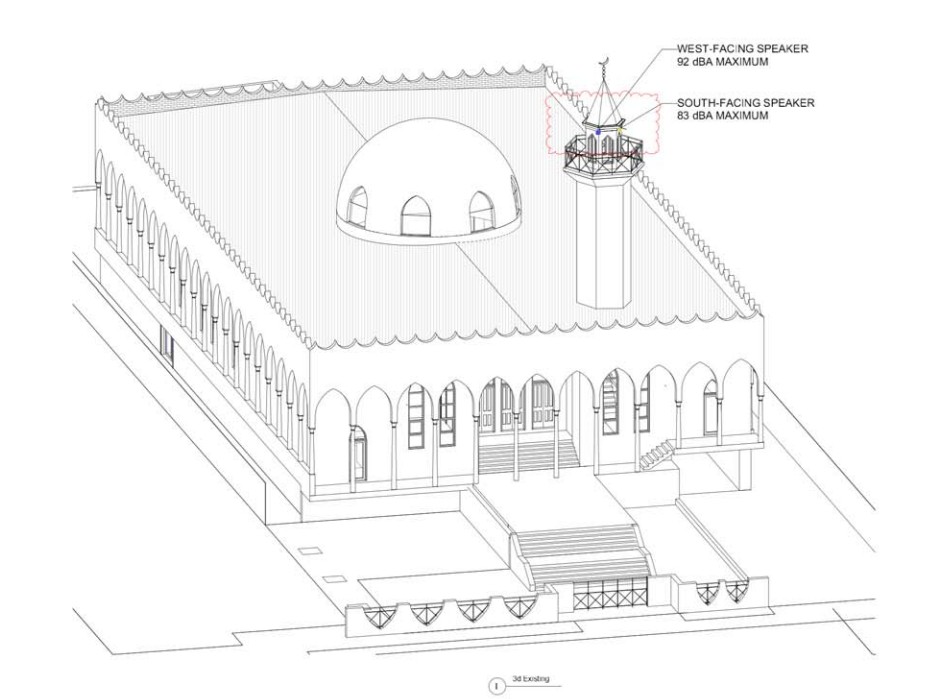
It is now seeking approval to install four loudspeakers on its minaret.
The intention is to broadcast the adhan — the Islamic call to prayer — across the surrounding area for approximately 15 minutes every Friday at midday.
This is the second attempt by the Lebanese Muslim Association (LMA), which operates the mosque, after a previous application was rejected by Canterbury-Bankstown Council last year.
That earlier proposal triggered a significant public response.
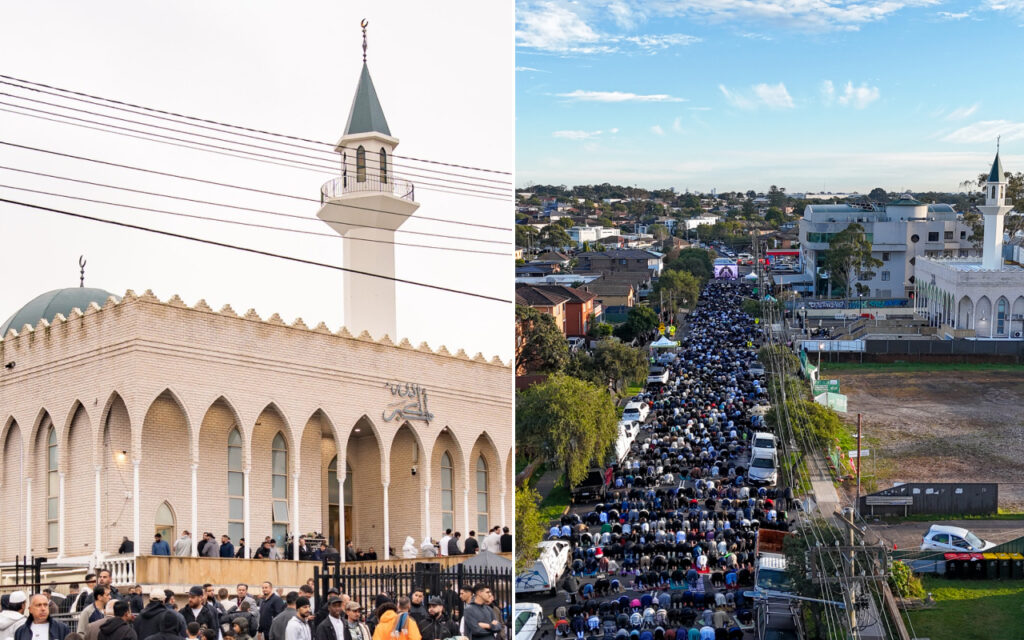
Out of 329 submissions made during the consultation period, all but one opposed the plan.
Concerns raised by residents included noise levels, disruption to daily life, and possible impacts on local property values.
Despite the overwhelming opposition in the public consultation, the LMA has returned with a revised application, reopening debate in the community.
The new submission is now open for public review and feedback.
LMA general secretary Gamel Kheir has strongly defended the proposal, rejecting criticism and accusing opponents of prejudice.
He argued that objections are being misrepresented and said they reflect underlying “Islamophobia” rather than genuine planning concerns.
According to Kheir, the opposition has been framed unfairly and does not represent the true sentiment of the local Muslim community.
He described some of the criticism as “a blatantly racist, ‘Islamophobic’ slur dressed up as concern for civil and community rights.”
Council documents from the earlier application show that the proposal was not formally rejected outright, but instead required further acoustic and environmental impact assessments before reconsideration.
Kheir maintains that the revised submission now addresses those technical requirements.
He also insists that community sentiment within Lakemba itself is supportive of the initiative.
“The community sentiment has been nothing but positive,” he told The Daily Telegraph.
“Those who live in Lakemba have nothing but praise for it because the call to prayer will only be once a week on a Friday at midday.”
He further argued that the sound impact would be minimal.
“You’ll only hear it within a 20m radius of the mosque… if you’re not coming to pray, then you’re not going to hear it,” he said.
His comments have added further fuel to an already highly sensitive debate.
At the core of the dispute is a broader question about religious expression in a secular society.
Kheir pointed to comparisons with Christian practices, particularly church bells.
He questioned why church bells are widely accepted in public life while the Islamic call to prayer faces resistance.
“Are we a multicultural society? Yes, we are… are we a secular country? Yes — it allows for freedom of religion and expression,” he said.
“If the church bells are allowed to ring and we are in favour of those bells ringing then why are we not allowed to do the call to prayer?”
Planning documents submitted by the mosque also make similar comparisons.
They describe the proposed loudspeaker system as a “simple addition” designed to support religious practice and strengthen community identity.
The documents state that the objective of the project is to create a “cultural and Islamic sense of community within the context of the mosque and its surrounds.”
They also include a translation of the adhan text that would be broadcast over the speakers.
The call to prayer includes traditional Islamic phrases such as “Allahu Akbar” and “Ashhadu an la ilaha illa Allah,” repeated in a structured sequence over approximately 15 minutes.
Alongside community debate, technical assessments have played a major role in the application.
An environmental noise impact report submitted with the proposal claims that the sound levels produced by the loudspeakers would comply with both local council regulations and standards set by the New South Wales Environment Protection Authority.
According to the report, the broadcast would remain within acceptable noise limits and would not significantly affect surrounding residential areas.
Despite these assurances, opposition remains strong in parts of the broader community.
Critics argue that even if technically compliant, the broadcast could still alter the character of a predominantly residential neighbourhood.
Some submissions also raised concerns about precedent, questioning whether approval could lead to similar applications from other religious institutions.
The Lakemba Mosque itself is one of the most historically significant Islamic sites in Australia.
Built in the 1970s with international donations, including support linked to the Saudi Royal Family, it has long served as a central place of worship for Sydney’s Muslim population.
The mosque has also been a focal point during moments of national attention.
It is regularly visited by political figures, including Australian prime ministers.
Earlier this year, Prime Minister Anthony Albanese visited the area during a public engagement, where he was reportedly confronted by members of the community in a tense exchange.
The mosque’s broader historical context has also been referenced in public debate.
Following the 2005 Cronulla unrest, large gatherings at the mosque were reported in the days that followed, before violence spread into parts of Sydney’s eastern and southern suburbs.
These historical associations have contributed to the sensitivity surrounding the current proposal.
Supporters of the application argue that the call to prayer is a normal and peaceful religious practice used widely across Muslim-majority countries and in many multicultural cities around the world.
They say the proposal reflects religious inclusion and recognition in a diverse society.
Opponents, however, continue to focus on issues of noise, planning consistency, and community consultation.
They argue that the scale of public opposition in the previous submission cannot be ignored.
The Canterbury-Bankstown Council is now reviewing the revised application, with public submissions once again being accepted.
No final decision has yet been made.
As the debate continues, the proposal has become a focal point for wider discussions about multiculturalism, religious expression, and the balance between individual freedoms and community expectations in modern Australia.
What began as a planning application has now evolved into a national conversation.
And once again, Lakemba finds itself at the centre of it.






