Trump Pressured Canada Again, But Carney Revealed a Much Bigger Strategy

What was supposed to be a routine announcement about a new mining project in Quebec quickly turned into something far more significant.
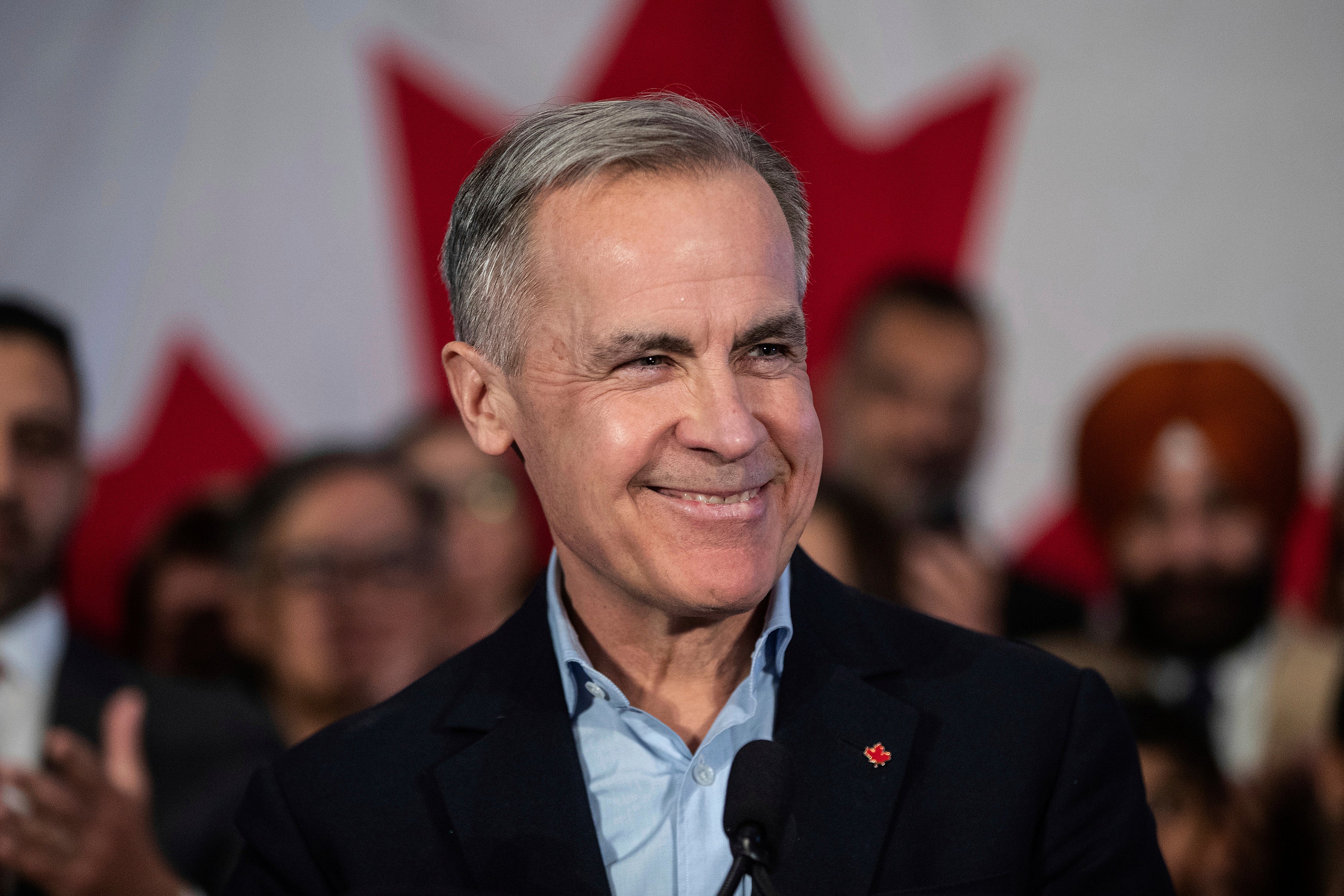
On a rainy day north of Montreal, Canadian Prime Minister Mark Carney stood before reporters to celebrate the launch of a major graphite mine worth billions of dollars.
At first glance, the event seemed focused on economic development and resource extraction. But as Carney spoke, a much broader message began to emerge.
Rather than concentrating solely on the mining project, the Prime Minister highlighted a series of economic indicators that suggested Canada is moving in a new direction.

According to Carney, Canadian exports to countries outside the United States have risen sharply and are on track to double over the next decade.
He also noted that foreign investment in Canada has reached its highest level in more than twenty years, growing at roughly twice the pace of several other G7 economies, including the United States.
Those comments alone signaled confidence in Canada’s economy. Yet the real significance of the speech became clear when questions shifted toward Canada’s relationship with Washington.
The timing was particularly important. Just one day earlier, officials in the Trump administration had criticized Canada over defense spending and announced a pause in participation in a joint defense cooperation board.
Historically, Canadian leaders have responded cautiously to such criticism, often emphasizing the importance of maintaining close ties with their southern neighbor.
Carney, however, adopted a noticeably different tone.
Instead of defending Canada’s position, he calmly pointed to the country’s growing investments in national security and continental defense.
He referenced more than $40 billion in commitments to modernize NORAD, along with additional spending on Arctic surveillance systems, advanced radar technology, and infrastructure designed to detect emerging threats.
The message was clear: Canada intends to remain a strong defense partner, but it is no longer willing to define its security strategy solely through its relationship with the United States.
That became even more evident when Carney stated that Canada would continue cooperating closely with America while simultaneously expanding defense partnerships with other allies as a member of NATO.
For many observers, that remark marked a significant shift.
For decades, Canada’s defense planning has largely revolved around cooperation with the United States. Publicly discussing alternatives in such direct terms is relatively uncommon for a Canadian prime minister.
Yet defense was only part of the story.
Carney revealed that Canada had established more than twenty new economic and security partnerships across five continents within a single year, a pace that reflects a rapidly expanding global strategy.
While trade disputes, tariffs, and political tensions have dominated headlines in Washington, Canada appears to have spent the same period strengthening relationships elsewhere.
This broader diversification effort may ultimately become one of the most important consequences of recent tensions between Ottawa and Washington.
Rather than forcing Canada into a more dependent position, external pressure may have accelerated its efforts to reduce economic and strategic reliance on a single partner.
The graphite mine announced in Quebec offers a powerful example of that strategy.
Graphite is a critical component in electric vehicle batteries, advanced manufacturing, artificial intelligence infrastructure, defense technologies, and energy storage systems.
As global competition for critical minerals intensifies, countries that control reliable supplies are gaining increasing geopolitical influence.
Recognizing this reality, Canada has moved aggressively to expand mining projects, strengthen supply chains, and attract investment into sectors considered essential for future economic growth.
Carney disclosed that Canada signed 56 critical-mineral agreements with more than ten countries over the past year alone.
That figure illustrates how quickly Ottawa is positioning itself within the global race for strategic resources.
Taken together, the economic announcements, defense commitments, and international partnerships reveal a larger vision taking shape.
Rather than reacting to every challenge from Washington, Canada appears to be preparing for a future in which it possesses greater economic flexibility, stronger global connections, and a more diversified network of allies.
As Donald Trump continues applying pressure on America’s northern neighbor, an increasingly important question is emerging.
What happens if Canada’s closest ally gradually becomes a country that needs the United States less than it once did?






