Carney’s New York Move Sends a Message to Washington as Rubio Faces Growing Scrutiny

In a matter of days, two very different events unfolded on opposite sides of the world. Yet together, they revealed something important about the changing dynamics of global influence, trust, and economic leadership.
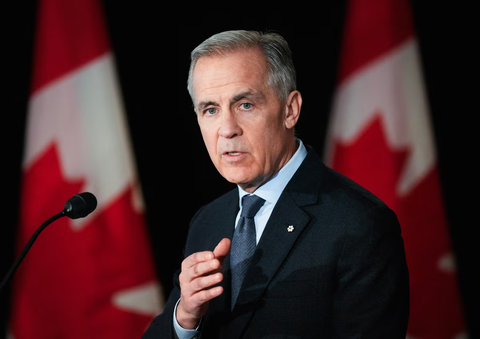
Canadian Prime Minister Mark Carney arrived in New York with a message aimed at some of the world’s most powerful investors and business leaders.
At nearly the same time, U.S. Secretary of State Marco Rubio landed in India, hoping to strengthen ties with a key strategic partner amid growing diplomatic tensions.
On the surface, the two events appeared unrelated. One focused on investment and economic opportunity, while the other centered on diplomacy and international relations.
But beneath the headlines, both stories revolved around the same issue: trust.
Speaking in the financial capital of the United States, Carney began by acknowledging that the world is undergoing a period of major disruption and uncertainty.
Many political leaders have spent recent years warning about global risks, supply chain disruptions, geopolitical conflicts, and economic instability.
Carney chose a different approach.
Instead of focusing on the dangers ahead, he argued that Canada had already begun preparing for them.
He outlined a series of measures introduced during his government’s first year, including tax reductions on income, capital gains, and new business investments.
The message was clear: Canada is not simply reacting to global changes. It is actively positioning itself to benefit from them.
What caught the attention of many investors was the confidence behind that message.
Carney did not present Canada as a country struggling to keep pace with larger economies. Instead, he described a nation seeking to move ahead of the competition.
That argument carried extra weight because of where it was delivered.
Standing in New York, surrounded by influential financial leaders, Carney effectively made the case that Canada could become one of the most attractive destinations in the world for long-term investment.
Then came the statement that shifted the tone of the entire speech.
Carney noted that while Canada possesses abundant natural resources, its most valuable asset may be something far less tangible: trust.
The remark may not have sounded dramatic, but it resonated with investors who increasingly value stability and predictability in an uncertain world.
While Carney was emphasizing confidence and reliability in New York, a very different scene was unfolding thousands of miles away in India.
Marco Rubio’s visit was intended to reinforce cooperation between Washington and New Delhi following months of friction over trade disputes, tariffs, and political disagreements.
However, during a media exchange, a reporter raised concerns about alleged racist comments originating from the United States and questioned whether such rhetoric was harming relations.
The discussion quickly became uncomfortable.
Rubio appeared uncertain about the specific comments being referenced, and the conversation briefly shifted from diplomacy to confusion.
Although the exchange did not change policy or alter any agreements, it attracted significant attention online and raised broader questions about perception and credibility.
For many observers, the moment highlighted a challenge facing governments around the world.
In an era of economic uncertainty and geopolitical competition, trust has become a strategic asset.
Businesses investing billions of dollars seek stable environments where long-term planning remains possible.
Investors look for governments that provide consistency rather than unpredictability.
Countries are increasingly evaluating not only economic opportunities but also the reliability of their international partners.
This is where the connection between Carney’s speech and Rubio’s trip becomes more apparent.
One event projected confidence, predictability, and preparation for the future.
The other underscored how quickly questions about credibility and perception can complicate diplomatic efforts.
Carney argued that a stronger Canada benefits not only Canadians but also the United States.
A stronger ally, he suggested, contributes to regional stability, secure supply chains, reliable energy production, and greater economic resilience across North America.
Rather than framing international relations as a competition with winners and losers, he emphasized mutual benefit and long-term cooperation.
That message arrives at a time when many countries are reassessing their partnerships and searching for dependable economic relationships.
As global uncertainty continues to reshape investment decisions and foreign policy strategies, trust may become one of the world’s most valuable resources.
The bigger question now is not simply which countries possess the largest economies or the strongest militaries.
It is which countries are successfully building trust, attracting confidence, and positioning themselves as reliable partners for the future.
And judging by the message delivered in New York, Canada wants investors to believe it intends to be one of them.






