High above the rugged mountains of western Iran, American satellites captured something the Pentagon never expected to see so soon. Less than two months after the most intense U.S.-Israeli bombing campaign of the 21st century, Iran has clawed back access to its most prized strategic asset: a vast network of underground missile cities buried deep inside reinforced mountain complexes.
According to detailed analysis of commercial satellite imagery released by CNN on May 31, 2026, Iranian engineering teams have already reopened at least 50 of the 69 tunnel entrances that Washington and Jerusalem spent billions of dollars and thousands of precision munitions trying to seal forever.
The images are unmistakable. Bulldozers and dump trucks, some camouflaged with netting and tarps to evade overhead surveillance, have been working around the clock clearing rubble, filling craters, and repaving access roads into the mountainside facilities. What the Pentagon had assessed would take “many months, if not longer,” Iran accomplished in weeks.
A senior U.S. official, speaking on condition of anonymity, admitted to CNN that Tehran “exceeded every timeline set by the intelligence community.” The strategy that was supposed to trap Iran’s ballistic missiles, cruise missiles, and drone swarms inside their mountain vaults has failed spectacularly.
The campaign, dubbed Operation Epic Fury by U.S. planners, had one clear objective: collapse the entrances to these deeply buried bases so the weapons inside could never reach their launch platforms. The tunnels themselves – protected by layers of reinforced concrete and mountain rock – were never the primary target. The missiles stored deep within them were never directly hit. All Washington and Israel needed to do, they believed, was block the doors. Iran has now kicked those doors wide open again.
Satellite photos of one major complex near Kermanshah tell the story in stark detail. Four entrances were completely destroyed by bunker-buster strikes. Today, two are fully cleared and operational. The access roads, once a moonscape of overlapping craters from repeated munitions hits, have been repaired and repaved. Work continues on the remaining two entrances.
Similar scenes repeat across 18 separate underground facilities scattered throughout Iran. The asymmetry is breathtaking: the United States and Israel unleashed the full weight of their most advanced airpower, only for Iran to undo the damage with civilian-grade construction equipment any contractor could rent.
President Trump had repeatedly declared the mission a historic success. “Their missile and drone capabilities have been drastically reduced,” he stated during and after the strikes. “Very few remain. Their capacity to launch is destroyed.” Defense Secretary Pete Hegseth echoed the line, telling reporters that Iran was merely “digging out launchers and remaining missiles” but had “no capacity to replace them” and “no defense industry” left to speak of. Those claims are now colliding head-on with cold, high-resolution satellite reality.
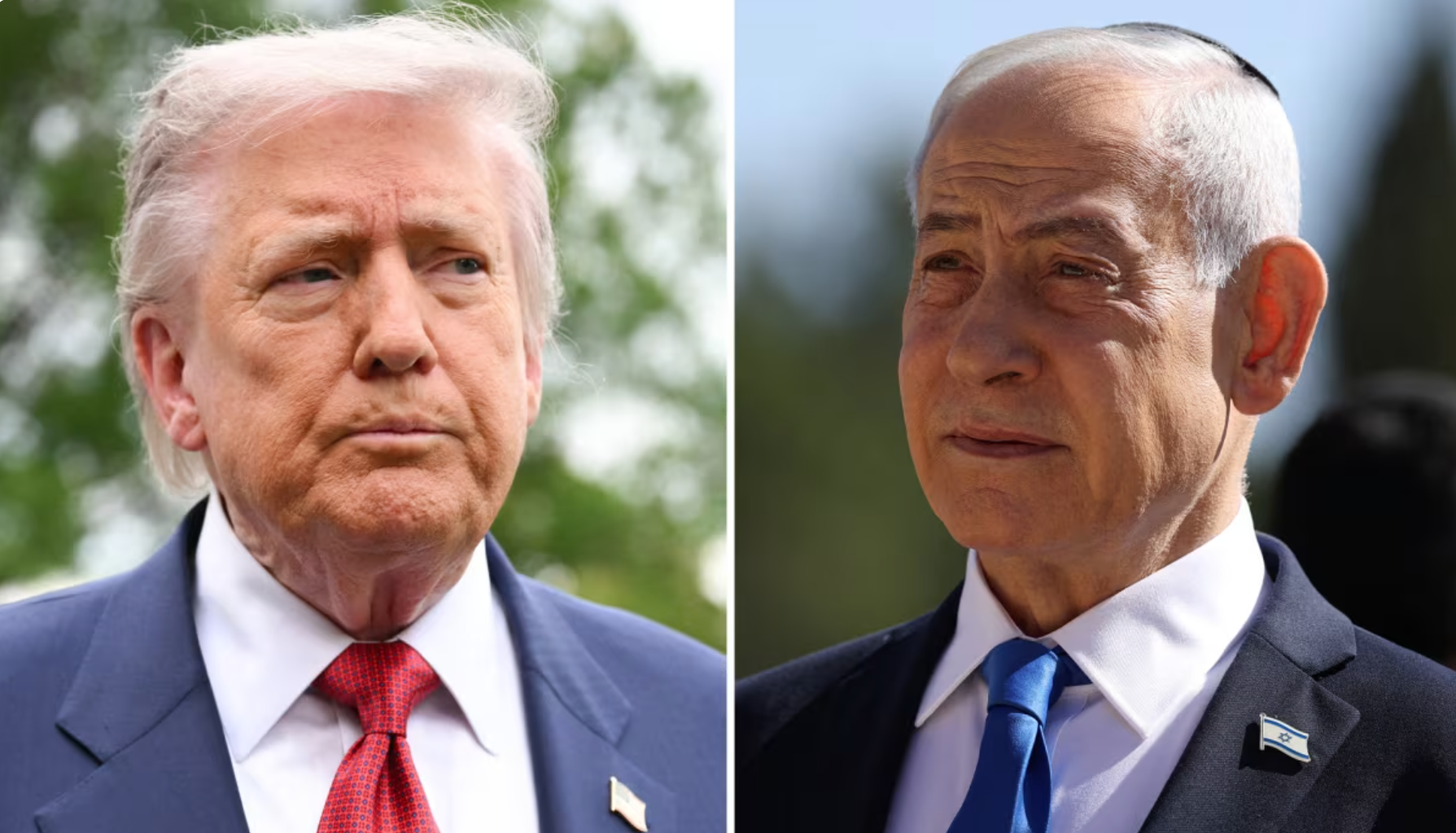
The numbers are sobering. Multiple intelligence assessments circulating in Washington estimate Iran still retains access to approximately 1,000 missiles of varying ranges and types – the same arsenal Trump described as “almost gone.” Because the weapons were stored inside the tunnels when the entrances were sealed, they survived intact. The only thing the strikes achieved was a temporary lock on the garage doors. Those doors are now open. Iranian state television, through Press TV, wasted no time broadcasting what it claimed was footage from inside the newly accessible complexes: rows of intact missile systems lined up in the dimly lit tunnels. While the footage has not been independently verified, its timing – released as CNN’s satellite analysis spread globally – sends an unmistakable message. The arsenal is alive. The launch capability is back.
The revelation lands at the most awkward possible moment for the White House. Even as the satellite images were being analyzed, President Trump was in the Situation Room reviewing a draft preliminary agreement with Tehran. According to multiple reports, he sent the draft back with significantly hardened conditions, including the complete dismantlement of Iran’s enriched uranium reserves. Iran had already rejected previous American proposals as unacceptable. The new demands go even further.
Why harden the negotiating position precisely when satellite evidence shows Iran recovering the very military leverage the strikes were meant to eliminate? The question hangs heavy over the talks. Iran’s position has remained rock-solid: the release of approximately $12 billion in frozen Iranian assets held by the United States must happen first, before any substantive progress. Washington has shown no public willingness to meet that precondition. The result is a classic standoff – one side demanding money before talking, the other demanding uranium before paying. Neither side has blinked.
Qatar, Oman, and Pakistan continue to shuttle between the capitals as intermediaries, but the window for mediation is narrowing fast. Iran’s rapid military recovery has visibly strengthened its hand at the table. Trump’s decision to toughen demands has simultaneously narrowed the space for compromise. The two positions are moving apart, not closer together.
Meanwhile, the economic pain from the restricted Strait of Hormuz continues to mount. Roughly one-fifth of the world’s oil supply normally flows through those waters. Iranian forces maintain effective control, imposing restrictions that have already disrupted global energy markets. Gulf states that desperately need the strait reopened are caught in the middle. Qatar and Oman, key mediators, are feeling the squeeze themselves. Every extra day of restricted passage adds pressure on Asian importers, European economies, and American consumers at the pump. Trump has said publicly he is “in no rush,” but the economic reality suggests urgency whether the administration admits it or not.
The satellite imagery represents more than just an engineering triumph for Iran. It is the most direct challenge yet to the narrative Washington built around the entire military campaign. The story sold to the American public and the world was clear: the strikes had degraded Iran’s capabilities so severely that Tehran would have no choice but to negotiate on U.S. terms. That narrative now lies in ruins. The degradation was temporary. The recovery was faster than any American intelligence projection. The missiles that were supposed to be trapped forever are accessible again.
Experts point to a deeper lesson about the limits of airpower against hardened, underground targets. You can collapse entrances. You cannot easily destroy what lies hundreds of meters beneath solid rock. Iran’s engineers proved they could reverse the damage with basic heavy machinery and determination. The cost of the strikes ran into the billions. The cost of the repairs? A fraction of that. The strategic return on investment for Washington is now being openly questioned in intelligence circles and on Capitol Hill.

Inside Iran, the message is one of resilience. State media frames the reopening as proof that no foreign power can permanently disarm the Islamic Republic. The underground footage broadcast on Press TV is designed to project strength: the missiles are still there, the tunnels are still operational, and the nation is undefeated. For a regime that just lost its Supreme Leader in the opening hours of the conflict, this visible recovery is a powerful domestic rallying cry.
For the Trump administration, the optics are brutal. Hegseth’s public statements downplaying the repairs as “limited” now look increasingly hollow against visual evidence that contradicts the victory lap. The gap between presidential rhetoric and satellite-verified reality is widening at a time when credibility on national security issues is everything.
The week’s developments paint a single, unmistakable picture. CNN published the satellite imagery exposing 50 reopened tunnel entrances. Iranian engineers used bulldozers and dump trucks to achieve what the Pentagon said would take months. Hegseth acknowledged the work but insisted Iran cannot replace lost missiles.
Tehran broadcast footage of what it says is an intact underground arsenal. Trump reviewed the draft deal and made the American position even tougher. Iran continues to demand its $12 billion in frozen assets first. And the Strait of Hormuz remains under effective Iranian restrictions while roughly 1,000 missiles sit ready behind doors that are no longer sealed.
The war was supposed to end Iran’s ability to threaten the region with those missiles. Instead, it only delayed it – by weeks, not years. The inconvenience has passed. The doors are open again.
As negotiators in Islamabad and back-channel diplomats scramble to bridge the growing divide, one thing is certain: the leverage equation has shifted once more. Iran is not coming to the table weakened and desperate. It is arriving with restored military capability, continued economic pressure through the strait, and a very public demonstration that its most important strategic assets survived the most determined assault Washington and Jerusalem could mount.
The missiles are back. The tunnels are open. And the world is watching to see what happens next when a nation that can launch is told the deal has just gotten harder.






