Government acknowledges mistake following review of official information
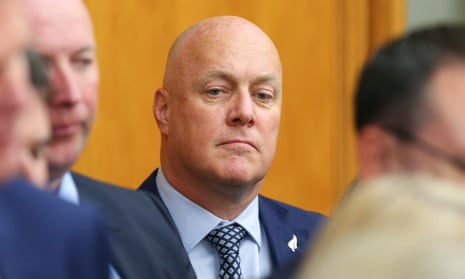
Prime Minister Christopher Luxon and senior ministers have responded to renewed political scrutiny after the Government confirmed an error relating to a recent announcement and subsequently issued updated information. The development prompted criticism from opposition parties, while Government representatives said the correction demonstrated a commitment to transparency and accurate public communication.
The issue emerged after officials reviewed details associated with a government statement and identified information requiring amendment. Ministers said the correction was made as soon as the discrepancy became clear and stressed that maintaining public confidence depends on ensuring official information remains accurate and up to date.


Government representatives argued that administrative mistakes can occur within large policy processes involving multiple agencies and extensive technical detail. Ministers maintained that correcting inaccuracies promptly is an important part of responsible governance and should not be interpreted as evidence of wider instability or policy failure.
Opposition leader Chris Hipkins said the situation raised questions about internal processes and ministerial oversight. Labour MPs argued that the public expects a high standard of accuracy from official announcements, particularly when policies involve significant public interest or financial implications.
The Government rejected suggestions that the issue reflected broader concerns about competence or leadership. Coalition ministers said the revised information did not fundamentally alter the policy direction and emphasised that officials had acted appropriately once the matter was identified. National representatives continued defending the Government’s wider record on policy delivery.
Political analysts note that governments frequently face scrutiny when corrections or clarifications are required following major announcements. Such developments can attract considerable political attention, particularly during periods of heightened debate over economic conditions, public services, and government performance. Analysts caution, however, that the significance often depends on the practical impact of the error itself.
Public reaction has been mixed. Some commentators argued that acknowledging mistakes and issuing corrections demonstrates accountability, while others suggested repeated adjustments to official information can contribute to public uncertainty. The episode has spurred discussion regarding how governments communicate complex policy details and manage public expectations.
Media coverage has focused on both the content of the correction and the political responses that followed. Journalists questioned ministers about how the error occurred, whether additional reviews are underway, and whether any further clarifications may be necessary. Government representatives said they remain confident in the overall policy framework despite the revision.
Political scientists observe that communication issues can become politically significant when they reinforce broader narratives promoted by opposition parties. Even relatively limited administrative errors may receive extensive attention if they occur during periods of intense political competition or when governments are already under scrutiny in other areas.
The Government continues emphasising its broader priorities, including economic management, infrastructure investment, healthcare reform, and public service delivery. Ministers argue that voters should focus on long-term outcomes and policy implementation rather than isolated administrative issues. Coalition representatives maintain that their reform programme remains on track.
Labour and other opposition parties say parliamentary scrutiny is essential whenever official information is corrected after public release. Opposition MPs argue that transparency and accountability are central to democratic governance and that governments must provide detailed explanations when errors occur in official communications.
Experts in public administration note that large policy programmes often involve evolving information and technical complexity. They say corrections may occur as agencies review data, receive additional advice, or refine implementation arrangements. However, analysts also stress the importance of robust review processes before announcements are made public.
Business groups and industry stakeholders have focused primarily on whether the correction affects the practical implications of the policy concerned. Many organisations are more concerned with certainty and implementation than with the political dispute itself. Stakeholders continue monitoring developments to determine whether operational impacts are likely.
Within National, ministers and coalition partners have publicly supported Luxon and defended the Government’s handling of the issue. Coalition representatives argued that acknowledging and correcting mistakes is preferable to leaving inaccurate information unaddressed. They rejected opposition suggestions that the matter reflected deeper governance problems.
Political commentators suggest that communication challenges can become increasingly sensitive as elections approach. Governments often face greater pressure to ensure policy announcements are clear, accurate, and fully developed before release. Opposition parties, meanwhile, intensify scrutiny of any inconsistencies or revisions.
Questions remain regarding whether further clarification or updated information may be provided in the coming days. Some aspects of implementation are reportedly still under consideration, and ministers have indicated that officials continue reviewing operational details linked to the policy area involved.
For Luxon, the challenge is maintaining public confidence while demonstrating that the Government can respond effectively when mistakes occur. Political analysts note that voters often judge governments not only on whether errors happen, but also on how leaders respond once problems are identified.
For the Opposition, the episode provides another opportunity to argue that the Government should face stronger scrutiny regarding policy preparation and communication. Labour continues framing accountability and transparency as important issues ahead of the next election cycle.
As political debate continues, both Government and Opposition are expected to use the incident to reinforce broader arguments about leadership, competence, and trust. Analysts suggest the longer-term significance will depend on whether the issue remains isolated or contributes to wider concerns among voters.
Ultimately, the episode highlights the pressures governments face when managing complex policy programmes in a highly scrutinised political environment. While the correction itself may be administrative in nature, the political discussion surrounding it reflects broader debates about accountability, communication, and public confidence in government decision-making.






