Tensions between Washington and Ottawa have resurfaced after renewed comments from former U.S. President Donald Trump referring to Canada as the “51st state” — remarks that have once again triggered political backlash and intensified debate over sovereignty, diplomacy, and trade relations between the two countries.
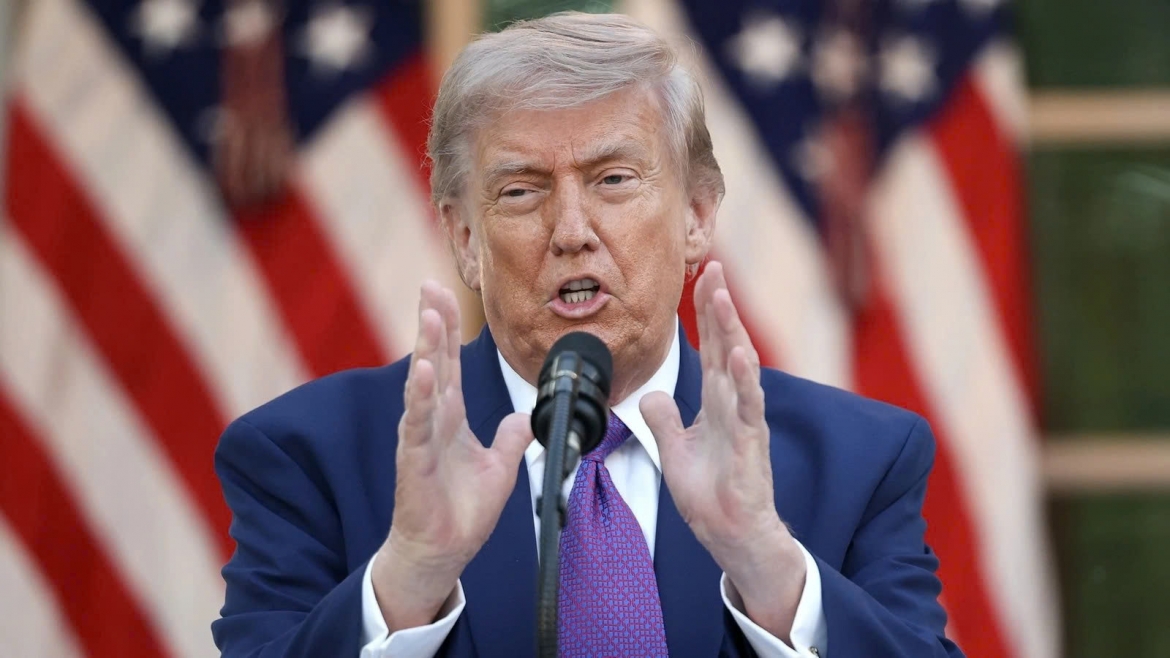
The controversy escalated further after U.S. Ambassador Pete Hoekstra publicly echoed or amplified the discussion, a move that Canadian officials and commentators say crossed an expected diplomatic boundary.
A familiar but explosive remark returns
Trump’s “51st state” framing is not new, but its repetition continues to generate strong reactions in Canada.
While often dismissed by analysts as rhetorical provocation, the phrase carries significant symbolic weight, touching on national identity and sovereignty — two deeply sensitive issues in Canadian political discourse.
This latest iteration, however, gained traction faster than previous cycles due to its timing and amplification through official diplomatic channels.

Hoekstra’s role intensifies the controversy
The situation became more politically charged after comments attributed to U.S. Ambassador Pete Hoekstra circulated widely, effectively amplifying the discussion.
Critics argue that ambassadors are expected to reinforce bilateral stability rather than engage in rhetoric that can be interpreted as questioning another nation’s sovereignty.
Canadian observers described the moment as “unusual” and “unhelpful,” particularly given the broader sensitivity of current trade and geopolitical negotiations.
Canada reacts strongly across party lines
Responses from Canadian political leaders were swift and unusually unified.
Prime Minister Mark Carney emphasized national sovereignty and economic independence, while provincial leaders, including Ontario Premier Doug Ford, also pushed back firmly against the framing.
Despite political differences within Canada’s domestic landscape, there appears to be rare consensus on one point: Canada’s sovereignty is not negotiable.
“Not for sale” sentiment dominates public reaction
Public reaction in Canada has been largely dismissive of any notion of annexation or political integration.
However, the repetition of such rhetoric has amplified a deeper concern — that symbolic language, even when not intended literally, can still strain diplomatic trust.
Analysts note that in international relations, perception often matters as much as policy.
Trade tensions form the backdrop
The diplomatic friction is unfolding alongside ongoing trade negotiations and economic adjustments between the two countries.
At the same time as political rhetoric intensifies, parts of the U.S. administration have reportedly softened certain tariff positions on Canadian goods under domestic economic pressure.
This dual-track dynamic — political tension paired with economic pragmatism — is shaping the current phase of the relationship.
A complex relationship beneath the headlines
Experts emphasize that despite headline controversies, Canada and the United States remain deeply interconnected economically.
Supply chains, energy exports, manufacturing, and cross-border investment tie the two economies together in ways that make long-term separation or confrontation unlikely.
However, symbolic disputes can still influence negotiation tone and public sentiment.

Why the rhetoric keeps returning
Political analysts suggest that recurring references to Canada as a potential “51st state” are less about policy and more about political signaling.
Such statements often function as rhetorical tools aimed at domestic audiences rather than serious foreign policy proposals.
However, repeated use of this language risks accumulating diplomatic friction over time.
Diplomatic norms under scrutiny
The involvement of a sitting ambassador in amplifying such rhetoric has raised questions among diplomatic observers.
Traditionally, ambassadors are expected to reduce tensions, clarify misunderstandings, and maintain stable bilateral communication channels.
When that role is perceived as blurred, it can create uncertainty about official positions.
Economic realities vs political messaging
Despite the political noise, the underlying economic relationship remains strong.
Canada and the U.S. continue to be each other’s largest trading partners in many sectors, including energy, automotive manufacturing, agriculture, and technology.
This economic interdependence limits the practical impact of political disputes, even when rhetoric escalates.
Canada’s strategic positioning
Canadian leaders have increasingly emphasized diversification in trade partnerships in recent years, seeking to reduce overreliance on the U.S. market.
However, geography, infrastructure, and historical ties mean the United States will remain Canada’s primary economic partner for the foreseeable future.
U.S. domestic pressures shaping foreign rhetoric
Some analysts argue that domestic political dynamics in the United States often influence external messaging toward allies.
Trade policy, immigration debates, and economic nationalism can all feed into broader narratives about sovereignty and borders.
In this context, Canada sometimes becomes part of a wider domestic political conversation rather than a standalone diplomatic issue.
The role of symbolism in international politics
Experts highlight that symbolic statements — even when not intended as policy — can still have real-world diplomatic effects.
Repeated references to territorial or political integration can shape public perception, even if official policy remains unchanged.
Unity effect inside Canada
Ironically, analysts suggest that such rhetoric often produces the opposite of its intended effect.
Rather than dividing Canadian opinion, it tends to reinforce national unity and strengthen public support for sovereignty-focused messaging.
Behind-the-scenes diplomacy continues
Despite public tensions, diplomatic and economic channels between Canada and the United States remain active.
Officials on both sides continue to engage on trade, security, and energy issues, even as political rhetoric plays out in public forums.
A recurring question with no clear answer
As the latest controversy circulates, observers are again asking why the “51st state” narrative persists despite repeated backlash.
The answer, according to many analysts, lies in the intersection of politics, media amplification, and symbolic messaging — where statements can travel far beyond their original intent.
And the final reality check
For all the noise, one fact remains unchanged:
Canada and the United States remain deeply connected, economically and strategically — even when political rhetoric suggests otherwise.
But as long as provocative language continues to resurface, so too will the diplomatic friction it creates.
And the question that keeps returning is simple… how long can symbolic rhetoric stay just symbolic before it starts affecting real policy?






