Chinese EVs Arrive in Canada as Carney Signals a Major Shift in Trade Strategy
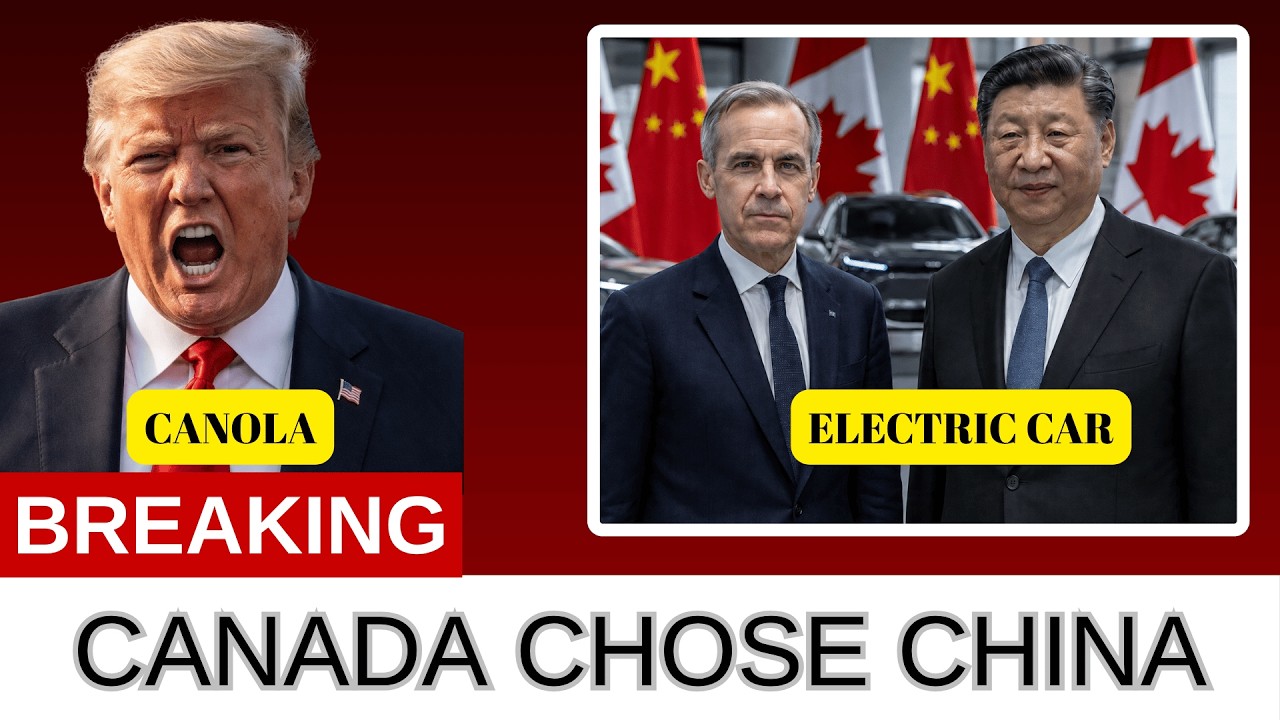
For the first time in years, Chinese-made electric vehicles have officially arrived on Canadian soil, marking a significant moment in Canada’s evolving trade and automotive strategy.
The arrival follows a policy change championed by Prime Minister Mark Carney that dramatically lowers barriers for a limited number of Chinese electric vehicles entering the Canadian market.
Off the coast of British Columbia, the cargo vessel Glovis Treasure recently arrived carrying luxury electric vehicles produced in China.
Among the vehicles on board were models from Lotus, a premium automotive brand owned by Chinese automotive giant Geely.
At the same time, additional shipments of Chinese-built Teslas have reportedly begun clearing customs at Canadian ports.
The development represents more than the arrival of a new category of vehicles.
It signals a broader shift in how Canada approaches international trade and economic partnerships.
For years, Chinese electric vehicles faced tariffs exceeding 100 percent, effectively preventing them from competing in the Canadian market.
Under the new arrangement, that barrier has been significantly reduced through a controlled import framework.
The policy allows up to 49,000 Chinese-made electric vehicles to enter Canada annually under a quota system.
While critics have described the move as a major opening to Chinese manufacturers, supporters argue that the quota represents only a small fraction of Canada’s overall vehicle market.
Government officials have emphasized that the system is designed to remain tightly managed rather than creating an unrestricted influx of imports.
The origins of the policy can be traced to broader trade tensions that emerged over the past several years.
As tariffs and trade disputes affected Canada’s automotive sector, policymakers began exploring ways to diversify economic relationships and reduce reliance on any single market.
At the same time, Canadian agricultural exports faced challenges of their own.
Products such as canola became caught in trade disputes that affected farmers across Western Canada.
According to supporters of the agreement, opening limited access for Chinese EVs helped create conditions for easing pressure on Canadian agricultural exports.
The arrangement therefore carries implications far beyond the automotive industry.
It connects manufacturing interests in Ontario with agricultural concerns in provinces such as Saskatchewan and Alberta.
Another notable aspect of the policy is its focus on affordability.
Beginning in future years, an increasing share of the import quota will be allocated to lower-priced electric vehicles.
The goal is to improve access to EV ownership for middle-income households that have struggled with rising vehicle prices.
Many electric vehicles currently available in Canada remain beyond the reach of average consumers despite government incentives.
Supporters argue that greater competition could encourage lower prices across the industry.
The announcement, however, has generated concern among established automakers.
Executives from major North American manufacturers have questioned whether the policy could place additional pressure on domestic production and employment.
Political leaders in several U.S. states with strong automotive sectors have also expressed concerns about the potential impact of Chinese-built vehicles moving through the North American market.
Some lawmakers have even proposed restrictions on certain Chinese-connected vehicles entering the United States.
Those proposals highlight growing debates surrounding trade, technology, and economic security.
Yet one detail has added a layer of complexity to the controversy.
A significant portion of the first vehicles arriving under Canada’s new quota are Teslas manufactured at the company’s Shanghai facility.
In other words, some of the vehicles drawing criticism are produced by an American company operating in China.
That reality has complicated efforts to frame the issue as a simple competition between domestic and foreign brands.
Industry analysts note that China’s electric vehicle sector has become one of the fastest-growing and most competitive in the world.
Manufacturers such as BYD have rapidly expanded into international markets and continue exploring opportunities throughout North America.
Several reports suggest that Chinese automakers are closely monitoring Canada’s market as a potential area for future growth.
Whether those ambitions translate into significant sales remains uncertain.
For now, the import quota limits the scale of expansion while allowing Canadian consumers access to a wider range of vehicles.
The policy also provides Ottawa with flexibility to adjust rules if market conditions change.
More broadly, the decision reflects a larger strategy taking shape under Carney’s government.
Rather than relying exclusively on one economic partner, Canada appears increasingly interested in diversifying trade relationships while maintaining existing alliances.
Officials insist that the country is not turning away from traditional partners.
Instead, they argue that Canada is creating additional options in an increasingly competitive global economy.
As the first shipments of Chinese-made EVs arrive at Canadian ports, the debate is likely to intensify.
Supporters see greater consumer choice, stronger negotiating leverage, and new trade opportunities.
Critics see potential risks to domestic manufacturing and North American supply chains.
Either way, the arrival of those vehicles represents more than a change in transportation.
It marks the beginning of a new chapter in Canada’s approach to trade, competition, and economic independence.






