Bridge Dispute Raises New Questions About Canada–U.S. Trade Strategy as Carney Rejects Compensation Demand
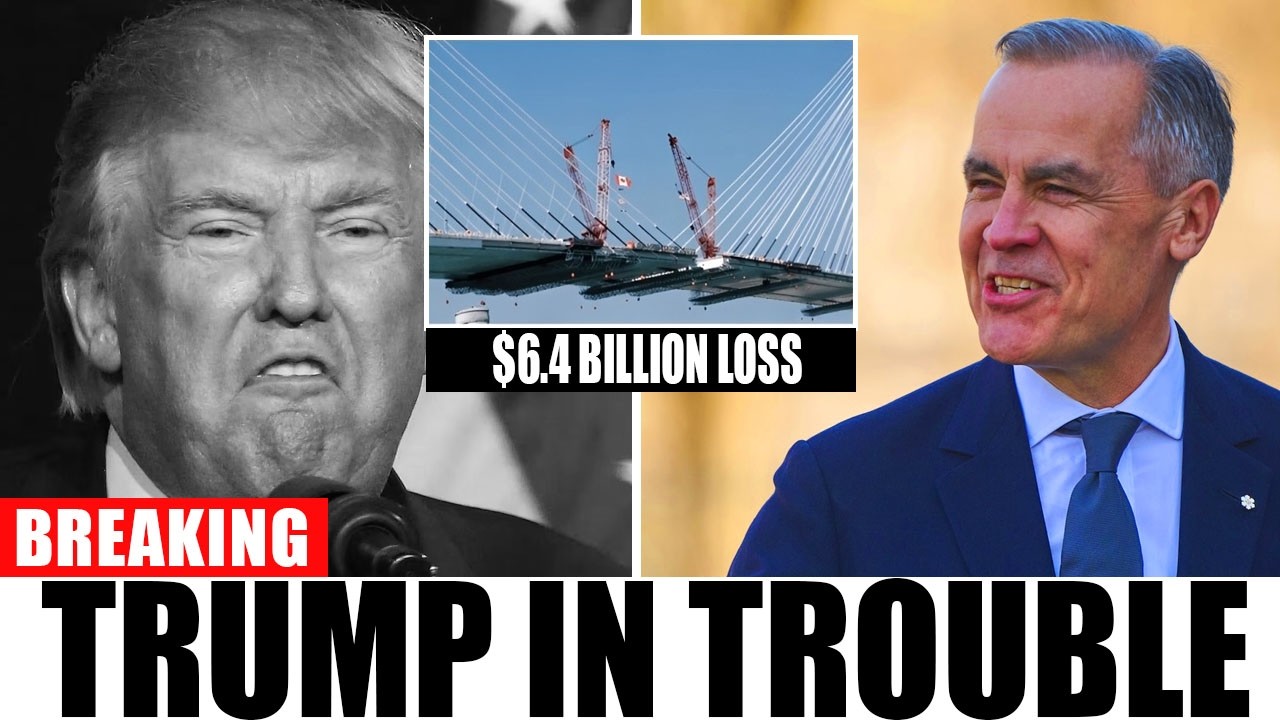
Canada’s political and economic relationship with the United States has come under renewed scrutiny following a dispute surrounding the opening of the Gordie Howe International Bridge, a major infrastructure project intended to strengthen cross-border trade. At the centre of the debate is Mark Carney, whose government has rejected calls for additional compensation tied to the bridge before it enters service.
The controversy gained national attention after comments attributed to the administration of Donald Trump suggested that the United States should receive greater compensation and influence regarding the project despite long-standing agreements governing its construction and ownership.
The issue has attracted widespread interest because the bridge is expected to handle a substantial share of merchandise trade between Canada and the United States. As a result, any uncertainty surrounding its opening carries implications far beyond a single infrastructure project.
For many observers, the dispute reflects broader tensions that have emerged in recent years over trade policy, tariffs, and economic sovereignty. It has also prompted renewed debate across Canada’s political landscape regarding how Ottawa should respond when major bilateral projects become entangled in wider diplomatic disagreements.
According to the transcript, Carney did not respond through a public confrontation. Instead, he reportedly emphasized the existing ownership arrangements and financial commitments associated with the bridge, arguing that the facts surrounding the project were already well documented.
The discussion quickly expanded beyond the bridge itself. Questions emerged regarding whether a major transportation corridor that facilitates a significant portion of Canada–U.S. trade should become a bargaining tool in broader economic negotiations.
The transcript notes that ownership of the bridge is shared between the Government of Canada and the State of Michigan, with Canada having financed the construction costs. That arrangement formed the basis of Ottawa’s position during the dispute.
What drew particular attention was the response from officials and stakeholders in Michigan. Rather than endorsing demands for additional compensation, several figures reportedly defended the original agreement and highlighted the economic benefits the bridge is expected to deliver to both countries.
The project itself dates back more than a decade. Agreements reached in the early 2010s established the financing model, ownership structure, and legal framework that have guided development ever since. According to the transcript, those arrangements remained unchanged leading into 2026.
The bridge was also previously supported through federal approvals and funding commitments in the United States, creating additional debate over why its ownership structure had suddenly become controversial.


As trade tensions intensified, the bridge increasingly became linked to wider disputes involving tariffs, market access, and international trade strategy. The transcript suggests that growing friction between Ottawa and Washington created an environment in which infrastructure projects acquired new political significance.
Another important factor was the bridge’s role within North America’s manufacturing supply chains. The Detroit–Windsor corridor remains one of the continent’s most important commercial gateways, particularly for the automotive sector.
Analysts cited in the transcript argued that delays or restrictions affecting the crossing could increase costs for manufacturers, disrupt production schedules, and create additional uncertainty for businesses operating on both sides of the border.
The transcript further highlights concerns about reliance on a single major commercial crossing. For decades, much of the region’s truck traffic has depended on existing infrastructure, leading policymakers to view the new bridge as an important source of redundancy and resilience.
Critics of the compensation demand argued that preventing the bridge from opening would impose economic costs not only on Canada but also on American workers, exporters, and manufacturers that stand to benefit from improved transportation links.
Supporters of Ottawa’s position contend that the project demonstrates the importance of maintaining predictable rules for cross-border investment. They argue that altering established agreements after construction is largely complete could undermine confidence in future infrastructure partnerships.
Meanwhile, Carney has faced growing scrutiny in Ottawa over how best to navigate an increasingly complex trade relationship with Washington. While some observers have called for a firmer response, others have supported a more measured approach focused on legal agreements and economic facts.
The broader political debate has therefore moved beyond the bridge itself. It now encompasses questions about sovereignty, trade diversification, and the future direction of Canada’s economic relationship with its largest trading partner.
The situation has also highlighted widening divisions within Parliament and among policymakers regarding the balance between defending Canadian interests and preserving stable commercial ties with the United States.
For now, the bridge dispute serves as another example of how infrastructure, trade, and diplomacy have become increasingly interconnected. While Ottawa has offered a carefully measured response rooted in existing agreements, the broader implications for Canada–U.S. relations continue to be debated. As negotiations and political discussions continue, the debate remains unresolved within Canada’s broader political landscape.






