By XAMXAM
In Washington, moments of genuine surprise have become rare. Hearings are choreographed, talking points rehearsed, and clashes previewed long before the cameras roll. That is why a recent viral video purporting to show Barack Obama confronting Donald Trump in a public hearing has resonated so widely — not because of what it proves, but because of what it dramatizes about modern American politics.
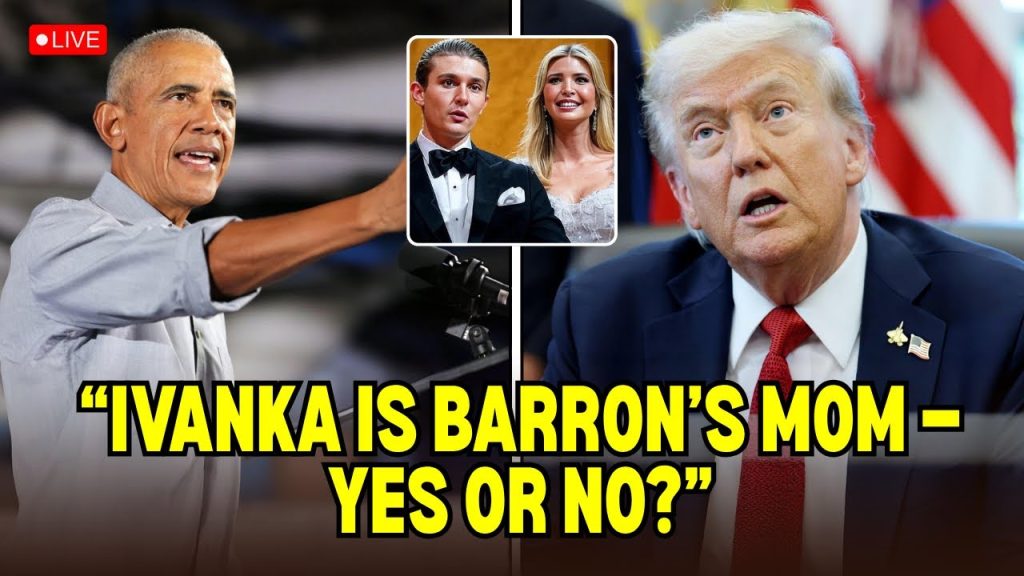
The clip, framed as a historic exchange, centers on a simple but unsettling dynamic: one figure insisting on measured honesty, the other responding with performance, deflection, and ultimately silence. Whether viewed as political theater, commentary, or allegory, the moment has traveled fast because it captures a tension many Americans already recognize.
The setting is familiar. A formal hearing room. Senators and aides seated in neat rows. Cameras poised to capture every shift in posture. Obama is portrayed entering calmly, papers in hand, projecting the composure that defined much of his presidency. Trump follows with visible confidence, greeting the room as if it were an audience rather than a tribunal. From the outset, the contrast is visual as much as rhetorical.
Obama’s opening remarks, as presented in the clip, do not accuse or provoke. They establish a frame. Leadership, he argues, begins with honesty — not optimism alone, not slogans, but an acknowledgment of unresolved problems. He speaks of inequality, division, climate risks, and economic anxiety in a tone closer to a lecture than a rally. The room, at least as depicted, listens.
Trump’s response is immediate and recognizable. He rejects the premise outright. America, he insists, is winning. Markets are strong, jobs are back, confidence has returned. Where Obama describes cracks, Trump describes momentum. The exchange becomes less a debate over facts than a collision of governing philosophies: realism versus reassurance, diagnosis versus declaration.
This is where the clip takes its dramatic turn. After absorbing Trump’s counterattack — which blends personal criticism with familiar boasts — Obama does not escalate. He does not rebut each claim. Instead, he poses a question, quiet and direct, framed as a test of honesty rather than policy. The content of the question matters less than its function. It demands a clear answer in a setting where evasion has become second nature.
Trump does not answer. He deflects, objects, reframes. The refusal stretches, and the room falls silent. In the narrative of the clip, that silence becomes the point. It is presented as a crack in the performance, a brief moment where confidence fails to produce control.
The power of the scene lies not in its literal accuracy — it is clearly stylized, condensed, and dramatized — but in its symbolic clarity. For years, Trump’s political strength has rested on his ability to dominate attention. He overwhelms with speed, repetition, and certainty. Obama’s political identity, by contrast, has often relied on patience and restraint, on the belief that tone itself can convey authority.
Seen through that lens, the viral exchange functions less as a documentary record than as a parable. It imagines what happens when those two styles are forced into direct contact under rules that privilege answers over applause. The result is not a decisive victory for either side, but an exposure of limits.
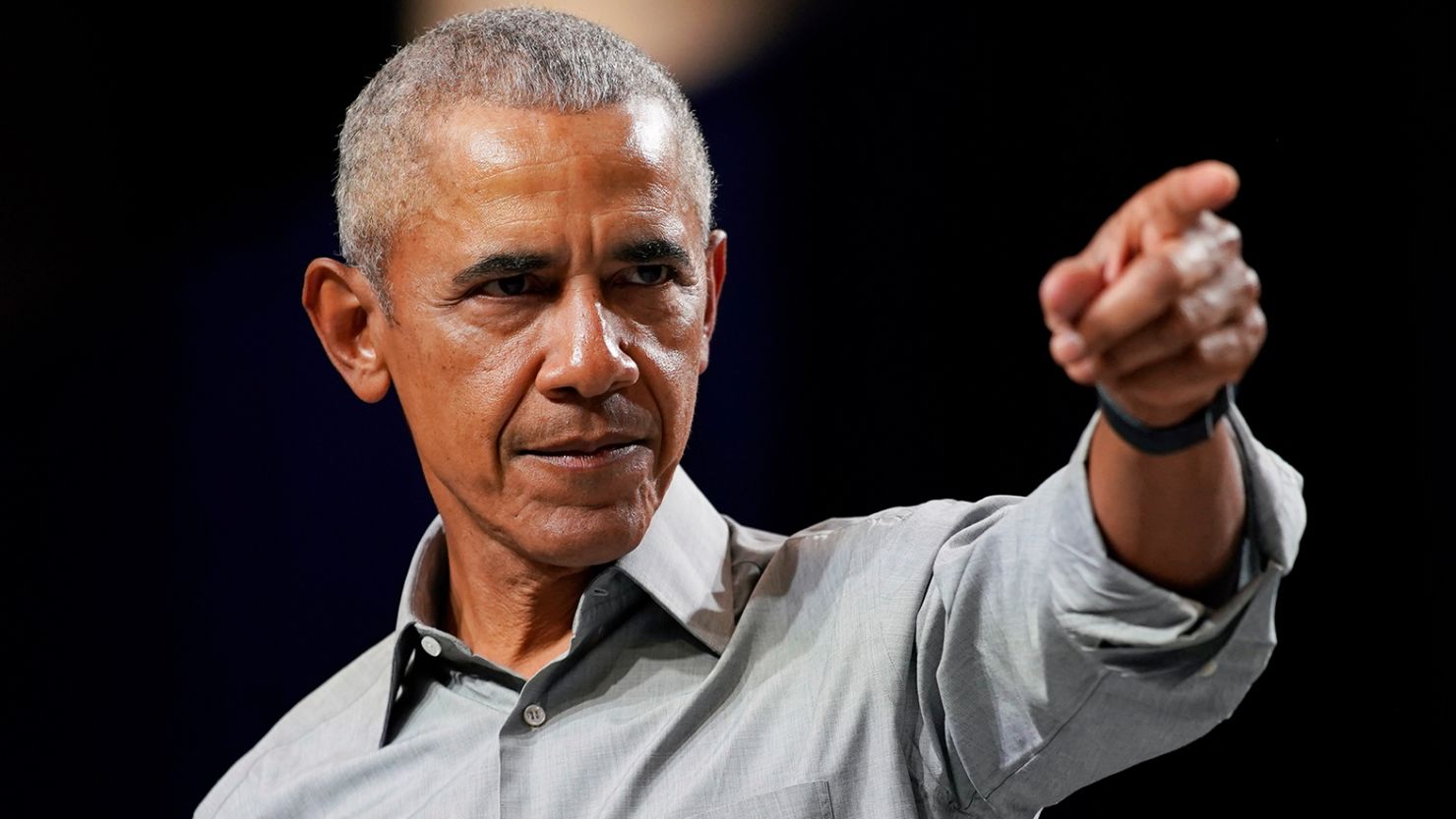
Supporters of Trump see the moment differently. To them, the refusal to engage is not weakness but resistance — a rejection of what they view as bad-faith provocation. In that reading, Trump’s walkout is an assertion of control, not a concession. The silence is strategic, not revealing.
Critics see something else. They see a pattern repeated across interviews, debates, and press conferences: when confronted with a question that cannot be spun into affirmation, Trump changes the subject or exits the stage. The clip condenses that pattern into a single, shareable beat.
The reaction to the video says as much about the audience as about its subjects. Millions have shared it not because it changes their minds, but because it confirms an intuition. For some, it affirms the belief that politics has become performance without accountability. For others, it reinforces the conviction that traditional norms of interrogation are themselves a kind of trap.
What is striking is how little the clip relies on spectacle. There is no shouting match, no procedural chaos. Its most quoted moment is a pause — a stretch of time where nothing happens. In an attention economy built on constant noise, stillness reads as revelation.
Obama, in the portrayal, does not appear triumphant. His final remarks are subdued, almost melancholy. Truth, he suggests, has a way of waiting. It does not disappear when ignored. It simply lingers. That line, repeated across social platforms, resonates because it speaks to a broader anxiety: that unresolved realities do not vanish just because leaders decline to face them.
Trump’s departure, by contrast, is abrupt. He leaves the room, cameras trailing behind him. The image is familiar, echoing past exits from interviews and debates. To admirers, it signals independence. To critics, avoidance.
The enduring appeal of the video lies in its ambiguity. It does not declare a winner. It stages a question and lets the absence of an answer do the work. In doing so, it reflects a deeper national argument about what Americans expect from those in power.
Is leadership the ability to project confidence, or the willingness to confront discomfort? Is truth something to be asserted, or something to be tested?
The clip offers no resolution. It ends, fittingly, with silence — and with a question that continues to circulate long after the screen goes dark.







