A World Cup Trophy, a Prime Minister, and Canada’s Quiet Transformation

Something unexpected happened in Canada this week.
At what appeared to be a routine World Cup ceremony, Prime Minister Mark Carney delivered a moment that quickly spread across social media and national headlines.
It wasn’t a policy announcement.
It wasn’t a trade agreement.
It wasn’t even a speech about politics.
Instead, Canadians watched their prime minister speak like an ordinary football fan.
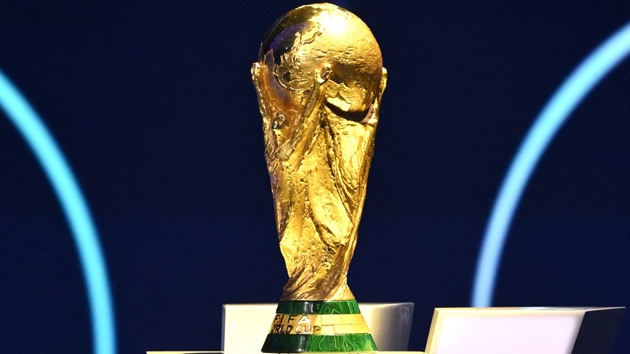
Standing beside the FIFA World Cup trophy, Carney recalled sitting in his parents’ basement four decades ago, watching every match of the 1986 World Cup.
The image immediately resonated.
For years, Canadians have become accustomed to seeing political leaders carefully managing every word and every public appearance.
This moment felt different.
Carney laughed, shared personal memories, and spoke openly about his emotional connection to the sport.
One story captured particular attention.
He described watching Alphonso Davies score against Croatia during the 2022 World Cup and joked that his heart rate monitor jumped from 60 beats per minute to 178 almost instantly.
The crowd laughed.
Online audiences loved it.
But beneath the humor was something far more significant than a sports anecdote.
What began as a celebration of football gradually became a reflection on Canada’s changing sense of itself.
For much of the past year, Canada’s international image has been shaped by economic uncertainty, trade disputes, defense debates, and constant comparisons with the United States.
Many of the country’s biggest headlines focused on external pressures.
This event felt remarkably different.
Instead of discussing challenges, Carney focused on progress.
Instead of emphasizing threats, he highlighted achievement.
He reminded the audience that Canada’s national football team had once been ranked among the world’s outsiders.
Today, it stands among the sport’s rising competitors.
When Carney joked that moving from 112th place to the global top 30 represented a “75 percent increase,” the audience laughed again.
Yet the message behind the joke was serious.
Canada no longer views itself as a country standing quietly in the background of global affairs.
That shift extends far beyond football.
Over the past several months, Canada has pursued new trade partnerships, expanded defense cooperation with allies, attracted major foreign investment, and positioned itself more aggressively in sectors such as critical minerals, energy, and advanced manufacturing.
At the same time, Canadian cities are preparing to host matches during one of the largest sporting events on Earth.
The World Cup is becoming more than a sporting spectacle.
It is increasingly serving as a platform for national branding.
Historically, major sporting events have often marked turning points in how countries present themselves to the world.
Nations use these moments not only to showcase infrastructure and tourism but also to project confidence, stability, and ambition.
Canada appears to understand that opportunity.
During the ceremony, Carney repeatedly returned to a theme that many observers initially overlooked.
He spoke about community sports programs, local playing fields, and opportunities for young Canadians.
On the surface, these comments seemed unrelated to international politics.
In reality, they reflected something deeper.
Modern geopolitical influence is no longer measured solely through military strength or economic output.

National reputation, cultural visibility, and social confidence increasingly shape global perceptions.
Countries that appear optimistic often attract investment.
Countries that project stability frequently attract talent.
Countries that generate positive international attention strengthen their soft power.
That may explain why this seemingly small event attracted so much attention.
For years, Canada has often been discussed internationally in relation to larger powers.
Its role was frequently framed through its relationship with Washington.
Its economic story was often connected to American policy decisions.
Its diplomatic position was commonly interpreted through broader North American dynamics.
This week offered a different narrative.
The conversation was not about trade disputes.
It was not about tariffs.
It was not about political conflict.
For a brief moment, global attention focused on Canada itself.
That distinction matters more than many people realize.
Countries rarely transform their international position overnight.
Political shifts usually begin with psychological shifts.
National confidence often emerges before major strategic changes become visible.
The mood surrounding the World Cup ceremony suggested that Canada may be entering such a phase.
Not through dramatic declarations.
Not through confrontational rhetoric.
But through a growing willingness to define its own story.
Whether discussing sports, investment, energy, or diplomacy, the underlying message increasingly sounds the same.
Canada is becoming more comfortable acting on its own terms.
That does not mean abandoning traditional partnerships.
Nor does it mean seeking conflict.
Instead, it reflects a country gradually developing greater confidence in its own place within a rapidly changing world.
The World Cup trophy may have been the centerpiece of the ceremony.
But the larger story was never really about football.
It was about identity.
It was about confidence.
And perhaps most importantly, it was about a nation beginning to see itself differently.
The question now is whether this was simply a memorable World Cup moment—or an early glimpse of a broader transformation that is already reshaping Canada’s role on the global stage.






