It seemed like the perfect triumph for the European elites. When news of Peter Magyar’s election victory echoed through the corridors of Brussels, champagne corks practically popped in the offices of the EU Commission and among liberal forces in Berlin.
The narrative, repeated ad nauseam by large sections of the mainstream media, sounded simply too good not to be true from their perspective: Viktor Orbán, the perpetual thorn in the side of the Brussels centralists, had finally been defeated.
The liberal revolution in Hungary was imminent. But the euphoria, which leading politicians like Ursula von der Leyen and Annalena Baerbock celebrated almost exuberantly on social media, is now giving way to a cold shudder.
What was hailed as a democratic liberation is increasingly revealing itself as one of the most brilliant political maneuvers in modern European history. A move of absolute mastery that is currently plunging the European Union into an unprecedented identity crisis.
The question that is being asked with increasing frequency in whispers in the power centers of Europe is simply: Have we been lying to ourselves all this time?
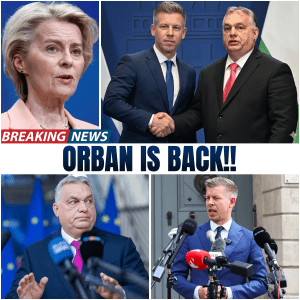
To truly grasp the magnitude of this political earthquake, one must consider the background and the close connection between the two main players. Peter Magyar was never the left-wing anti-Orbán rebel that the international press desperately tried to portray him as. He comes from the innermost circle of the Hungarian power structure and was for years one of Viktor Orbán’s closest and most trusted associates.
The theory currently circulating not only in intelligence circles but also rapidly on social media is as explosive as it is plausible: Orbán orchestrated this apparent election defeat long in advance.
Since the classic left-wing opposition in Hungary no longer exists in practice and has repeatedly failed miserably at the five percent threshold, the conservative camp needed a new, fresh face. Someone who could tap into discontent without jeopardizing the country’s fundamental, hard-line political orientation.
The Hungarian people, therefore, did not vote between conservative and left-wing, but rather between Orbán and a “new Orbán” in a more modern, rhetorically skilled guise. Since most EU officials and journalists in Berlin or Washington do not speak Hungarian and relied on filtered translations, they fell into this trap like classic amateurs.
But the real stroke of genius, which is now causing the Eurocrats to break out in a cold sweat, only became apparent in the days that followed. Peter Magyar quite unabashedly suggested that Viktor Orbán should run for the most powerful office on the continent in 2029: the presidency of the European Union.
Magyar publicly praised Orbán’s visionary foresight and his uncompromisingly hard line on migration policy. For the Greens and the Left in Europe, this scenario is an absolute nightmare. The man they branded an autocrat for over a decade could sneak into the top job at the European Union.
If this ambitious plan succeeds, the entire left-wing agenda faces a radical end. The Green Deal, often criticized as ruinous, the ever-increasing carbon tax, the excessive emissions trading system—all those measures that cost citizens and businesses vast sums and cause exploding living costs—could be definitively halted or even reversed under an EU president like Orbán.
It’s a political earthquake that also explains why US Republicans like Donald Trump and JD Vance are so intensely involved in the European debate. Trump called Magyar a “good man” shortly after his victory—a remarkable statement for someone who previously supported Orbán unconditionally. The global conservative axis appears to be completely reorganizing, and Brussels is watching helplessly.
As if this geopolitical humiliation weren’t enough, Peter Magyar, immediately after taking power, made a bombshell domestically, causing particular alarm among public broadcasters across Europe.
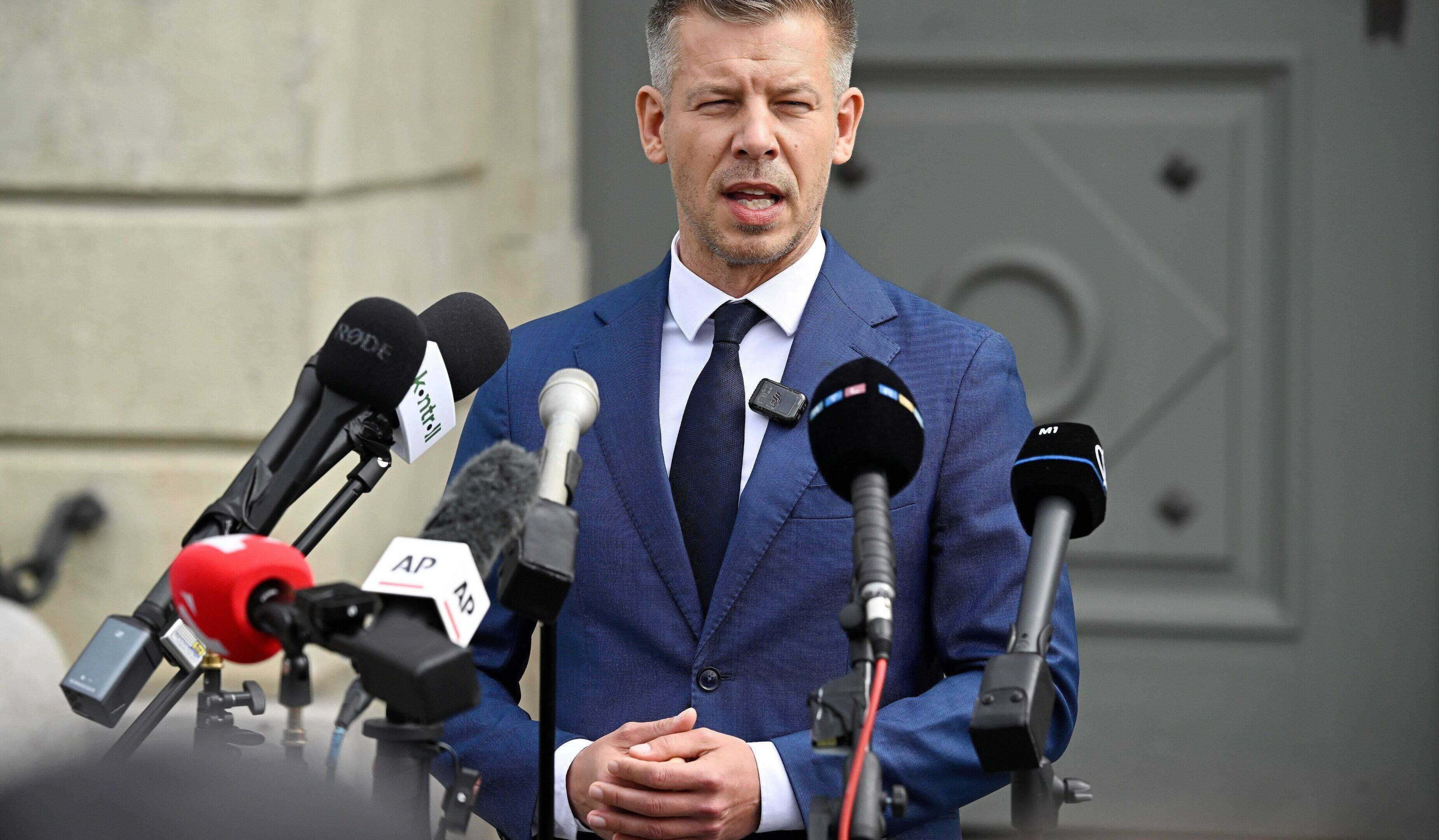
In an unprecedented and radical move, the new Prime Minister announced the complete suspension of news broadcasts on public television and radio. The reason? The conditions for truly impartial and neutral reporting had to be rebuilt from the ground up.
What the mainstream establishment immediately condemned as a feared “attack on press freedom” had already been stated quite transparently in Magyar’s election manifesto months earlier. He had made it unequivocally clear that state broadcasting could no longer serve as a propaganda tool and ideological mouthpiece.
For many critical citizens yearning for neutral reporting, this is a powerful signal. But for the established broadcasters, who for years attacked Orbán precisely because of his lack of media freedom, it’s the ultimate shock: Magyar is taking them at their word and enforcing neutrality with an iron fist.
For German broadcasters, who often have to defend themselves against accusations of political bias, this crackdown serves as a cautionary tale of how quickly the pendulum of power can swing back.
The reactions of European leaders to the election results, meanwhile, reveal an almost tragic denial of reality. Commission President Ursula von der Leyen exulted: “Europe is Hungarian, the people of Hungary have spoken.” Foreign Minister Annalena Baerbock even went so far as to make the euphoric claim that the AfD had lost an important ally and that it was a great day for Europe. These statements border on a political admission of failure.
The bitter truth is: there are no left-wing or green parties left in the new Hungarian parliament. Hungarian voters collectively reject these ideologies. Magyar’s new governing party is, in its DNA, a staunchly conservative force, most comparable to the Bavarian CSU of the 1980s, permeated with extremely hardline positions on migration and sovereignty.
Orbán’s own party is even more national-conservative, and smaller factions are even further to the right. When the European left celebrates an election result that cements the conservative and right-wing bloc in a member state at nearly 100 percent, it only proves how trapped it is in its own wishful thinking. No one has lost allies here—except the Greens, who have lost touch with political reality.
Furthermore, anyone who seriously believed that under Peter Magyar Hungary would suddenly and gleefully pump billions into Ukraine and open the EU borders to uncontrolled migration has been brutally disappointed. On key geopolitical issues, Magyar and Orbán are acting almost in perfect unison. Magyar has already made it unequivocally clear that he will continue to block the EU’s billions in payments to Kyiv under the current conditions.
Instead, he demands concrete results and is benefiting from Orbán’s groundwork, who had already negotiated that Hungary would not have to participate in certain devastating loan packages. Moreover, the new prime minister is attaching virtually insurmountable conditions to Ukraine’s potential EU accession.
There will be no accelerated accession process. Priority must be given to the countries of the Western Balkans. Furthermore, the minority rights of the Hungarian population in Ukraine, which are currently being severely curtailed by the war, must be fully restored.
And the ultimate blow for the EU bureaucrats: even if all these conditions are met, Magyar demands a binding national referendum on accession – but only after the war has ended. Since the Hungarian population already clearly rejects Kyiv’s accession, this EU project is becoming increasingly unattainable.

The picture currently emerging is that of a masterfully staged piece of political theater. Peter Magyar will, in the medium term, rise to become the new, even more efficient Viktor Orbán, while Viktor Orbán himself is positioning himself to take the reins in Brussels as a strongman. It is a Trojan horse of the absolute highest order.
Left-wing and green Europe has suffered a historic strategic defeat while, ironically, celebrating a victory. This Hungarian coup proves that conservative and patriotic politics cannot simply be laughed off or destroyed by media smear campaigns.
Resistance to Brussels paternalism, rampant climate dictates, and uncontrolled migration is not weakening—it is becoming more intelligent, more strategic, and therefore far more dangerous for the established system. For the people of Europe, this development means that the last word on the future of the continent has by no means been spoken.






