The Hidden Trade Strategy That May Have Caught Washington Off Guard
For weeks, the narrative coming out of Washington appeared straightforward. Mexico was moving ahead. Canada was falling behind. The United States was holding formal trade review talks with Mexico while Ottawa seemed absent from the table.
That perception quickly became the dominant storyline across political circles, financial media, and trade observers. The message was clear: Mexico had secured its place in the next phase of North American trade discussions, while Canada was still waiting for an invitation.
But a closer examination of recent events suggests the reality may be far more complicated.
What if Canada was never left behind in the first place?
The question has become increasingly important as the July 1 notification deadline under the Canada-United States-Mexico Agreement approaches. What happens before that date could shape the economic future of North America for years to come.

The perception problem began months ago when American officials repeatedly emphasized that Canada was lagging behind Mexico in trade discussions. Public statements from Washington painted a picture of a cooperative Mexico and a reluctant Canada.
According to that narrative, Mexico was engaging on key issues including automotive rules of origin, steel and aluminum trade, supply-chain security, and economic competitiveness. Canada, meanwhile, was insisting that tariff issues be addressed before broader negotiations could move forward.
From Washington’s perspective, that position looked like a delay tactic.
As a result, many observers concluded that Ottawa was losing leverage at precisely the moment when North America’s trade architecture was being redesigned.
Then came May 29.
The Office of the United States Trade Representative released a statement announcing the completion of the first bilateral review round with Mexico. The announcement highlighted discussions on trade deficits, manufacturing competitiveness, supply-chain resilience, automotive production, and strategic industries.
Canada was not mentioned.
For many analysts, the omission appeared significant.
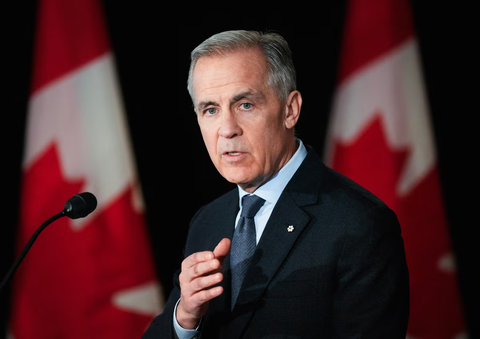
The headlines practically wrote themselves. Mexico was inside the room. Canada was outside.
Yet behind the scenes, a different story may have been unfolding.
Just four days before Washington released its announcement, Prime Minister Mark Carney held an important conversation with Mexican President Claudia Sheinbaum. The discussion reportedly focused on tariffs, trade policy, and the future structure of CUSMA negotiations.
That call raised important questions.
If Canada had truly been isolated from the process, why would Ottawa be coordinating positions with Mexico immediately before a major U.S. trade announcement?
The answer may lie in the distinction between public negotiations and private negotiations.
Experienced trade officials often note that formal rounds rarely represent the beginning of a negotiation. More often, they serve as confirmation of discussions that have already taken place behind closed doors.
In other words, the real negotiations frequently happen before governments announce them.
That interpretation gained credibility when Canada’s chief negotiator, Janice Charette, revealed details about discussions with American counterparts.

According to Charette, Washington had already described a bilateral mechanism for Canada within the broader CUSMA framework. She famously compared the structure to a “snap-on Lego piece” attached to the larger North American agreement.
The significance of that description cannot be overstated.
It suggested that Canada was not being excluded from the process. Instead, Ottawa was operating on a separate track tailored to issues unique to the Canada-U.S. relationship.
That distinction matters.
The trade challenges facing Mexico and the United States are not identical to those facing Canada and the United States.
Automotive production near the southern border involves different supply chains, labour considerations, and trade dynamics than those affecting Canadian industries.
Similarly, trade deficit concerns frequently cited by American officials regarding Mexico do not translate directly to the Canadian relationship.
As a result, it would not be surprising for Washington to pursue separate bilateral discussions addressing country-specific concerns.
Viewed through that lens, Canada’s absence from the first U.S.-Mexico review round may have been less dramatic than many assumed.
Rather than being excluded, Ottawa may simply have been participating through a different channel.
That possibility changes the entire interpretation of recent events.
Instead of a country scrambling to catch up, Canada appears as a government pursuing a quieter strategy—one focused on securing negotiating architecture before engaging in public political theatre.
Silence, in this context, may not have represented weakness.
It may have represented preparation.
That calculation carries risks.
Critics argue that allowing Washington to dominate the public narrative creates uncertainty for investors and businesses. Every day without clarification fuels speculation that Canada’s position is deteriorating.
Supporters counter that public messaging and actual negotiations are rarely the same thing.
Governments often reveal only a fraction of what is taking place behind closed doors.
The coming weeks will test which interpretation is correct.
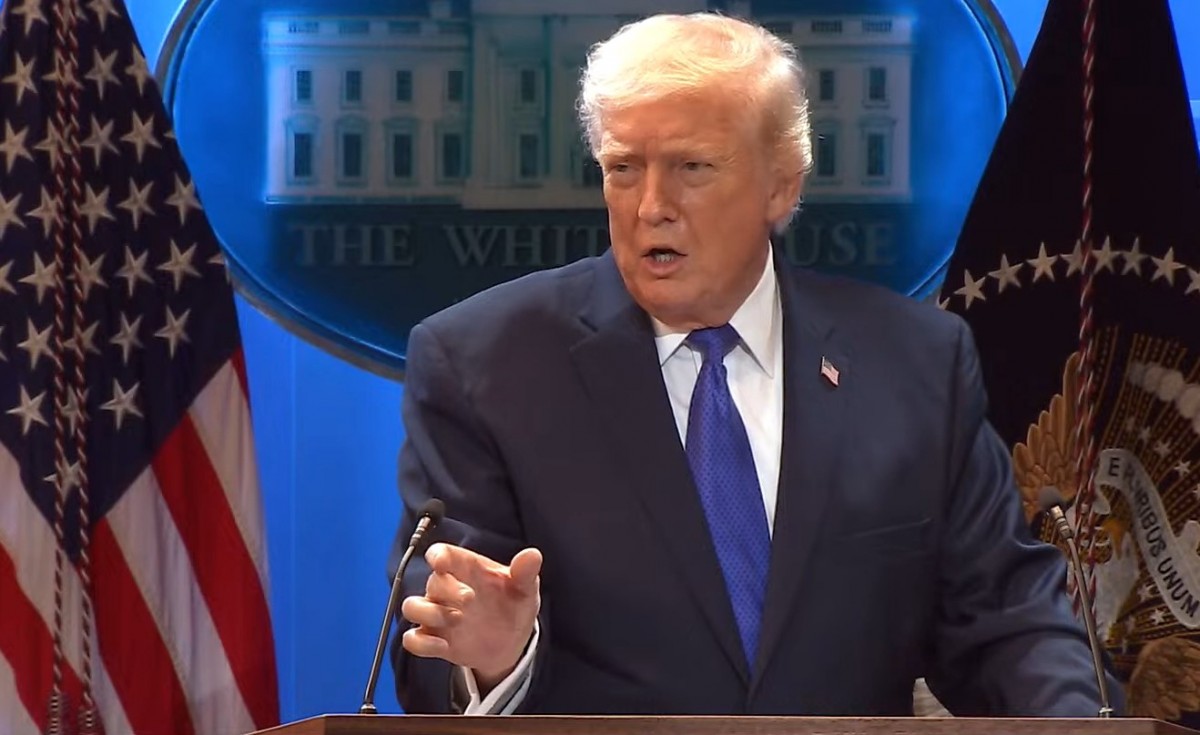
The July 1 notification deadline now looms over all three governments. Under the review framework, Canada, the United States, and Mexico must indicate whether they intend to continue the agreement.
Importantly, notification is not the same as finalizing a deal.
That distinction has become central to Ottawa’s position.
Canadian officials appear to believe that a commitment to continue the agreement can coexist with unresolved disputes over tariffs and bilateral issues.
Washington has not fully clarified whether it shares that interpretation.
That uncertainty represents one of the most consequential unanswered questions in North American trade policy.
For businesses on both sides of the border, the stakes could hardly be higher.
CUSMA provides stability for billions of dollars in annual trade flows. It supports manufacturing networks, energy partnerships, agricultural exports, and countless cross-border investments.
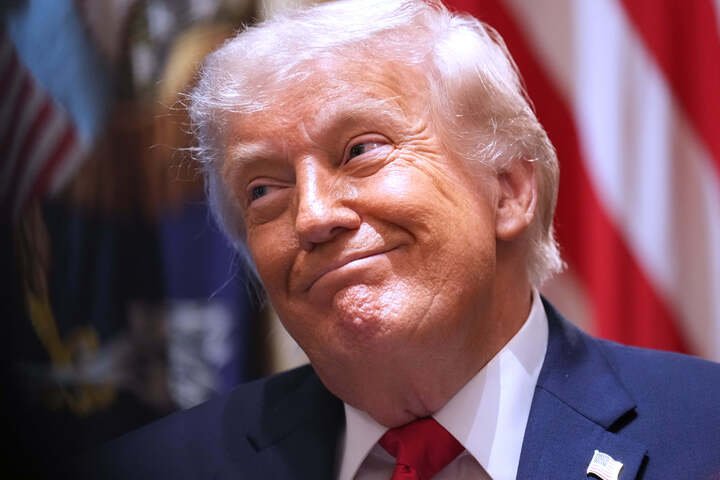
Any disruption would send shockwaves through multiple sectors simultaneously.
The political implications are equally significant.
A successful Canadian strategy would demonstrate that Ottawa maintained influence despite public perceptions to the contrary. It would also suggest that Washington misread Canada’s negotiating position from the beginning.
A failed strategy would reinforce claims that Canada allowed itself to become marginalized during a critical moment in North American economic diplomacy.
At this stage, neither outcome is guaranteed.
What is clear is that the simplistic story of Canada being left behind no longer fully explains the available evidence.
The timeline tells a more nuanced story.
Calls were made.
Positions were coordinated.
Frameworks were discussed.
Negotiators were briefed.
And while public attention remained focused on Mexico’s formal meetings with the United States, Canada may have been quietly building its own pathway into the next chapter of continental trade.
Whether that pathway leads to success remains unknown.
But one thing is becoming increasingly difficult to ignore.
The assumption that Canada’s silence reflected weakness may prove to be one of Washington’s most consequential miscalculations.
As July 1 approaches, North America is moving toward a decision that could redefine economic relations across the continent for the next decade.
When that decision arrives, the story may look very different from the one many believed just a few weeks ago.






