Trump’s “51st State” Talk Dismissed by Canadian Officials Amid Recession
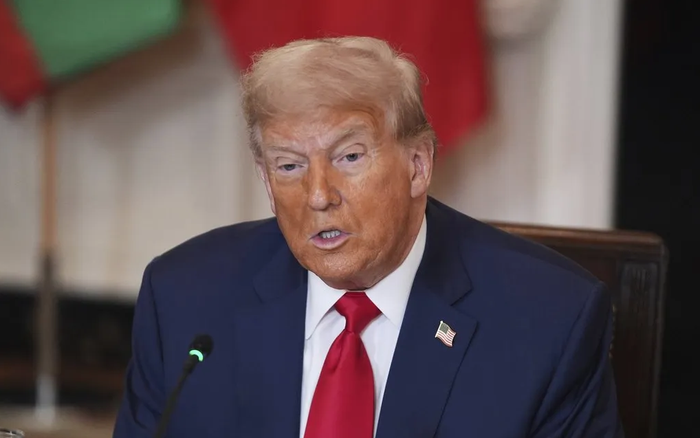
OTTAWA — President Donald J. Trump reignited controversy on social media by posting “51st State” in response to reports that Canada has entered a technical recession, the first since 2020.
The remark, shared on Truth Social, revived his long-standing suggestion that Canada could join the United States, drawing swift condemnation from Canadian leaders.
Ford’s Sharp Rebuttal
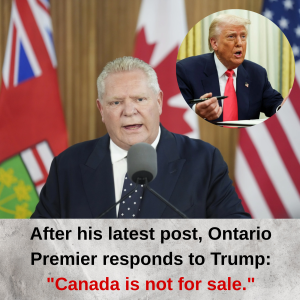
Ontario Premier Doug Ford responded immediately on X, stating firmly: “I can’t believe I have to say this again, but Canada will never be the 51st state of the United States. Canada is not for sale.”
His statement reflected a broad consensus among Canadian officials that the country’s sovereignty is not negotiable.

Trump’s Repeated Suggestions
Mr. Trump has floated the idea of Canada becoming the 51st state since late 2024, often linking it to economic arguments. He has claimed that such a union would bring mutual benefits, including stronger trade and resource integration.
Canadian leaders have consistently rejected the notion as unserious and incompatible with the nation’s independent identity.
Carney Remains Silent
Prime Minister Mark Carney has not yet commented publicly on the latest post. His government continues to focus on managing economic challenges, including the technical recession driven by contraction in two consecutive quarters.
Economic Backdrop
The technical recession has heightened sensitivities in U.S.-Canada relations. Canadian officials attribute part of the downturn to ongoing trade tensions and tariffs imposed by the Trump administration.
Despite the friction, the two countries remain deeply integrated economically, with the United States still Canada’s largest trading partner.
Historical Context
Suggestions of Canada joining the United States have surfaced periodically in American political discourse but have never gained traction north of the border. Canadians widely view the idea as incompatible with their national identity and democratic traditions.
Sovereignty Emphasis
Canadian politicians across party lines have stressed that sovereignty is not up for debate. The swift responses underscore a unified national position on maintaining independence.
Diplomatic Strain
The episode adds to existing strains in bilateral relations. Trade disputes, tariff threats and differing approaches to global issues have tested the partnership in recent months.
Public Reaction in Canada
Many Canadians reacted with a mixture of amusement and irritation to Mr. Trump’s post. Social media platforms saw an outpouring of memes, defiance and calls for stronger diversification away from U.S. dependence.
Strategic Diversification
The Canadian government has accelerated efforts to strengthen ties with Europe, Asia and other partners. Prime Minister Carney has emphasized building resilience through new trade agreements and defense partnerships.
No Immediate Escalation
Despite the provocative rhetoric, officials in Ottawa have chosen a measured response. The government appears focused on practical economic management rather than engaging in public rhetorical battles.
Broader Implications
The incident highlights the challenges of conducting diplomacy in an era of constant social media activity by world leaders. Mr. Trump’s posts often force allies to navigate public statements that complicate behind-the-scenes negotiations.
Economic Interdependence
The United States and Canada share one of the world’s most integrated economies. Cross-border supply chains in energy, automotive manufacturing and critical minerals make sustained cooperation essential despite periodic political turbulence.
Carney’s Approach
Mr. Carney, a former central banker, has adopted a pragmatic style in managing relations with the Trump administration. He has repeatedly stated that Canada must deal with the U.S. as it exists while protecting Canadian interests.
Future Relations
Analysts expect the relationship to remain functional but occasionally volatile. Both countries have strong incentives to maintain stability in trade and security cooperation under the NATO alliance.
Public Sentiment
Polls indicate overwhelming Canadian opposition to any form of political union with the United States. The idea is largely seen as political theater rather than a realistic proposal.
Conclusion
President Trump’s latest social media comment has once again tested the boundaries of U.S.-Canada relations. While Canadian officials firmly rejected the notion, the episode serves as a reminder of the enduring strength of Canadian national identity and the complexities of managing a relationship with a powerful and unpredictable neighbor.
As both countries navigate economic challenges and global uncertainties, the focus remains on preserving a productive partnership while protecting core sovereign interests.






