For decades, the global military order followed a predictable pattern.
When NATO countries needed advanced weapons, fighter jets, missile systems, artillery, or armored vehicles, there was one unquestioned supplier at the center of it all:
The United States.
American defense giants dominated the alliance so completely that many countries barely considered alternatives. Buying American wasn’t just about military capability — it was about political alignment, strategic loyalty, and long-term dependence.
But now, something extraordinary is beginning to happen behind the scenes of Western defense policy.
And Washington is starting to notice.
A quiet but significant shift is unfolding across Europe and parts of Canada’s defense establishment — one that could reshape NATO’s balance of power for decades to come.
Because after years of relying almost entirely on American military hardware, allies are beginning to ask a question that once sounded almost unthinkable:
What happens if dependence on the United States becomes a strategic vulnerability?
That question accelerated dramatically after the war in Ukraine.
As Europe rushed to rebuild depleted arsenals and modernize aging military equipment, governments suddenly discovered an uncomfortable reality:
The West’s defense-industrial base was nowhere near prepared for a prolonged geopolitical crisis.
Factories were overloaded.
Supply chains slowed.
Delivery timelines stretched for years.
Countries that urgently needed tanks, artillery shells, air defense systems, and fighter jets found themselves trapped in waiting lists.
And in many cases, the United States simply could not deliver fast enough.
That is when the cracks started appearing.
Poland moved aggressively toward South Korean military systems, signing massive deals for K2 tanks, K9 howitzers, and FA-50 fighter aircraft.
Romania followed similar discussions.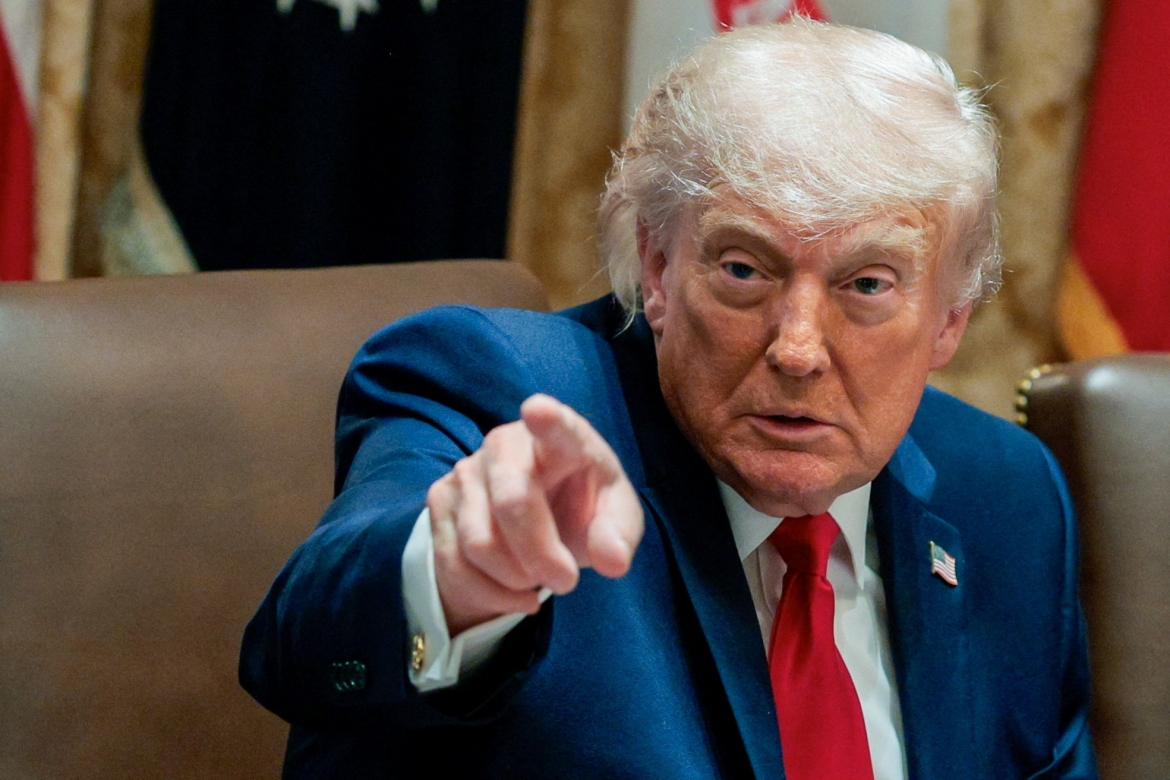
Finland expanded conversations about diversified procurement strategies.
Even countries traditionally loyal to American defense contractors quietly began exploring alternatives that would have seemed politically risky just a few years ago.
The reason was brutally simple:
South Korea could build faster.
Sometimes much faster.
In modern warfare planning, speed matters almost as much as technology itself.
Governments watching the destruction in Ukraine understood that waiting seven to ten years for weapons deliveries was no longer strategically acceptable.
And suddenly, the old assumption that America would always be the automatic supplier started weakening.
But the shift goes far beyond manufacturing speed.
The deeper issue is control.
Modern military systems are no longer just machines.
They are software ecosystems.
And that changes everything.
Take the F-35, America’s flagship stealth fighter.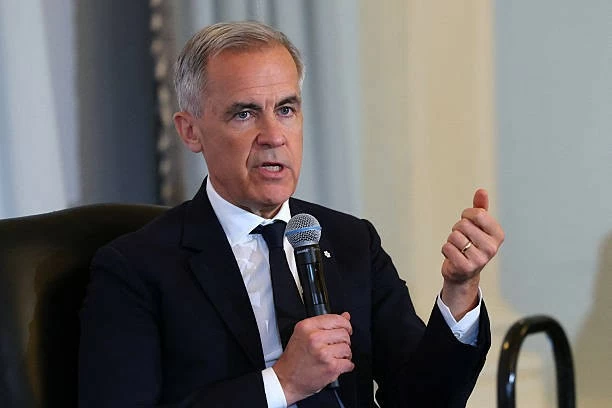
It is widely considered one of the most advanced combat aircraft ever built. But operating it requires constant software integration, maintenance infrastructure, spare parts access, encrypted logistics systems, and long-term technical support heavily tied to the United States.
Officially, there is no public evidence of a so-called “kill switch.”
But many defense planners across Europe have started realizing something equally important:
A country does not need a literal kill switch to exercise enormous influence over another nation’s military capabilities.
Dependency itself creates leverage.
If software updates slow down…
If spare parts become delayed…
If technical support becomes politicized…
Operational readiness can suffer rapidly.
And in an era of growing political unpredictability, that possibility suddenly feels far more real than it once did.
This is where Donald Trump re-enters the conversation.
Throughout his political career, Trump repeatedly challenged traditional assumptions about NATO, alliances, and burden-sharing.
He publicly criticized European allies for relying too heavily on American protection while failing to spend enough on defense themselves.
At times, he even suggested that American military commitments should become conditional.
For many European governments, those comments triggered alarm bells that never fully disappeared.
Because whether leaders agreed with Trump or not, his presidency exposed a strategic truth Europe had spent decades avoiding:
The continent’s security architecture depended heavily on political stability in Washington.
And political stability in Washington no longer looked guaranteed.
That realization is now fueling one of the biggest defense debates in Europe since the Cold War.
Should Europe continue building its military future around American systems?
Or should it develop true strategic autonomy?
The conversation has intensified dramatically in France and Germany.
French President Emmanuel Macron has repeatedly argued that Europe must reduce dependence on external powers and build stronger independent defense capabilities.
Meanwhile, European defense companies are racing to strengthen domestic production capacity.
Programs like FCAS — the Future Combat Air System — aim to create a next-generation European fighter platform independent from American dominance.
But internal tensions remain severe.
France, Germany, and Spain continue struggling over industrial leadership, technology sharing, and production control.
That frustration is one reason Airbus Defence and Space CEO Michael Schoellhorn recently signaled greater openness toward alternative partnerships — including deeper cooperation with Sweden’s Saab.
The message was unmistakable:
Europe is growing impatient.
And if political disputes continue delaying progress, some countries may move ahead without waiting for consensus.
Meanwhile, Canada is watching these developments carefully.
Although Canada remains deeply integrated with the United States through NORAD and NATO, discussions around procurement independence have quietly intensified.
Canadian policymakers understand the strategic dilemma well.
On one hand, geographic and military realities make cooperation with the United States unavoidable.
On the other hand, excessive dependence limits flexibility.
That tension has become increasingly visible as global politics grow more unstable.
Some analysts now believe Canada could eventually diversify portions of its procurement strategy toward European or Asian suppliers in specific sectors — particularly where supply speed and political independence become priorities.
The implications of this shift are enormous.
For decades, America’s military-industrial dominance gave Washington influence extending far beyond the battlefield.
Weapons systems create long-term alliances.
Maintenance contracts create dependency.
Software integration creates leverage.
Military procurement is not simply business.
It is geopolitical architecture.
That is why the current shift matters so much.
Because if Europe and Canada gradually diversify away from American systems, Washington could lose more than contracts.
It could lose strategic influence itself.
And this is where the debate becomes deeply controversial.
Supporters of greater European defense independence argue that diversification would actually strengthen NATO.
They believe allies capable of producing their own equipment, maintaining their own industries, and sustaining their own military readiness would reduce pressure on the United States while creating a more balanced alliance.
In this vision, NATO becomes stronger because responsibility becomes more distributed.
But critics warn of the opposite outcome.
They fear fragmentation.
Different systems create interoperability challenges.
Competing defense industries create political rivalries.
And diverging procurement strategies could gradually weaken the cohesion that has defined NATO for generations.
Some American analysts already worry that Europe’s growing push for “strategic autonomy” reflects declining trust in U.S. leadership itself.
That concern is becoming harder to dismiss.
Especially as political polarization intensifies across the Western world.
Especially as elections increasingly reshape foreign policy direction every few years.
Especially as allies begin preparing for scenarios they once considered impossible.
The irony is striking.
For years, Washington demanded that NATO countries spend more on defense.
Now they are.
But many are no longer automatically spending that money in America.
And that may become one of the most significant geopolitical shifts of the next decade.
Because beneath the contracts, fighter jets, and missile systems lies a much larger transformation:
A growing number of Western allies are beginning to believe that true security may require greater independence — even from their closest partner.
Whether that ultimately strengthens NATO or slowly fractures it remains uncertain.
But one thing is becoming impossible to ignore:
The era of unquestioned American defense dominance is no longer guaranteed.
And the world is starting to adjust.