Australia has announced a new round of sanctions targeting Israeli settlers and farming outposts in the West Bank, marking one of the strongest actions Canberra has taken in response to ongoing violence in the Palestinian territories.
The decision, unveiled by Foreign Minister Penny Wong, immediately attracted international attention because it is the first time Australia has sanctioned not only individuals but also farming outposts that authorities say have become centers of settler violence against Palestinians.
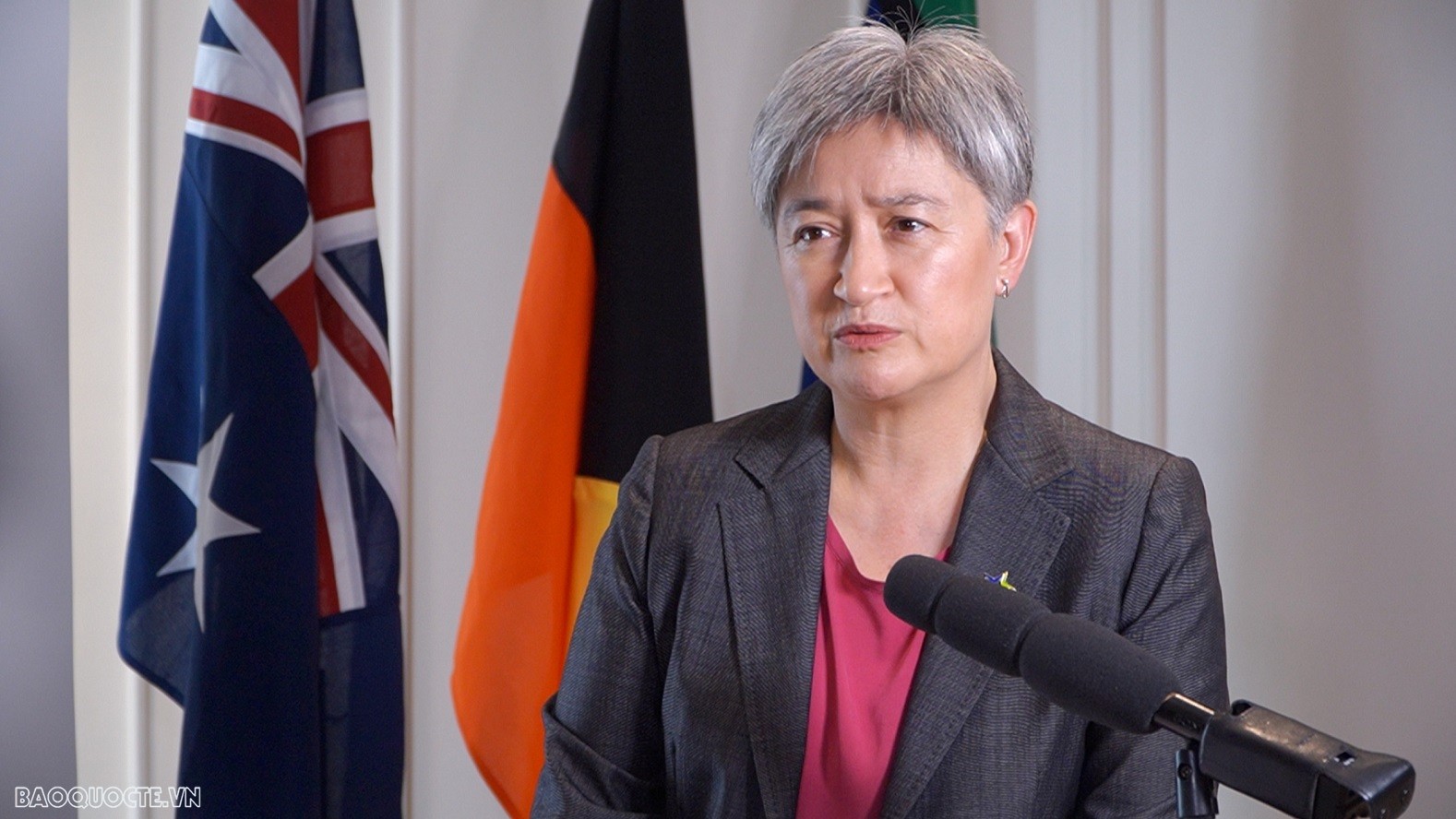
Under the new measures, three Israeli individuals and four entities have been subjected to targeted financial sanctions, while the individuals will also face travel bans preventing entry into Australia. The sanctions were coordinated with international partners, including New Zealand, as part of a broader effort to address escalating tensions in the West Bank.
The announcement comes amid growing international concern over rising violence in the occupied territory, where clashes between Israeli settlers and Palestinian communities have intensified in recent years.
According to the Australian government, the sanctions were imposed in response to what it described as escalating settler violence against Palestinians.

In a statement, Wong argued that such violence undermines both regional stability and prospects for a lasting peace agreement.
She said that settler violence has been linked to the destruction of property, displacement of families, physical assaults, and other abuses that have resulted in injuries and deaths.
The decision represents another significant development in Australia’s evolving approach to the Israeli-Palestinian conflict.
For decades, Australian governments have generally maintained strong diplomatic ties with Israel while also supporting a negotiated two-state solution.
However, recent years have seen increasing international pressure on Western governments to take a stronger stance against violence in the West Bank.

The sanctions announced this week build upon previous measures already imposed by Australia and several allied nations.
Last year, Australia introduced sanctions against Israeli settlers accused of involvement in violent activities in the West Bank, including financial restrictions and travel bans.
More recently, Australia joined the United Kingdom, Canada, New Zealand and Norway in sanctioning Israeli ministers Itamar Ben-Gvir and Bezalel Smotrich over allegations that their public statements encouraged extremist violence and settlement expansion.
What makes the latest sanctions particularly notable is their focus on physical locations rather than solely on individuals.
Australian officials stated that the newly designated farming outposts have allegedly functioned as hubs from which violent activities have been organized or supported.
The move mirrors actions previously taken by other Western governments.
The United States, during the Biden administration, became the first country to sanction entire settler outposts rather than only individual settlers, arguing that some outposts had become bases for attacks against Palestinian civilians.
European governments have also been increasing pressure.
Just days before Australia’s announcement, the European Union imposed sanctions on four organizations and three individuals connected to what it described as serious human rights abuses against Palestinians in the West Bank.
European officials argued that certain organizations had played a role in facilitating settlement expansion, land seizures, and the displacement of Palestinian communities.
The EU measures included asset freezes and travel restrictions similar to those now being adopted by Australia.
The broader dispute over settlements remains one of the most contentious issues in the Israeli-Palestinian conflict.
Israel captured the West Bank during the 1967 Six-Day War and has since allowed the establishment and expansion of numerous settlements throughout the territory.
Many countries and international organizations consider these settlements illegal under international law, while Israeli governments have disputed aspects of those interpretations.
The issue has become increasingly controversial as settlement construction has expanded and violence has escalated.
Human rights organizations have repeatedly documented attacks on Palestinian villages, agricultural land, and residents, often attributing them to extremist settler groups.
Israeli authorities have at times prosecuted individuals involved in violent incidents, but critics argue that enforcement has been inconsistent.
Supporters of stronger sanctions contend that international pressure is necessary to deter future abuses and protect vulnerable communities.
Critics, however, question whether sanctions alone can significantly alter conditions on the ground.
Some analysts argue that financial restrictions and travel bans carry symbolic importance but may have limited practical impact on individuals whose activities are largely localized within the region.
Others believe that the growing willingness of Western democracies to sanction settler organizations sends a powerful political message.
The timing of Australia’s decision is also significant.
The conflict in Gaza, ongoing tensions across the Middle East, and mounting international scrutiny of Israeli settlement policies have created a highly charged diplomatic environment.
Governments around the world are facing increasing pressure to demonstrate how they intend to respond to reports of violence and alleged human rights abuses.
Australia has emphasized that its sanctions are not directed against Israel as a state.
Instead, officials insist the measures target specific individuals and entities accused of contributing to violence.
Canberra also reaffirmed its support for Israel’s security while simultaneously stressing its commitment to Palestinian rights and the pursuit of a negotiated peace settlement.
Foreign Minister Wong reiterated that Australia remains committed to a two-state solution as the only realistic path toward lasting peace and security for both Israelis and Palestinians.
She described ongoing settlement expansion and settler violence as major obstacles to achieving that goal.
International reaction has been mixed.
Human rights advocates welcomed the sanctions, arguing that governments must hold perpetrators of violence accountable regardless of nationality or political affiliation.
Some pro-Palestinian groups, however, contend that broader measures are needed and have called for stronger action against institutions they believe enable settlement expansion.
Meanwhile, supporters of the Israeli settlement movement have criticized sanctions imposed by Western countries, arguing that they unfairly target Jewish communities living in disputed territories.
The debate is likely to continue as international governments weigh additional responses to developments in the West Bank.
For Australia, the sanctions represent a notable moment in foreign policy.
By targeting farming outposts for the first time, Canberra has signaled a willingness to move beyond symbolic statements and adopt measures that directly affect organizations accused of contributing to violence.
Whether the sanctions will have a meaningful impact on conditions in the West Bank remains uncertain.
What is clear is that Australia has joined a growing group of nations seeking to increase pressure on actors they believe are undermining peace efforts in one of the world’s most enduring and complex conflicts.
As tensions continue across the region, the consequences of these decisions—both diplomatic and political—will likely be closely watched by governments, activists, and communities around the globe.






