For decades, Canada built its prosperity on a relatively simple formula: strong trade relationships, stable global markets, and close economic integration with allies—especially the United States.
Now, according to many observers, that era may be coming to an end.
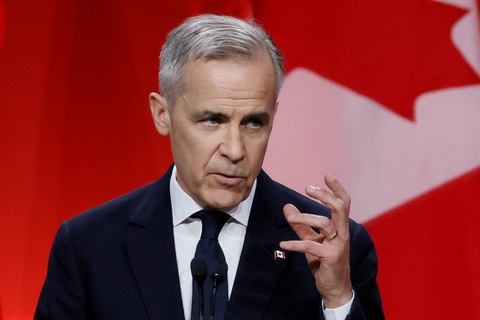
Recent comments from Canadian Industry Minister Mélanie Joly have sparked renewed discussion about whether Canada is entering a fundamentally different phase of its economic and geopolitical strategy—one focused less on efficiency and more on resilience, sovereignty, and self-reliance.
The remarks come at a time when global uncertainty is reshaping how governments think about economic security.
Supply chains that once seemed dependable have become vulnerable to disruptions.
Trade relationships that were viewed primarily as economic partnerships are increasingly being seen through the lens of strategic competition.
And countries around the world are reassessing how much dependence they can afford to place on foreign suppliers for critical industries.
Against that backdrop, Joly has repeatedly emphasized a message that has become central to the current government’s vision: economic strength is national strength.

While the phrase may sound straightforward, its implications are significant.
Rather than focusing exclusively on maximizing short-term efficiency, Canada is increasingly investing in domestic industrial capacity, strategic sectors, and technologies considered essential for long-term independence.
Recent government announcements provide a clearer picture of this shift.
In late May, Joly announced a $100 million federal investment in the deployment of ELYSIS low-carbon aluminum technology, supporting a broader $440 million industrial project in Quebec. The government described the investment as part of a strategy to strengthen domestic supply chains, protect jobs, and position Canada as a leader in sustainable industrial production.
The move reflects a growing belief among policymakers that strategic industries such as aluminum, critical minerals, advanced manufacturing, and clean technologies are no longer simply economic assets—they are national security assets.
That idea has become increasingly prominent in Canada over the past year.
Government officials have argued that rising tariffs, geopolitical tensions, and shifting trade relationships require a new approach to economic planning. Rather than relying heavily on a single trading partner, Canada is attempting to diversify markets while simultaneously expanding domestic production capabilities.
The automotive sector offers another example.
Earlier this year, Joly highlighted Canada’s new Automotive Strategy, which aims to strengthen domestic manufacturing and reduce vulnerabilities created by changing international trade dynamics. Government statements accompanying the strategy emphasized building a more resilient and independent economy capable of withstanding global shocks.
Supporters of the approach argue that the world has changed dramatically.
They point to supply chain disruptions experienced during recent global crises.
They point to growing competition between major powers.
And they point to the increasing use of trade restrictions, tariffs, and economic leverage as tools of international influence.
In their view, countries that fail to strengthen domestic capabilities risk becoming overly dependent on external actors whose priorities may not always align with their own.
That concern appears to be shared by Prime Minister Mark Carney.
In recent speeches, Carney has argued that many of Canada’s historical strengths—particularly its deep economic dependence on the United States—have also created vulnerabilities that must be addressed. He has repeatedly called for a stronger and more independent Canadian economy while pursuing new international partnerships across multiple continents.
The message is not one of isolation.
Far from it.
Canadian officials continue to stress the importance of international cooperation and trade.
But the emphasis is changing.
Instead of assuming global stability, policymakers are increasingly preparing for a world characterized by uncertainty, competition, and strategic rivalry.
This thinking is also influencing Canada’s defense and industrial policies.
Earlier this year, the federal government unveiled Canada’s first Defence Industrial Strategy, designed to expand domestic manufacturing capabilities, strengthen supply chains, and create jobs while reducing dependence on foreign suppliers. Officials described the initiative as part of a broader effort to reinforce Canada’s strategic autonomy.
Observers note that such language would have been far less common in Canadian political discourse just a few years ago.
Historically, Canada often positioned itself as a middle power benefiting from globalization and open markets.
Today, the discussion increasingly centers on resilience, security, and economic sovereignty.
The shift is also visible in Canada’s growing efforts to build relationships beyond North America.
Recent agreements with Germany and Norway have focused on industrial cooperation, advanced manufacturing, research partnerships, and securing critical supply chains. Government officials have described these partnerships as essential for creating a more diversified and resilient economy.
For some analysts, these developments represent a natural adaptation to changing global realities.
They argue that countries everywhere are reevaluating economic strategies that were developed during a more stable period of globalization.
For others, however, the transformation raises important questions.
Can Canada realistically reduce its dependence on the United States while maintaining economic growth?
Will major investments in domestic industries deliver the promised benefits?
And can the country successfully compete in increasingly strategic sectors such as advanced manufacturing, clean technology, critical minerals, and artificial intelligence?
The answers remain uncertain.
What is clear is that Ottawa appears committed to pursuing this path.
The government’s recently announced Canada Strong Fund—a sovereign wealth fund designed to invest in strategic national projects—illustrates the scale of its ambitions. Officials have described the initiative as a tool for supporting innovation, infrastructure, technology, energy, and industrial development while giving Canadians a direct stake in long-term economic growth.
Meanwhile, broader geopolitical developments continue to reinforce the government’s argument.
Global competition for resources is intensifying.
Trade disputes remain common.
And many governments are increasingly treating economic policy as an extension of national security policy.
In this environment, Joly’s comments may represent more than a simple political slogan.
They may reflect a strategic shift that is already reshaping how Canada defines prosperity, competitiveness, and national strength.
Whether that strategy succeeds remains one of the most important questions facing the country.
Its supporters see a blueprint for a stronger, more independent Canada.
Its critics worry about costs, risks, and unintended consequences.
But few dispute that the country is moving in a new direction.
And if current policies continue, historians may eventually look back on this period as the moment when Canada began redefining its place in a rapidly changing world—not merely as a trading nation, but as a country determined to build greater economic resilience, industrial capacity, and strategic autonomy for the decades ahead.






