Shifting Alliances: How Geopolitical Ruptures are Forcing a US-Canada Realignment
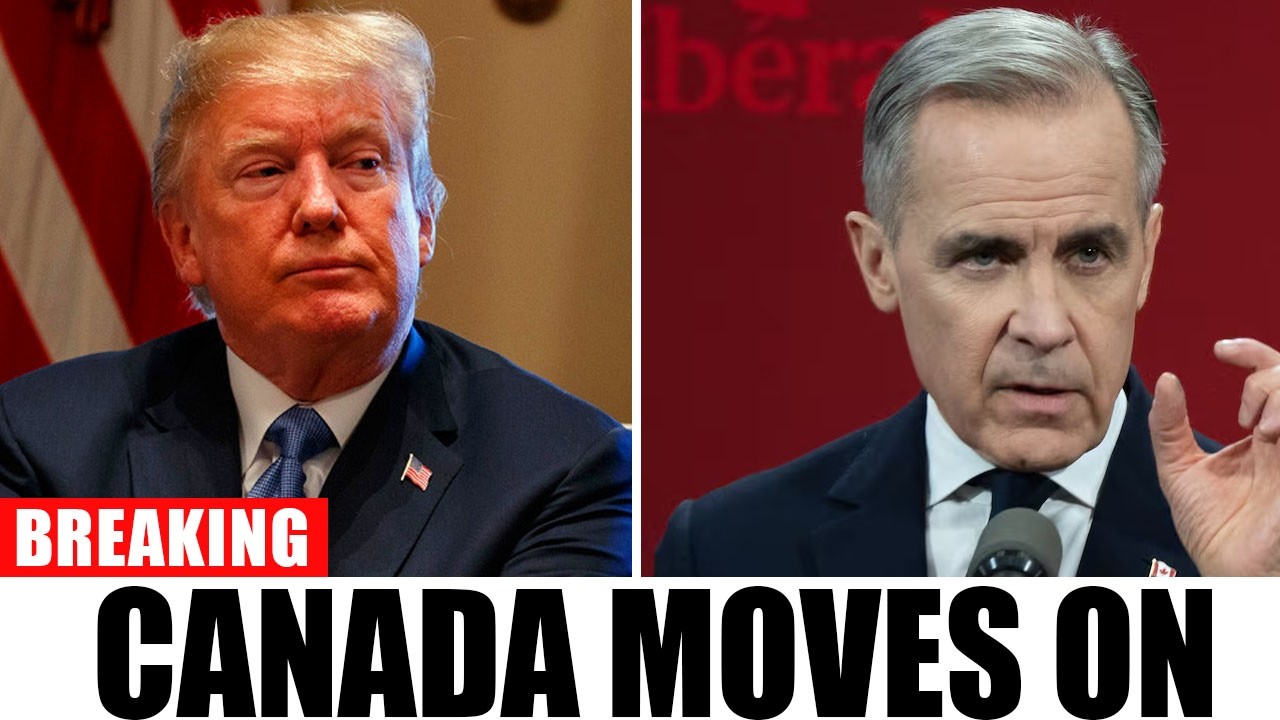
As Canada and the US work to see eye to eye on trade, Prime Minister Mark Carney delivered a highly anticipated speech in New York. He called for a bold new partnership between the two traditional allies as the world undergoes what he described as a historic “rupture.”
The Canadian leader made his strategic intentions clear to the audience of policymakers and international investors. “Let’s be absolutely clear. Canada Strong will help make America great again,” Carney stated, offering a reliable counterweight to global volatility. “Our reputation as a reliable, predictable partner has rarely been more valuable in a world where transactions are replacing relationships.”
For generations, Canada and the United States have shared one of the closest and most successful partnerships in modern history. The two neighboring nations share the world’s longest undefended border, which serves as a testament to their deep institutional trust. Furthermore, their economies are completely intertwined, and their militaries cooperate fully through vital defense frameworks like NATO and NORAD.
For decades, leaders on both sides of the border have routinely described this bilateral relationship as not only important, but entirely unique. Yet, in recent months, sharp questions have emerged about whether this foundational alliance is entering a dangerous new phase. “We’re blessed with many commodities in Canada,” Carney noted during his address, “but we have earned the most valuable one, which is trust.”

Ongoing trade disputes, shifting domestic political priorities, and evolving global threats are forcing both capitals to reconsider assumptions that once seemed completely permanent. Despite these rising bilateral tensions, this period has also marked a remarkable turning point for Canada’s defense strategy and industrial base. Foreign observers are tracking Ottawa’s rapid defense investments, noting that the country is aggressively accelerating its military industrial developments.
Most notably, Canada is actively moving toward hitting the strict 2% of GDP defense spending target mandated by NATO. This dramatic surge in military positioning is happening at a moment of visible friction in the bilateral relationship between Washington and Ottawa. While both nations must navigate this immediate strategic tension, maintaining a robust, healthy partnership embedded in a larger network of democratic allies remains absolutely vital to collective Western security.
The historic Canada-US partnership is certainly not disappearing, but it may never look exactly the same again. To understand the depth of the current friction, it helps to examine how this stabilized relationship was initially built. For much of the modern era, Canada and the United States benefited from a remarkable, predictable level of continental stability.
Bilateral trade agreements continuously expanded economic ties, allowing manufacturing supply chains to stretch seamlessly across the border. Consequently, millions of jobs on both sides came to depend directly on the free, uninterrupted flow of goods, services, and investment capital. At the same time, both countries shared identical geopolitical and strategic goals, working closely on global defense, intelligence gathering, and international diplomacy.
Whether responding to sudden security threats or global economic challenges, cross-border cooperation was always viewed as the natural and logical choice. This long, historic period of partnership created a widespread belief among the public that the relationship would always remain unbreakable. It was assumed the alliance would withstand pressure regardless of which political party happened to hold power in Washington or Ottawa.
However, recent international and domestic developments have fundamentally challenged that long-standing assumption. Over the last several years, bitter disagreements over tariffs, nationalist trade policies, and heavy industrial competition have become increasingly visible to the public. Political rhetoric has also turned significantly more confrontational, eroding the polite diplomatic baseline that historically characterized North American relations.
Canadian leaders have expressed growing concern about systemic unpredictability in Washington’s long-term policy commitments. Meanwhile, American officials have openly questioned long-standing trade arrangements, intellectual property rules, and shared economic priorities. What once seemed like routine, manageable policy disagreements have increasingly raised larger, more alarming questions about basic trust and institutional reliability.
These mutual concerns became highly noticeable when Prime Minister Mark Carney traveled to New York to deliver his strategic message. His address argued that the global rules-based system is undergoing a massive, irreversible change. Carney described a fragmented world where traditional diplomatic relationships are being heavily tested and where deep strategic trust is becoming scarce.
This message was not simply directed at the political establishment in Washington, but was calibrated for a much wider audience. It was intentionally aimed at global investors, multinational businesses, and international partners trying to navigate growing geopolitical uncertainty. Carney heavily emphasized that Canada remains a highly reliable and predictable partner at a time when many countries are frantically reassessing their core economic and strategic vulnerabilities.
In many ways, the New York speech reflected a broader, more defensive shift in contemporary Canadian strategic thinking. Rather than assuming that close relations with Washington can always be taken for granted, Canadian policymakers are increasingly focused on strengthening their own independent position. This national shift can be seen most clearly in the country’s rapidly evolving defense policy.
Canada has recently approved historic increases in military spending and accelerated targeted efforts to strengthen its independent defense capabilities. For years, successive governments in Ottawa faced harsh domestic and international criticism for failing to meet basic NATO spending targets. More recently, however, the federal government has moved aggressively to expand investments in critical defense infrastructure, military readiness, and heavy industrial production.
Supporters argue that these expensive investments are necessary not only for national security, but also for maintaining Canada’s voice among its Western allies. The message being sent out to the world is both clear and undeniable. Canada explicitly wants to be viewed as a serious, capable contributor to collective security and a resilient partner in an increasingly competitive international environment.
At the exact same time, Ottawa has quietly worked to deepen its economic and diplomatic relationships well beyond North America. European partnerships have received significantly greater attention from Canadian diplomats, and trade diversification has become a prominent national security goal. Consequently, official discussions regarding critical minerals, energy security, and advanced technology cooperation have expanded significantly across the Atlantic and Pacific.
These global diversification efforts do not suggest that Canada is intentionally turning its back on the United States. Instead, they realistically reflect a desire to build greater economic flexibility in a world that appears far less predictable than it once did. Many astute policymakers in Washington fully understand these valid Canadian security concerns.
Former American officials and national security experts have repeatedly emphasized the strategic importance of maintaining an ironclad relationship with Canada. They point out that North American geography alone creates powerful, permanent incentives for total security cooperation. The two nations share massive economic networks, transportation systems, energy infrastructure, and continent-wide security responsibilities that simply cannot be separated without devastating consequences.
Even during these intense periods of political disagreement, both sides of the border remain deeply and structurally connected. However, many foreign policy observers also acknowledge that these current geopolitical tensions have become far harder to ignore.