Weaponizing Conscience: The Cynical Backdoor to the US-Canada Tariff War
It was just after dark in Washington when the geopolitical bombshell dropped on Tuesday, June 2nd, 2026. The timing was highly deliberate, landing just hours after US Trade Representative Jamison Greer sat smiling across a table from Canada’s Trade Minister, Dominic LeBlanc.
The initial handshakes for the cameras proved to be a calculated smokescreen. Shortly after the meeting adjourned, Greer’s office unleashed a sweeping press release targeting dozens of trading partners under a single, highly inflammatory headline: global tariffs justified by systemic forced labor.
On the surface, Washington is framing this move as a grand humanitarian crusade to purge exploited labor from Western supply chains. Following a multi-month probe launched in March into 59 nations and the European Union, the White House handed down a stunning, blanket verdict.
Every single audited jurisdiction—all 60 out of 60—failed the American test on the exact same night. When a regulatory referee blows the whistle on every single player on the global field simultaneously, it becomes clear the referee is playing a very different game.
Washington divided its new economic targets into two distinct geopolitical tiers. A heavier 12.5% tariff was slapped on 44 countries with partial or nonexistent forced labor laws, hitting vital Asian allies like Japan, South Korea, and Singapore.
Meanwhile, a smaller group of 16 jurisdictions, including Canada, the UK, and the EU, were hit with a 10% tariff. Washington claims this lighter penalty targets nations that have the proper laws on the books but allegedly under-enforce them at their borders.
However, the logical contortion of this policy immediately invited fierce international criticism. Policy experts note that Canada has pioneered rigorous anti-forced labor legislation for years, meaning this sudden penalization has very little to do with protecting workers’ rights.
“The forced labor issue is an excuse—a convenient legal cover for blanket tariffs that Washington heavily desired to impose anyway.” — David Henig, European Centre for International Political Economy
The real narrative requires rewinding to February 2026, when the US Supreme Court struck a massive blow to the White House trade agenda. The high court decisively ruled against the administration’s sweeping, blanket global tariffs, leaving trade officials scrambling to rebuild their protectionist walls.
Faced with a slammed front door, Washington trade architects simply engineered a cynical backdoor. By launching a values-based probe under the guise of statutory labor laws, the executive branch managed to resurrect the identical tariffs rejected by its own highest court.
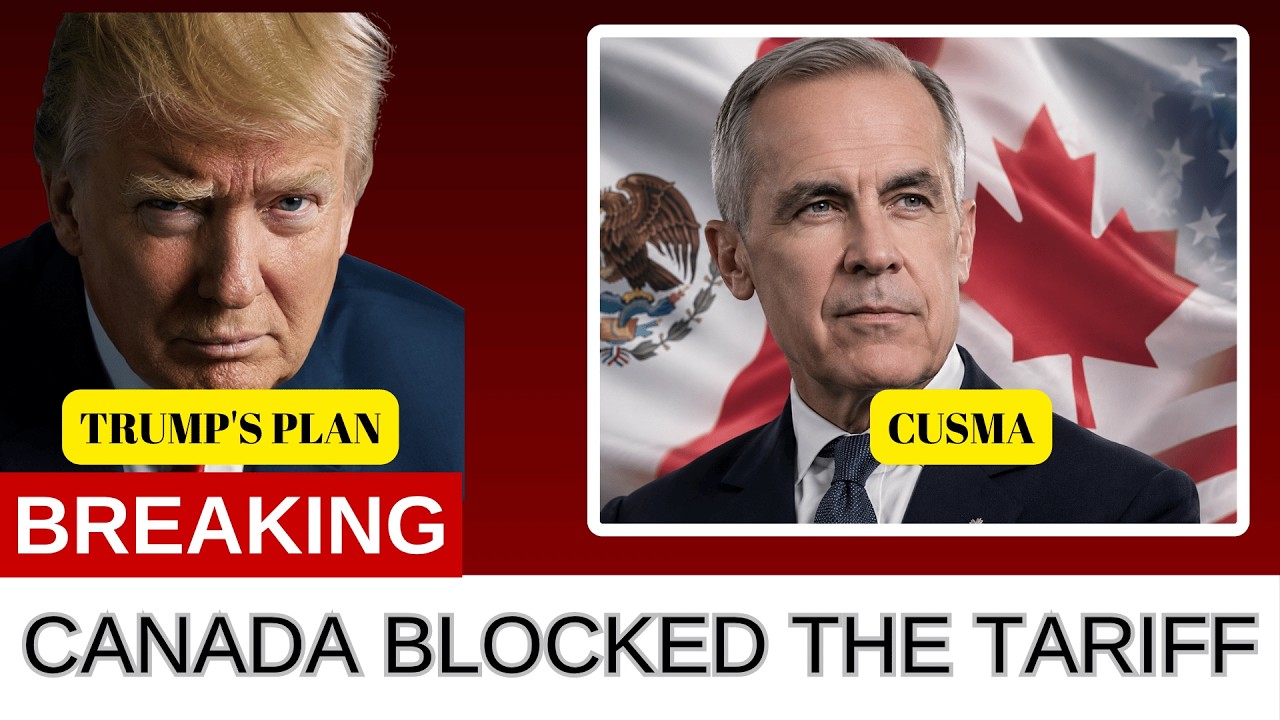
Yet, Canada’s long-term economic defenses were well-prepared for this specific style of cross-border ambush. Greer’s actual proposal levies a 10% tariff on Canadian exports, but it carries a massive, defining catch: it only applies to goods that fail to comply with the rules of origin under CUSMA.
This single acronym changes everything for northern exporters, as nearly 90% of all Canadian trade shipped south already strictly complies with CUSMA. The administration aimed a heavy economic cannon at its northern neighbor, only for the shell to hit a legal wall built years ago by Canadian negotiators.
Recognizing the strength of this institutional firewall, Prime Minister Mark Carney refused to play into Washington’s hands with public outrage. Instead, Carney calmly pointed out the explicit CUSMA carve-out, demonstrating that the vast majority of Canadian commerce would proceed completely untouched.
Furthermore, Carney took the moral high ground by agreeing with the underlying principle of eradicating forced labor, effectively neutralizing Trump’s attempt to frame Canada as a villain. This calculated, strategic response allowed the diplomatic blow to bounce harmlessly away while preserving Canada’s sovereign dignity.
However, a brutal assessment of the 92-page Washington document reveals one major systemic vulnerability that Ottawa cannot easily ignore. Between 2020 and 2026, Canadian border authorities intercepted a mere 50 shipments suspected of forced labor origins, ultimately blocking just two.
In stark contrast, US Customs officials operating under the Uyghur Forced Labor Prevention Act inspected over 6,000 suspicious shipments, blocking more than 2,500 outright. This staggering statistical gap exposed a real lack of enforcement teeth, leaving an unlocked door that Washington eagerly exploited.
To build its case, the US relies heavily on internal data from Above Ground, a prominent Canadian human rights group. The advocacy group previously warned that Canadian industries could be inadvertently profiting from tainted global commodities like seafood, coffee, cocoa, and cotton.
Yet, in a striking twist, Above Ground’s director, Karen Hamilton, explicitly warned the American government not to impose these tariffs on Canada. While demanding internal reform, Hamilton rejected the penalties, exposing them as an unprincipled attempt to bypass the US Supreme Court’s constitutional restrictions.
Hamilton’s pushback captures the defensive mood of a nation that is growing increasingly weary of foreign economic intimidation. The sudden labor penalties dropped the very same week the US President publicly needled Canada about becoming a hypothetical “51st state.”
This isn’t an isolated regulatory dispute; it is a coordinated, multi-front campaign designed to make Canada fold under pressure. Fortunately, US trade protocols dictate that these sweeping tariffs cannot be enacted into law overnight.
Washington is legally mandated to run a public comment period, with official agency hearings scheduled to begin this July. This brief window provides Ottawa with a prime strategic opportunity to pivot from passive defense to a permanent counter-offensive.
The smartest move for Ottawa is to immediately close its border enforcement gap by aggressively enforcing its existing 2020 ban. By publishing transparent customs statistics and seizing illicit cargo, Canada can protect vulnerable global workers while completely stripping the legal pretext out of Washington’s hands.
Defending trade through the CUSMA shield while aggressively correcting real border enforcement vulnerabilities is the ultimate winning play. When the tariff hearings begin in July, Canada will have the tools to expose a cynical cash grab and defend its economic sovereignty on the global stage.






