A heated exchange during a Senate committee hearing has reignited debate over one of Australia’s most pressing economic challenges: productivity.
Government officials and opposition figures clashed over whether the federal government’s latest tax reforms will actually strengthen the economy or simply expand government revenue at a time when Australians are already facing rising living costs, housing pressures, and economic uncertainty.

The confrontation unfolded during questioning of Treasury Secretary Jenny Wilkinson and government ministers as Senator Matt Canavan repeatedly pressed officials on a straightforward question: will the government’s major tax changes increase productivity?
The answer, according to critics, was far from clear.
Canavan focused on several of the government’s most significant tax measures, including reforms to capital gains tax, negative gearing arrangements, and trust taxation rules.
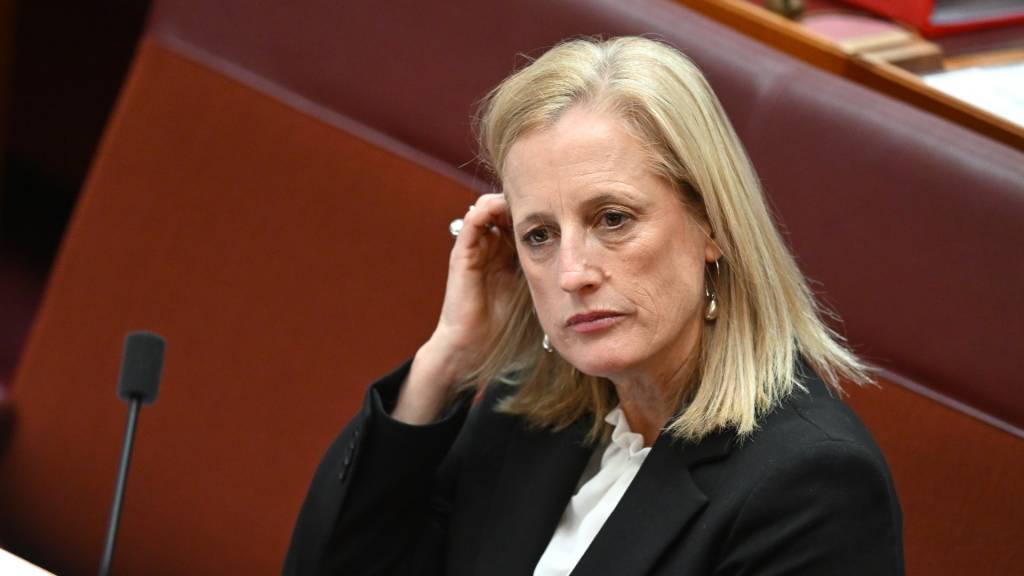
The senator argued that productivity remains Australia’s greatest long-term economic challenge and questioned whether the government’s tax package had been supported by detailed economic modelling demonstrating clear productivity gains.
Treasury officials pointed to a range of business-focused measures included in the budget, including changes to research and development incentives, reforms to loss carry-forward rules, permanent instant asset write-offs, and adjustments to venture capital investment thresholds.
According to Treasury, these measures are designed to encourage innovation, investment, and economic activity.
However, when pressed on whether specific modelling had been undertaken regarding the productivity impacts of capital gains tax reforms, negative gearing changes, and trust arrangements, officials acknowledged that evidence from international studies remains mixed.
Treasury representatives cited analysis from the Organisation for Economic Co-operation and Development (OECD), arguing that global evidence on the relationship between concessional capital gains tax treatment and productivity outcomes is not definitive.
Instead of providing a specific productivity estimate, officials argued that the reforms would help direct capital toward more productive investments by reducing tax distortions within the economy.
That response failed to satisfy the opposition.
Canavan repeatedly asked whether Treasury had produced any quantitative estimate showing how much productivity would increase as a result of the changes.
He argued that Australians deserved a clear answer given the scale of the reforms.
The exchange quickly evolved into a broader debate about Australia’s economic performance under the current government.
Canavan claimed Australia is experiencing one of the weakest periods of productivity growth in modern history, pointing to several years of declining output per worker.
According to the senator, the government has failed to address the root causes of stagnant productivity while simultaneously increasing the tax burden on households and businesses.
He contrasted the current reforms with major economic transformations of previous decades, including the Hawke-Keating reforms of the 1980s and the introduction of the Goods and Services Tax under the Howard government.
Those reforms, he argued, were accompanied by substantial reductions in personal income taxes and significant structural changes designed to boost economic efficiency.
“The difference is that those reforms reduced taxes and increased competitiveness,” Canavan suggested during the hearing.
“The current package increases government revenue and expands the size of government.”
Treasury officials pushed back against that characterization.
They maintained that the government’s objective is not simply to raise revenue but to improve the allocation of investment capital throughout the economy.
According to Treasury, the reforms are intended to reduce incentives that may encourage excessive investment in existing housing assets while directing more capital toward productive sectors of the economy.
Government ministers also emphasized that the budget contains a broader productivity agenda beyond tax reform alone.
When challenged on what specific measures would increase productivity, ministers pointed to a range of initiatives covering housing, energy, infrastructure, regulatory reform, innovation, workforce development, and the creation of a more integrated national market.
Officials argued that productivity improvements cannot be achieved through a single policy change and instead require coordinated action across multiple sectors.
Yet the opposition remained unconvinced.
Canavan accused the government of relying on broad statements rather than measurable outcomes.
He argued that if the reforms were truly designed to increase productivity, the government should be able to provide detailed estimates demonstrating the expected benefits.
The debate became increasingly political when ministers accused the opposition of criticizing policies they had already voted against.
Government representatives argued that many of the reforms now being questioned were designed to address long-standing structural issues that previous governments had failed to resolve.
Housing affordability emerged as one of the central themes of the hearing.
Government ministers defended changes to property-related tax arrangements by arguing that Australia’s housing market has become increasingly inaccessible for younger generations.
They claimed the existing tax system has contributed to rising property prices and encouraged investment patterns that have made home ownership more difficult for first-time buyers.
According to ministers, maintaining the status quo would only worsen the housing crisis.
“The status quo is not working,” one minister told the committee.
“I think most Australians recognize that.”
The government insists that reforming the interaction between taxation and housing policy is necessary to improve affordability over the long term.
However, critics argue the timing could not be worse.
Canavan cited concerns raised by real estate professionals who claim uncertainty surrounding the budget is already affecting buyer confidence.
He pointed to growing anxiety among households dealing with inflation, interest rates, international instability, and broader economic uncertainty.
According to critics, introducing major tax reforms during such a fragile period risks undermining confidence in the housing market and the wider economy.
Government ministers rejected those concerns, insisting the reforms were carefully considered and designed to support long-term economic stability.
They argued that difficult decisions are necessary if Australia hopes to improve housing affordability and create a more productive economy for future generations.
The exchange highlighted a growing divide in Australia’s economic debate.
On one side are those who believe structural tax reform is necessary to modernize the economy and improve fairness in housing and investment markets.
On the other are critics who fear the reforms may discourage investment, expand government influence, and fail to deliver the productivity improvements being promised.
As Australia’s productivity growth remains sluggish and housing affordability continues to dominate public concern, the stakes surrounding the government’s economic strategy have rarely been higher.
The Senate hearing may have ended without a definitive answer to whether the tax changes will boost productivity, but it made one thing clear: the battle over Australia’s economic future is only beginning.






