NATO’s Top Commander Signals a Historic Shift: Canada May Be Entering Its Most Important Strategic Era
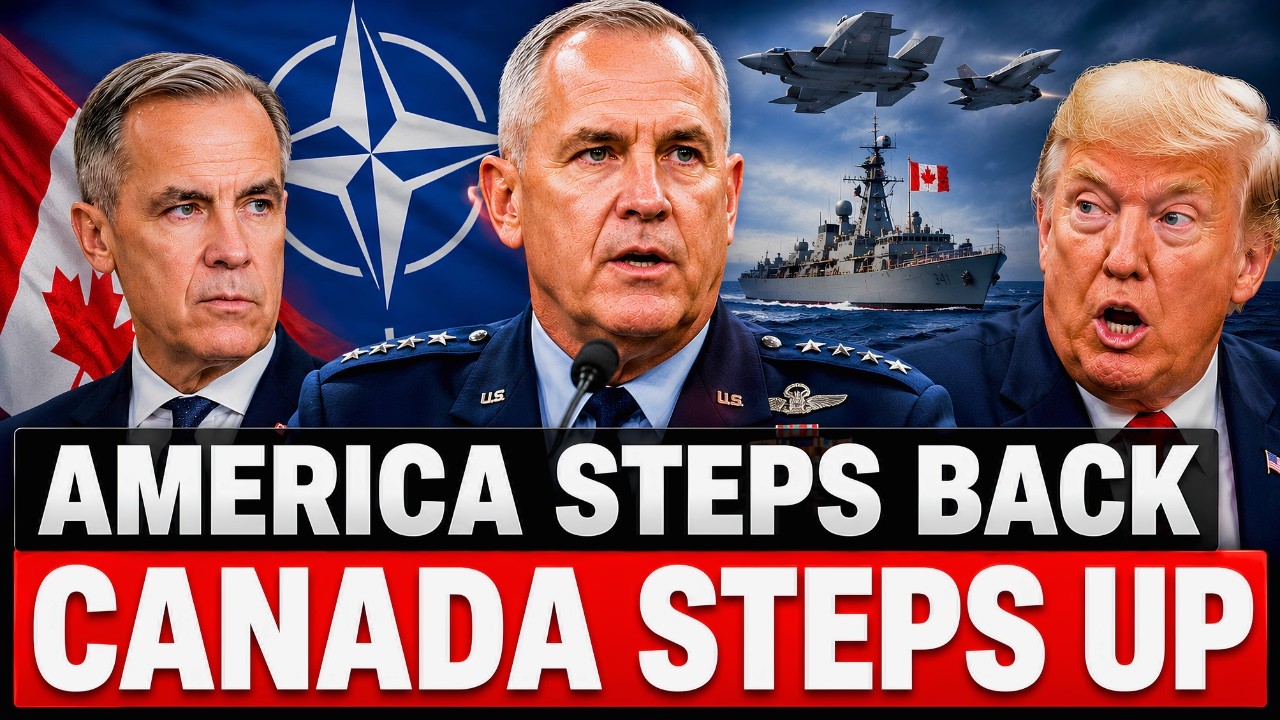
Something extraordinary happened inside NATO this week, and surprisingly few people seem to understand just how significant it could become.
The alliance’s highest military commander delivered a message that may redefine the balance of responsibility across the Western world for decades to come.
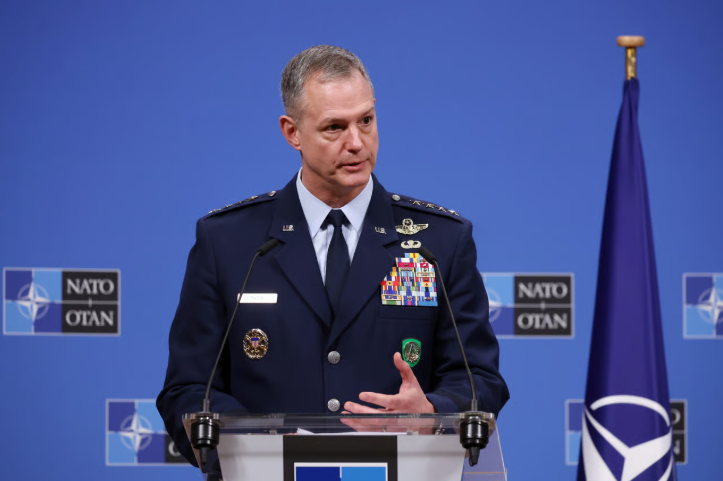
General Christopher Grinkevich, NATO’s Supreme Allied Commander Europe, told American lawmakers that the alliance has developed what he described as an unhealthy dependence on U.S. military power.
More importantly, he made it clear that Washington intends to change that reality.
For seventy-five years, NATO’s military structure rested on a simple assumption. If a major crisis emerged, the United States would provide the overwhelming share of military power needed to defend the alliance.
That assumption is now being revised from inside Washington itself.
This is not a demand coming from Europe. It is not pressure from Canada. It is a strategic decision being driven by the United States government.
For defense planners across the alliance, that changes everything.
Grinkevich specifically called on European allies and Canada to strengthen their air and naval capabilities. His message was not simply about spending more money. It was about building real military capacity.
Aircraft, surveillance systems, warships, logistics networks, and industrial production are now becoming strategic priorities.
The reason is simple. American resources are increasingly being stretched across multiple regions simultaneously, from Europe and the Arctic to the Indo-Pacific and the Middle East.
Washington no longer wants to carry the same burden alone.
Across Europe, governments have already begun responding. Germany is accelerating its rearmament program. Poland continues expanding one of the largest military modernization efforts in Europe. Britain and France are rebuilding critical capabilities lost after decades of defense cuts.
But Canada may be entering this transition from a surprisingly strong position.
Over the past year, Ottawa has quietly launched a series of initiatives that now appear remarkably well aligned with NATO’s evolving priorities.
Canada recently nominated General Jennie Carignan to lead NATO’s Military Committee, one of the alliance’s most influential leadership positions.
If successful, a Canadian officer could help oversee the very restructuring process now being discussed across NATO.
At the same time, Canada joined several allies in strengthening Arctic security cooperation, reflecting growing concern over military activity in the High North.
The Arctic is rapidly becoming one of the most strategically important regions on Earth.
Melting sea ice is opening new shipping routes while increasing access to natural resources. Russia has expanded its military presence there for years, and China continues to describe itself as a near-Arctic power.
For Canada, this is not a distant geopolitical issue. It is a national security challenge unfolding directly on its northern frontier.
That reality helps explain Ottawa’s decision to invest in advanced surveillance capabilities such as the Saab GlobalEye airborne early warning system.
The objective is straightforward: reduce dependence on foreign intelligence assets and strengthen Canada’s ability to monitor its own territory.
Canada has also expanded its role in defense manufacturing.
The opening of new drone production facilities and growing cooperation with European defense industries suggest Ottawa is preparing for a future where industrial capacity becomes just as important as military manpower.
Modern conflicts are no longer won solely by soldiers and equipment already in service.
They are won by countries capable of producing replacement systems quickly and sustaining operations over long periods of time.
This is one reason NATO members are increasingly focused on domestic manufacturing, supply chains, and technological independence.
Canada’s growing involvement in these areas positions it as more than simply a contributor to collective defense. It positions Canada as a strategic enabler.
The economic implications could be equally significant. Countries that play larger roles in alliance security often gain greater influence in trade negotiations, diplomatic discussions, and international investment decisions.
Military relevance frequently translates into political influence.
That is why Grinkevich’s remarks matter far beyond defense circles.
His statement effectively acknowledges that the Western security order is entering a new phase, one in which responsibility will be distributed more broadly among allies.
For Canada, that shift presents both risks and opportunities. The risk is obvious. Greater responsibility requires greater investment, stronger military capabilities, and difficult political decisions.
But the opportunity may be even larger.
A Canada that successfully adapts to this new environment could emerge as one of the alliance’s most influential middle powers.
The broader message from NATO’s top commander was unmistakable. The era of overwhelming American dominance within the alliance is gradually giving way to a more balanced model of collective defense.
The transition will not happen overnight. Yet the direction is becoming increasingly clear.
As Washington steps back from some traditional roles, allies will be expected to step forward. And among those allies, Canada appears to be positioning itself for exactly that moment.
Whether it can fully seize the opportunity remains uncertain. But one thing is becoming difficult to ignore.
The future NATO described by its top commander looks remarkably similar to the future Canada has quietly been preparing for all along.