Anchoring the Atlantic: The Geopolitical Dawn of Canadian LNG
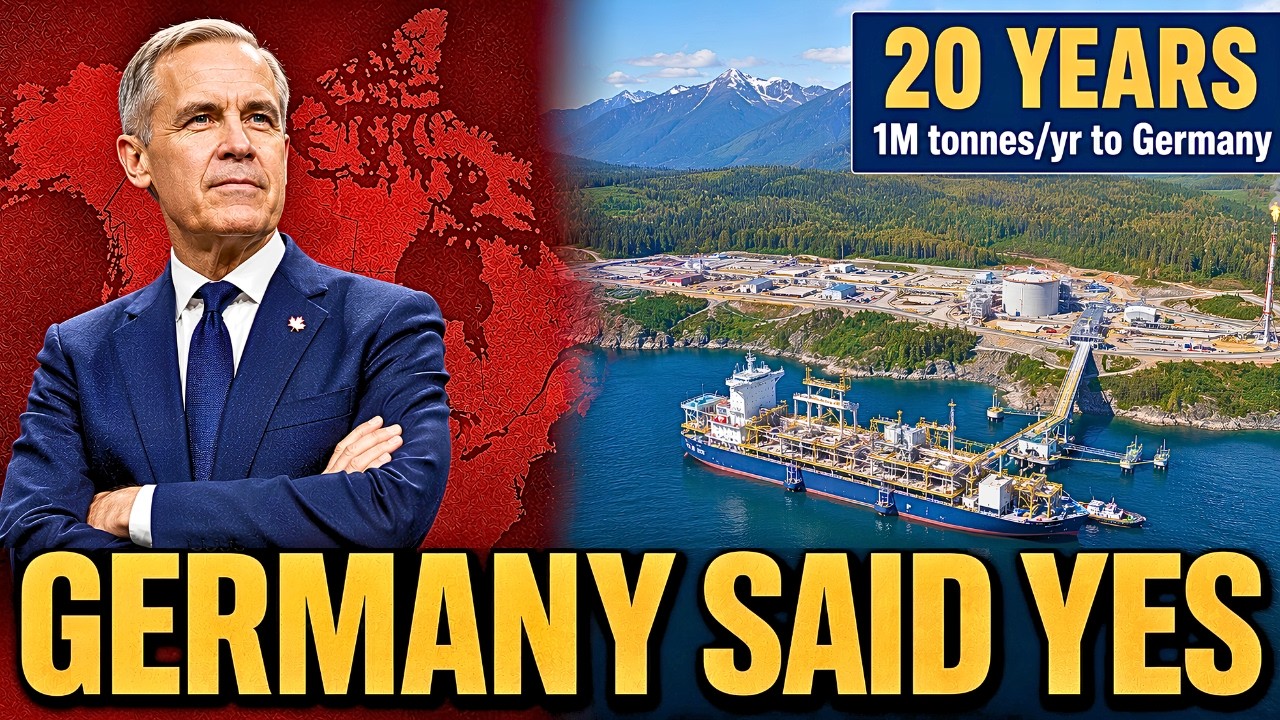
A profound shift shook the global energy landscape late last month. Just over four years after Prime Minister Justin Trudeau famously declared there was “no business case” for exporting Canadian liquefied natural gas (LNG) to Europe, Berlin and Ottawa effectively rewrote the script.
The initial hard refusal has officially dissolved into a signed, 20-year sovereign energy pact. On May 27th, Canada locked in its first-ever long-term LNG supply agreement with a European buyer, marking a critical turning point in transatlantic energy security.
The landmark deal pairs Ksi Lisims LNG, a proposed $10 billion floating export terminal in British Columbia, with Securing Energy for Europe (SEFE)—the state-owned energy enterprise of the German federal government. Under the framework, Canada will supply one million tons of LNG annually for up to two decades, with deliveries slated to commence in the early 2030s.
This is not merely a standard commercial transaction; it is Canada’s first European LNG supply deal, full stop. Announcing the agreement in Vancouver, Energy Minister Tim Hodgson stood alongside BC Premier David Eby and Eva Clayton, President of the Nisga’a Lisims Government.
To fully appreciate the gravity of this moment, one must revisit the strategic failure of August 2022. Six months after Russia’s invasion of Ukraine shattered Germany’s reliance on cheap pipeline gas, Chancellor Olaf Scholz flew to Canada on an urgent mission to secure alternative energy.
When Ottawa turned Scholz away, citing a lack of economic viability, Germany was forced to sign a multi-decade supply contract with Qatar extending to 2041. That historic rejection stood for years as a stark symbol of Canada’s inability to project economic power beyond North America.
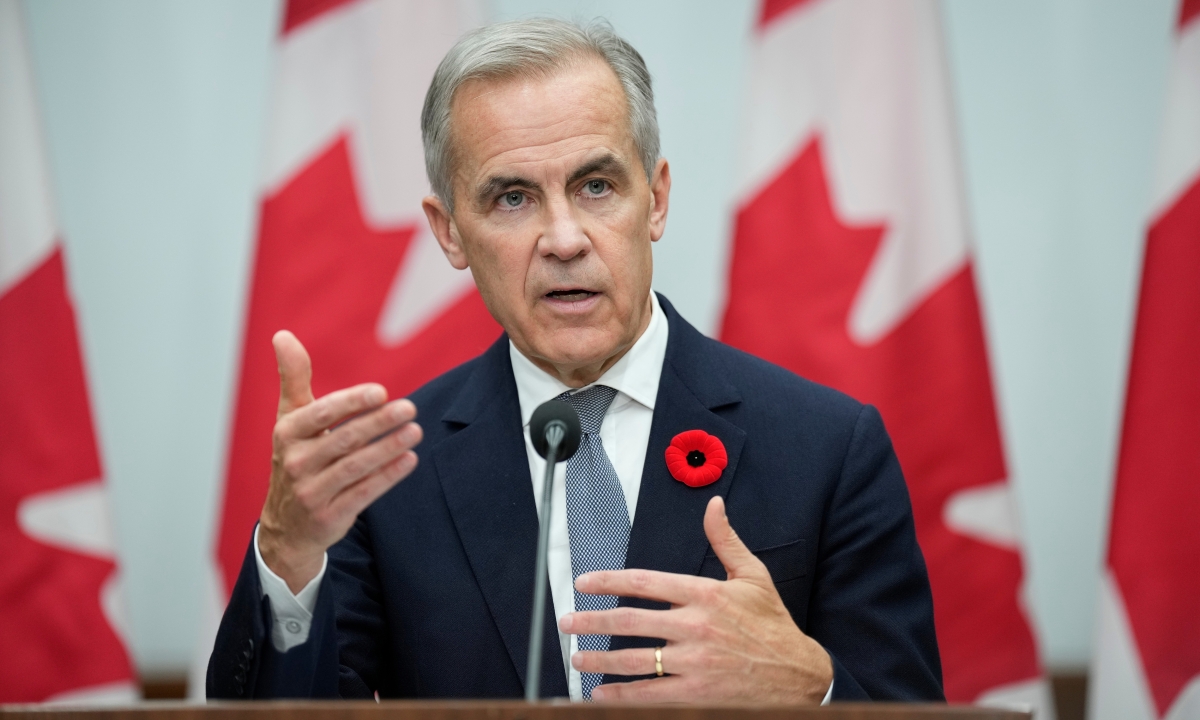
The new administration under Prime Minister Mark Carney has spent its first year in office aggressively dismantling that legacy of isolation. Last week’s breakthrough in Vancouver is the clearest evidence yet that Canada’s approach to global energy statecraft is being completely overhauled.
“By working more closely together, we diversify our supply chains and make our economies more resilient to global risks.” — Katharina Reiche, German Economy Minister
The infrastructure driving this geopolitical pivot is the Ksi Lisims LNG project, located on Pierce Island near the Alaska Panhandle. Crucially, the terminal sits on land fully owned by the Nisga’a Nation, a self-governing First Nation that signed a historic modern treaty in 1998.
Because the Nisga’a are foundational owners rather than minority stakeholders, the project avoids the traditional legal and political quagmires that have historically paralyzed Canadian resource development. The venture is co-led by Houston-based Western LNG and Rockies LNG, a consortium of major Canadian gas producers.
Global energy majors are already positioning themselves around the terminal’s 12-million-ton annual capacity. French giant TotalEnergies secured two million tons per year alongside a 5% equity stake last year, while Shell has issued similar long-term commitments.
A core competitive advantage of the facility is its reliance on British Columbia’s abundant, renewable hydroelectricity grid. By utilizing clean shore power rather than burning natural gas to drive its liquefaction turbines, Ksi Lisims will operate as one of the lowest-emission LNG facilities in the world.
This environmental profile is an absolute prerequisite for European state buyers operating under strict carbon reduction mandates. Powered by hydro, Canadian LNG offers Berlin a politically viable, low-carbon alternative that fossil-fueled operations in Qatar or the US Gulf Coast simply cannot match.
The identity of the buyer further underscores the deep geopolitical undercurrents of the deal. SEFE was originally a German subsidiary of Gazprom, the Kremlin’s state-owned gas monopoly used for decades to exert leverage over Europe.
Following the outbreak of the Ukraine war, Berlin systematically expropriated the company from Gazprom and nationalized it under full federal ownership. When SEFE signs a 20-year contract, it is an explicit geopolitical declaration by the German state that it views Canada as a trusted, permanent security partner.
The signing ceremony at the Canadian Embassy in Berlin carried a quiet message intended for Moscow, Tehran, and even Washington. Currently, Canada suffers from a massive strategic vulnerability, exporting virtually 100% of its surplus oil and natural gas to a single customer: the United States.
Prime Minister Carney’s core economic doctrine treats this total dependence on the American market as a critical national security threat. With the US frequently brandishing protectionist tariff threats, diversifying Canada’s energy export base to Europe and Asia has become an urgent defensive priority.
The timing of the announcement is similarly tied to mounting chaos across global maritime chokepoints. With Iran threatening to choke off the Strait of Hormuz—the vital shipping lane carrying 20% of the world’s traded oil—European governments are desperately searching for secure alternatives.
The economic rationale for this diversification is starkly illustrated by global price structural differentials. For decades, Canadian producers have been forced to sell their gas into the saturated domestic market at the heavily discounted AECO benchmark price of two to three dollars per million BTU.
By contrast, continental European LNG prices consistently hover between 12 and 14 dollars under normal market conditions. Capturing this dramatic price spread on the one-million-ton German contract translates to roughly $380 million annually in entirely new export revenue.
This massive wealth multiplication flows directly back into the Canadian economy. It arrives as critical royalty and tax streams for federal and provincial coffers, infrastructure dividends for the Nisga’a Nation, and corporate earnings that underpin domestic pension funds and savings accounts.
Yet, a rigorous geopolitical analysis requires evaluating the formidable domestic hurdles that Ksi Lisims must still clear before gas begins flowing to Europe. First and foremost, the project has yet to reach its Final Investment Decision (FID), which requires locking in binding sales contracts.
While the SEFE deal elevates total contracted volumes to five million tons, industry analysts widely agree that a terminal of this magnitude requires a threshold of 8 to 10 million tons to achieve full commercial viability. Ottawa must secure additional international buyers to cross the financial finish line.
The second challenge involves navigating the complex landscape of Indigenous consent along the energy corridor. While the Nisga’a Nation co-owns the terminal site itself, the project relies on the 750-kilometer Prince Rupert Gas Transmission pipeline, which intersects the traditional lands of multiple First Nations.
Several regional leadership groups, including the Union of BC Indian Chiefs, maintain active opposition to the pipeline route. This means that despite the terminal’s progressive ownership structure, the threat of protracted litigation and localized protests along the corridor remains highly real.
Furthermore, domestic environmental opposition in British Columbia is formidable and deeply organized. Constructing an industrial floating export terminal adjacent to sensitive Pacific salmon habitats will inevitably trigger intense regulatory scrutiny and political friction for Premier Eby’s provincial government.
Finally, the timeline of the project does not offer an immediate solution to Europe’s near-term energy anxieties. With operations projected to start in the early 2030s, this agreement addresses Germany’s long-term sovereign diversification goals rather than its immediate winter supply deficits.
Nevertheless, the strategic baseline of the relationship has fundamentally changed. In an era defined by aggressive American protectionism and unstable Middle Eastern supply lines, Germany’s nationalized energy anchor has officially chosen Canada.
The contract represents far more than future gas tankers bound for Hamburg; it is a tangible manifestation of a newly assertive Canadian trade strategy. By utilizing its resource wealth to anchor the Atlantic alliance, Canada has begun the critical process of breaking its reliance on a single market and reclaiming its role as a reliable energy superpower.






