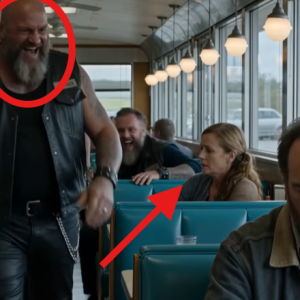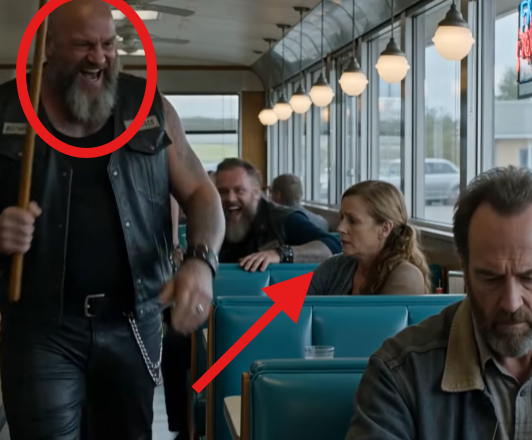
The diner door opened slowly.
Not one man walked in.
Seven did.
Older bikers, gray-bearded and silent, stepped inside wearing plain black jackets with a small white ribbon pinned near their hearts.
The cruel biker took one step back.
His friends stopped laughing.
The oldest rider looked at the cane on the floor.
Then at the man in the booth.
“Captain,” he said softly.
The whole diner seemed to breathe differently.
The cruel biker blinked.
“Captain?”
The old man reached for the wet napkin and wiped his hand, still calm.
“That cane belonged to my wife.”
His voice didn’t shake.
“She held it during chemo. After she passed, I carried it because it made me feel like she was still walking beside me.”
The cruel biker’s face changed, but pride kept him quiet.
One of the older riders picked up the cane gently, like it was something sacred.
The old man looked at the biker.
“You thought it made me weak.”
He paused.
“It was the only thing keeping me from feeling alone.”
The biker swallowed.
His friends stared at the floor.
The old man nodded toward the group behind him.
“These men ride with me every year to raise money for families who can’t afford cancer treatment.”
The waitress covered her mouth.
The diner owner whispered, “That’s why you come here every month.”
The old man looked down at the spilled water.
“My wife loved this booth.”
The cruel biker finally lowered his eyes.
“I didn’t know.”
The old man’s answer came softly.
“You didn’t ask.”
The older rider placed the cane back into his hand.
For a long moment, nobody spoke.
Then the cruel biker bent down, picked up the broken glass pieces with shaking fingers, and whispered, “I’m sorry.”
The old man looked at him.
“Don’t say it because you’re scared.”
The biker’s eyes turned wet.
“Then teach me how to say it right.”
The old man stood slowly with his cane.
Every biker in the room stepped aside.
And the man they had mocked walked past them with more strength than all of them together.