Canada’s approach to international trade has returned to the centre of political debate following remarks attributed to Prime Minister Mark Carney that questioned the effectiveness of repeated tariff measures and highlighted broader concerns about economic resilience in an increasingly competitive global environment.
The discussion has attracted national attention because it touches on one of the most consequential issues facing Ottawa: how Canada should respond when major trading relationships come under strain. At the centre of the debate is Carney, whose comments focused on the long-term impact of escalating tariff policies and their effect on trade diversification, supply chains, and economic leverage.
The transcript describes a high-level international economic forum where representatives from Canada and the United States were engaged in discussions surrounding trade policy. What was expected to be another routine exchange instead became a broader examination of whether repeated tariff measures were achieving their intended objectives.
According to the account presented, the dispute unfolded against the backdrop of seven separate rounds of tariffs that had been introduced over time. Each round was described as an effort to increase economic pressure and encourage changes in trade behaviour, yet questions remained regarding the overall effectiveness of that strategy.
Throughout the discussion, Carney reportedly avoided direct confrontation and instead focused on what he characterized as observable patterns in trade outcomes. Rather than framing the issue as a political disagreement, he presented it as a question of measurable economic performance and structural change.
His argument centred on the idea that repeated tariff measures had produced consequences beyond their original objectives. The transcript suggests that Canadian exporters responded by expanding trade routes, seeking alternative markets, and reducing exposure to future disruptions, developments that altered the broader trade landscape.

Supporters of this interpretation argued that diversification has become an increasingly important component of Canada’s economic planning. They contended that businesses often adapt to uncertainty by seeking new partnerships and alternative supply chains when traditional arrangements become less predictable.
Critics, however, may view such arguments differently, maintaining that tariffs can serve legitimate strategic purposes and that short-term disruptions do not necessarily invalidate broader policy goals. The transcript itself presents competing views but ultimately focuses on the outcomes Carney highlighted during his remarks.
As political observers examined the exchange, attention increasingly shifted toward the relationship between intent and outcome. Carney reportedly acknowledged the stated objectives behind tariff policies, including protection, leverage, and correction of trade imbalances, while arguing that outcomes should remain the primary measure of success.
The discussion also touched on concerns involving manufacturing sectors, supply-chain exposure, and changing international trade networks. According to the transcript, some industries experienced rising costs while businesses sought alternative arrangements to reduce uncertainty.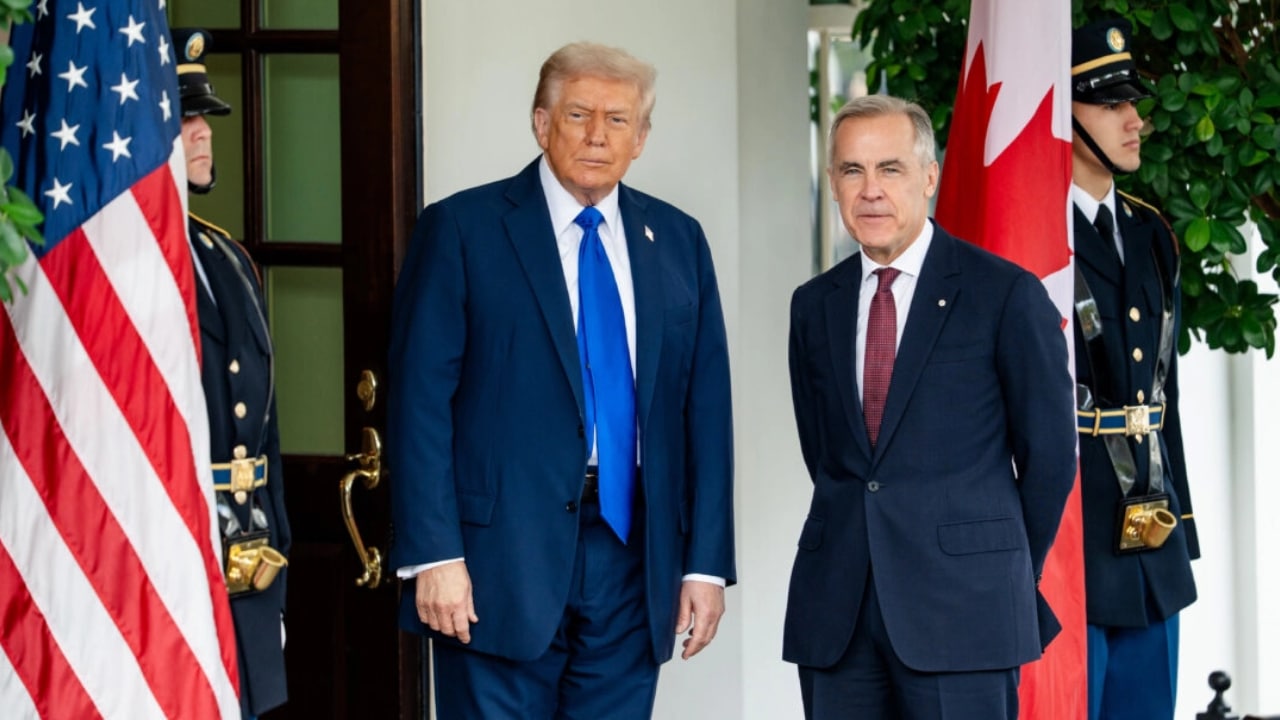
The transcript further suggests that Canada responded to successive tariff measures by accelerating efforts to diversify economic relationships. New agreements, alternative export markets, and broader trade connections were presented as examples of adaptation rather than direct retaliation.
Within Ottawa, the debate has implications extending beyond trade alone. Questions about economic security, national competitiveness, and long-term planning continue to influence discussions among policymakers, business leaders, and political observers.
The remarks also arrive at a time when governments around the world are reassessing supply-chain resilience and economic vulnerability. In that context, discussions about diversification and dependency have become increasingly prominent in public policy conversations.
According to the transcript, Carney repeatedly emphasized structure rather than rhetoric. His analysis focused on patterns that he argued had emerged over multiple rounds of escalation, including changing trade flows and adjustments within global supply networks.
That framing prompted renewed debate across Canada’s political landscape because it shifted attention away from political messaging and toward broader economic consequences. Analysts often note that structural shifts in trade can have long-term implications that extend beyond any single policy cycle.
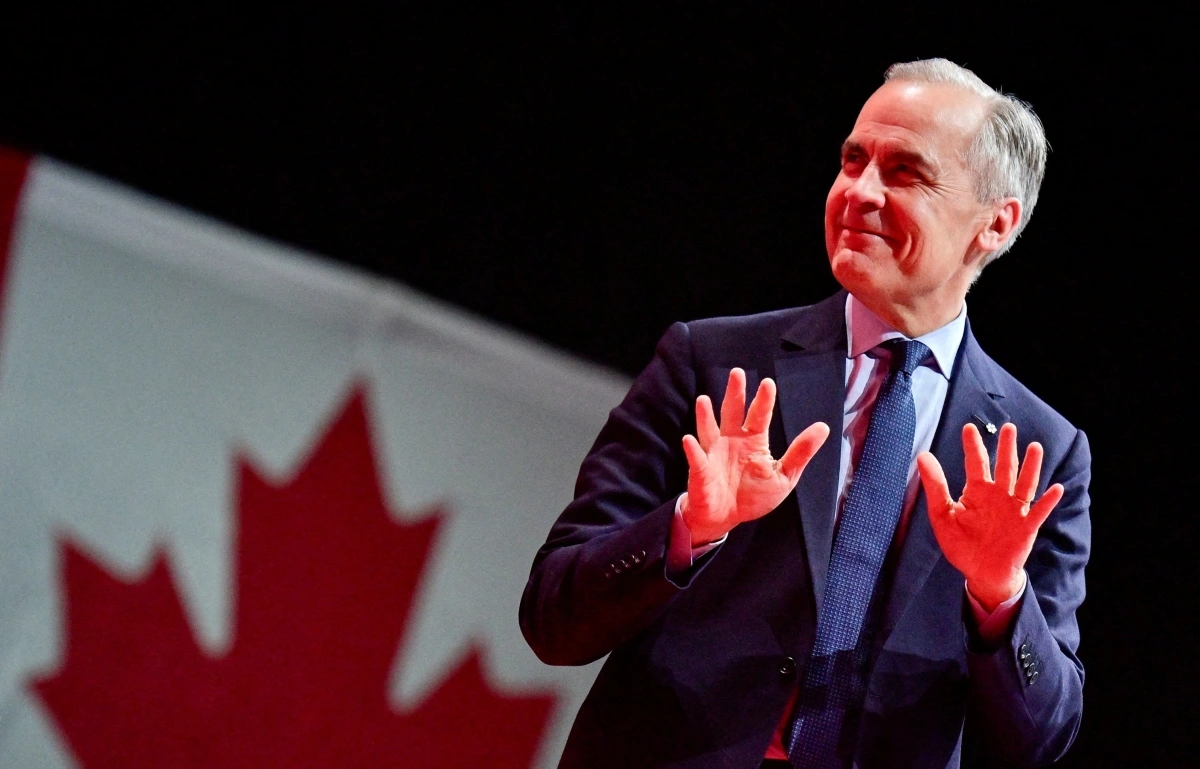
Some commentators suggested that the significance of the exchange lay not in a particular statement but in the broader questions it raised about leverage, adaptation, and economic interdependence. Such questions continue to shape policy discussions in Canada and among its international partners.
The transcript also describes growing attention to how businesses react when confronted with uncertainty. Rather than waiting for disputes to be resolved, firms frequently adjust sourcing arrangements, investment decisions, and export strategies in response to changing conditions.
Carney’s presentation, as described in the transcript, offered a carefully measured response to those developments. Rather than focusing on political personalities, he emphasized the relationship between policy actions and measurable outcomes over time.
The broader political implications remain open to interpretation. Supporters may view the argument as evidence of the need for greater resilience and diversification, while critics may question whether alternative strategies can fully address existing trade challenges.
What is clear from the discussion is that trade policy continues to occupy a central place in Canada’s political and economic agenda. The exchange highlighted how debates over tariffs, competitiveness, and market access remain closely tied to questions of national strategy.
As policymakers, industry leaders, and international partners continue evaluating the issues raised during the forum, the debate remains unresolved within Canada’s broader political landscape.






