TRUMP LOSES IT AFTER JIMMY KIMMEL AND ROBERT DE NIRO EXPOSE HIM ON LIVE TV — THE NIGHT COMEDY TURNED INTO DEFIANCE

Jimmy Kimmel Live became the epicenter of political and cultural shockwaves after Jimmy Kimmel and Robert De Niro delivered a live television moment that many are already calling historic. What began as satire quickly escalated into a blistering indictment of Donald Trump’s leadership, his approach to power, and his attempts to intimidate critics. Within hours, Trump erupted online, confirming exactly the behavior Kimmel and De Niro were exposing.
The moment landed in a volatile political climate. Just days earlier, Kimmel’s show had been abruptly suspended following pressure from Trump-aligned officials, a move widely criticized as government intimidation of free speech. When Kimmel returned to air on September 23, 2025, he did not come back quietly. He opened with an emotional monologue defending press freedom, accountability, and the right to criticize those in power without fear of retaliation.
Then came Robert De Niro. Appearing in a razor-sharp sketch portraying a mob-style FCC chairman, De Niro used dark humor to illustrate how power, threats, and “suggested consequences” replace open censorship in authoritarian systems. The audience instantly grasped the message: this was not just comedy, it was a warning. De Niro channeled decades of gangster roles to show how intimidation works when leaders rule through fear rather than law.
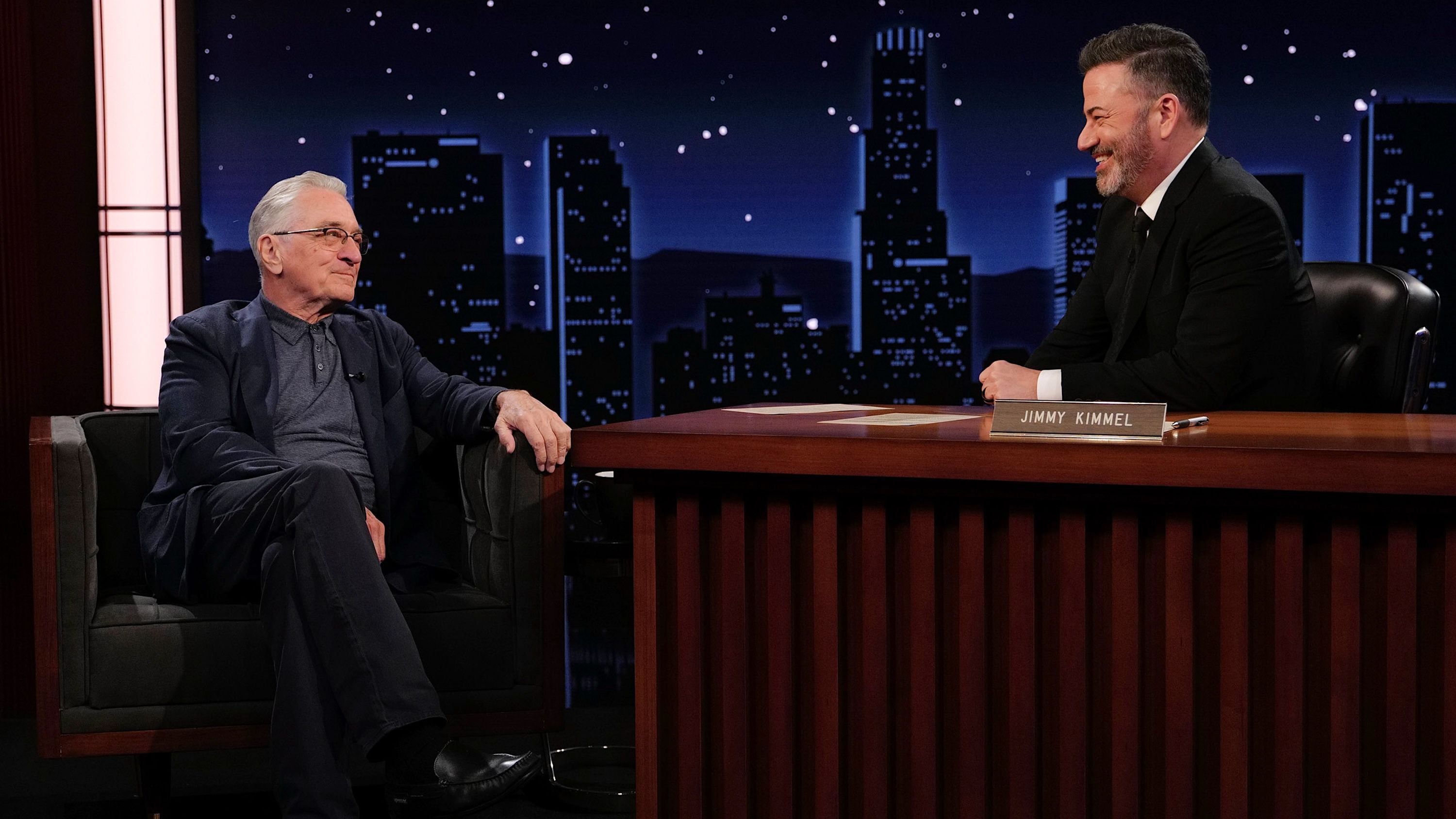
The impact was immediate and measurable. The episode drew more than 6.2 million live viewers, becoming the most-watched regular episode in Jimmy Kimmel Live history. On YouTube and social media, clips exploded past 26 million views in under 24 hours. Even with major broadcast groups refusing to air the episode in parts of the country, the message still broke through, amplifying its cultural and political significance.
Trump’s reaction only fueled the fire. Within hours, he lashed out on Truth Social, mocking De Niro’s intelligence and physical health while celebrating the earlier suspension of Kimmel’s show. To critics, the meltdown underscored the very point Kimmel and De Niro were making: Trump does not respond to criticism with argument or evidence, but with insults, threats, and attempts to silence dissent.
Beyond ratings and viral clips, the episode resonated because it connected entertainment to real-world consequences. References to January 6, the use of federal power to intimidate media, and threats to deploy force against political opponents framed Trump not as a misunderstood figure, but as a leader comfortable with coercion. Special counsel Jack Smith’s statements on accountability aired alongside the comedy, reinforcing that the concerns were legal and democratic, not merely partisan.
Cultural analysts note that moments like this matter because they break fear barriers. When influential figures refuse to back down publicly, it signals to journalists, artists, and institutions that silence is not the only option. The Kimmel–De Niro episode showed how satire can puncture authoritarian posturing in a way that formal politics often cannot.
In the end, Trump did not just lose his temper — he lost control of the narrative. What was intended to intimidate a comedian backfired into one of the most-watched, most-shared acts of televised resistance in recent memory. The night Jimmy Kimmel and Robert De Niro took the stage will be remembered not just as entertainment, but as a cultural line drawn against fear, silence, and the abuse of power.