🔥 BREAKING: TRUMP CLAIMS HE’S A “GENIUS” — COLBERT’S DEADPAN RESPONSE BRINGS THE HOUSE DOWN ⚡
For years, Donald J. Trump has made an unusually public case for his own intelligence. He has boasted of an exceptionally high IQ, challenged critics and world leaders to intelligence tests, praised his “good genes,” and famously described himself as “a very stable genius.” Few political figures in modern American life have insisted so loudly, and so often, on their mental superiority.
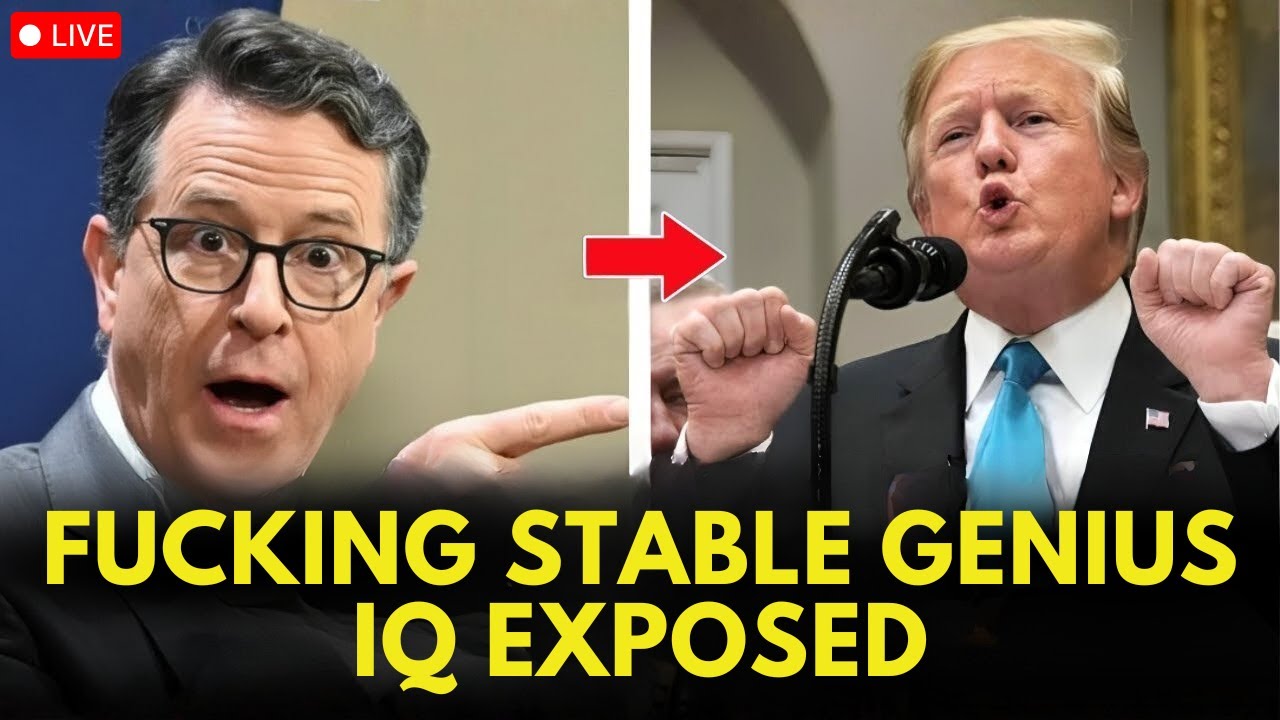
Few entertainers, in turn, have been as effective at responding as Stephen Colbert.
What has made the exchange between Mr. Trump and late-night television so enduring is not simply mockery, but method. Colbert has rarely needed to invent caricature or exaggeration. Instead, he has relied on repetition — replaying Mr. Trump’s own words, stripping them of context, and allowing their literal meaning to collide with public expectation. The result has been a long-running comic narrative in which self-assertion becomes its own undoing.
The pattern began well before Mr. Trump entered the White House. In 2013, he tweeted that his IQ was “one of the highest,” assuring “losers and haters” that their feelings of inferiority were “not your fault.” The boast was striking not only for its content, but for its tone: combative, defensive and dismissive all at once. It became a reference point that would resurface repeatedly as Mr. Trump’s public profile grew.
During his presidency, the claims escalated. After reports emerged that Secretary of State Rex Tillerson had questioned his intelligence in private, Mr. Trump denied the account, then proposed an IQ test comparison to settle the matter. The suggestion, delivered without irony, framed intelligence as a competitive spectacle — something to be won rather than demonstrated.
The moment that crystallized the persona came in January 2018, when Mr. Trump responded to questions about his mental fitness by declaring that his “two greatest assets” were “mental stability and being, like, really smart.” He concluded: “I went from VERY successful businessman, to top T.V. star… to President of the United States… on my first try. I think that would qualify as not smart, but genius.”
The phrase “very stable genius” immediately entered the political lexicon. For Colbert, it was, as he later suggested, an open invitation.
On The Late Show, Colbert responded not with outrage, but with literalism. He questioned what a “stable genius” might be, suggesting a person clever enough to live in a barn. He noted that genuinely intelligent people rarely need to announce it. Albert Einstein, Colbert observed, never tweeted “Sorry losers, but E=mc².”
The joke worked because it rested on a widely shared cultural assumption: intelligence reveals itself through action, not proclamation. Mr. Trump’s insistence on declaring his genius inverted that expectation, creating a tension comedy could exploit.
That tension resurfaced repeatedly. When Mr. Trump proposed an IQ test showdown with Mr. Tillerson, Colbert likened it to challenging one’s own employee to a fight in a parking lot — a contest that yields no real victory, even if won. When Mr. Trump attacked Colbert personally, calling him untalented or unfunny, those attacks became fodder for subsequent monologues, reinforcing the cycle.
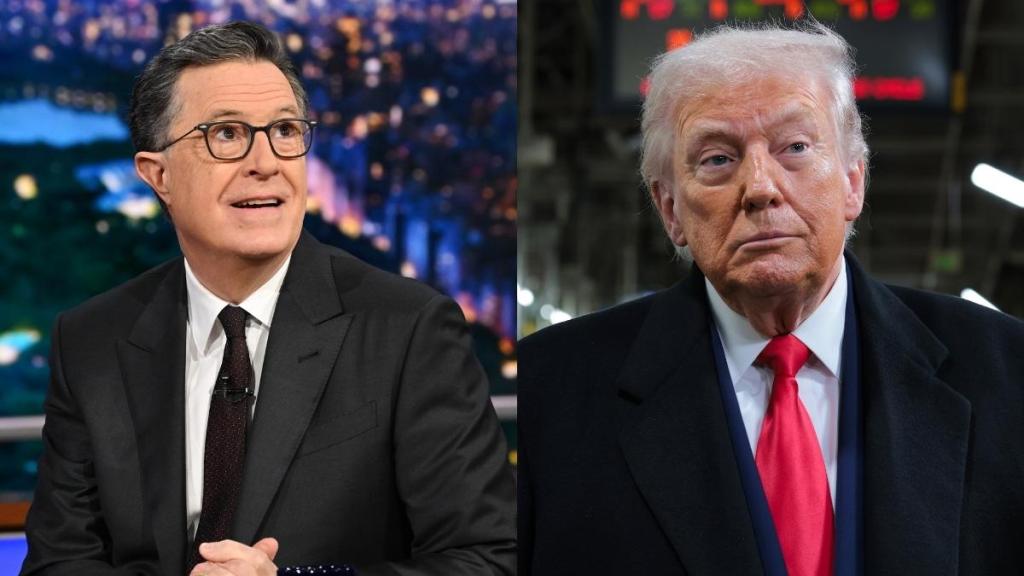
Perhaps the most memorable exchange came in 2020, after Mr. Trump described taking a cognitive screening test. He repeatedly recited part of the assessment — “person, woman, man, camera, TV” — as evidence of exceptional mental ability. Colbert responded by reciting the same words on air, then asking his audience, deadpan, whether he was now qualified to be president. The laughter was immediate and sustained, largely because nothing had been altered. The joke was the quote.
Colbert’s approach has relied on restraint. Rather than inventing insults, he has positioned himself as a mirror. Each boast, challenge or defensive remark is reflected back, unchanged, inviting viewers to assess it for themselves. In doing so, the comedy becomes less about Trump as an individual than about a broader cultural phenomenon: the conflation of confidence with competence.
For Mr. Trump, the insistence on being recognized as a genius appears deeply tied to his public identity. For Colbert, that insistence has become a recurring theme — not because it is rare, but because it is so consistent. Every reaffirmation reinforces the narrative.
The exchange illustrates something larger about political communication in the media age. Claims repeated often enough can dominate attention, but repetition also creates vulnerability. When assertions are documented, replayed and examined, they become material — not just for journalism, but for satire.
In this case, the humor has not depended on distortion. Every quote is real. Every response is grounded in the public record. The enduring appeal lies in the contrast: between self-certification and social judgment, between declaring intelligence and demonstrating it.
As long as that contrast remains, the story — and the comedy — is likely to continue writing itself.






