The Quiet Power of Not Responding
In modern American politics, noise is currency. Outrage circulates faster than policy, and reaction often matters more than substance. In that environment, comedy has evolved into a peculiar form of stress testing: a joke is introduced, and the response reveals more than the punchline ever could. Few recent moments illustrate this dynamic more clearly than the latest exchange—if it can even be called that—between Jimmy Kimmel and Donald Trump, with Melania Trump standing silently at the center.
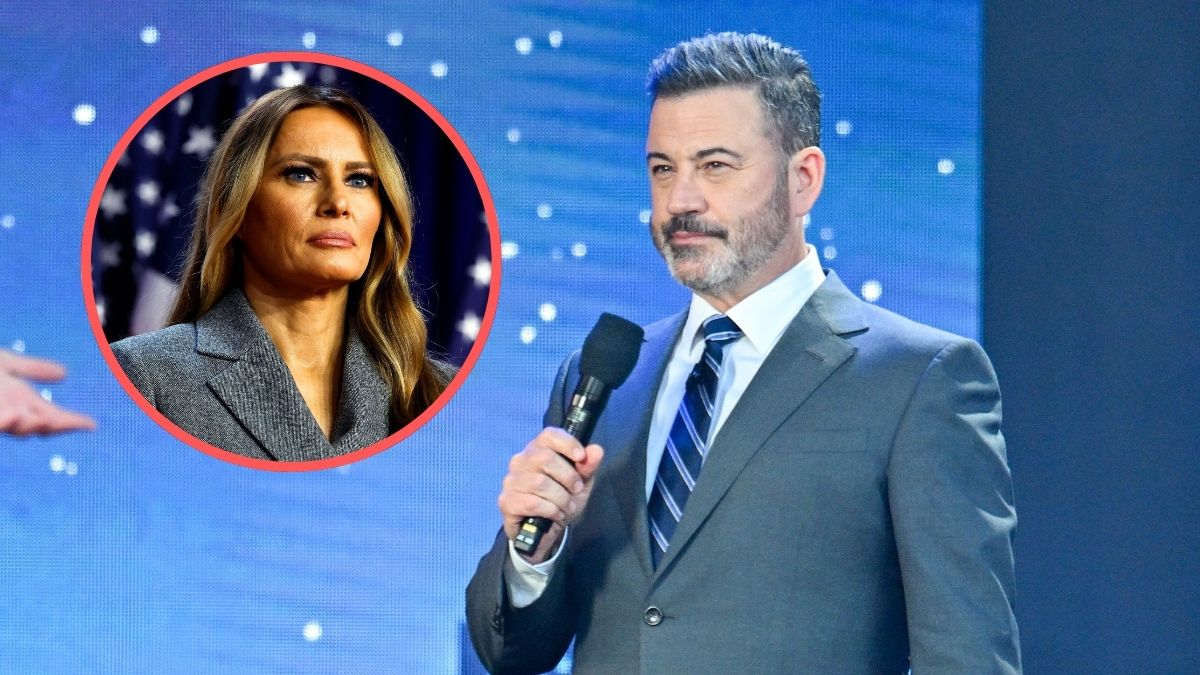
The moment itself was small. Kimmel made an offhand joke referencing Melania Trump, delivered with his usual casual precision. There was no monologue-long assault, no viral rant, no escalation. And yet, the response from Donald Trump suggested something closer to a five-alarm fire. Statements followed. Attention surged. The story expanded far beyond the joke that sparked it. Kimmel, notably, said nothing more.
This asymmetry is the story.
Late-night comedy has long functioned as a mirror rather than a weapon. Its most effective moments rarely rely on cruelty. Instead, they frame contradictions and allow audiences to notice them on their own. Kimmel’s approach, particularly when it comes to Melania Trump, has consistently avoided direct insult. He does not portray her as foolish, malicious, or incompetent. Rather, he treats her as an enigma—an immaculately styled figure who occupies the highest rooms of power while appearing emotionally removed from them.
That distance is not invented by comedy. It is a feature of Melania Trump’s public image. Across years of public appearances, she has perfected a posture of composure so consistent it reads almost like a performance of absence. She arrives. She stands. She poses. She leaves. Expression is minimal. Engagement is optional. Interpretation is left entirely to the viewer.
Kimmel’s humor circles this quality rather than striking it. His jokes often feel less like attacks and more like questions: What does it mean to be so present and yet so unavailable? How does someone exist at the center of spectacle while declining to participate in its emotional economy?
In contrast, Donald Trump has built his public persona on perpetual reaction. Every slight demands acknowledgment. Every joke becomes a provocation. Silence is treated not as strategy but as surrender. When comedy brushes past him, he responds as though it has declared war. That instinct, once a strength among supporters who prized combativeness, increasingly works against him. Each response amplifies the original remark, granting it attention it might never have earned.
This is where Kimmel “wins” without winning. He does not escalate. He does not reply. He allows the reaction itself to complete the joke.
Melania Trump’s role in this dynamic is subtler and more interesting. Her silence operates differently. It does not feel reactive or defensive. It feels structural, as though disengagement is not a tactic but a philosophy. In a political culture obsessed with visibility and confession, her refusal to explain herself has become its own form of power. She is endlessly discussed precisely because she reveals so little.
Comedy recognizes this. It does not need to invent absurdity around her. The surreal quality is already there: a first lady who appears everywhere and nowhere at once; a figure dressed for every occasion yet seemingly detached from all of them. Kimmel’s jokes land not because they exaggerate, but because they barely have to.
The sharpest satire often lies in restraint. By refusing to shout, it exposes those who cannot stop themselves from doing so. In this case, the contrast is stark. One figure reacts to everything. One reacts to nothing. And one—Kimmel—simply observes.
In the end, the episode says less about comedy than it does about power. Attention is not seized; it is granted. Outrage does not diminish mockery; it enlarges it. And silence, in a culture addicted to reaction, can be louder than any rebuttal.
Melania Trump remains unreadable. Donald Trump remains unable to let go. Jimmy Kimmel moves on.
The joke, long finished, lingers anyway—not because it was repeated, but because it never needed to be.






