WASHINGTON — Donald J. Trump has long treated public confrontation as a form of dominance. Insults, delivered bluntly and without hesitation, have been central to his political style for decades, a way of asserting control over both allies and adversaries. So when he referred to former President Barack Obama as “weak” during a live televised appearance this week, the remark followed a familiar script: provoke, destabilize, and command the moment.
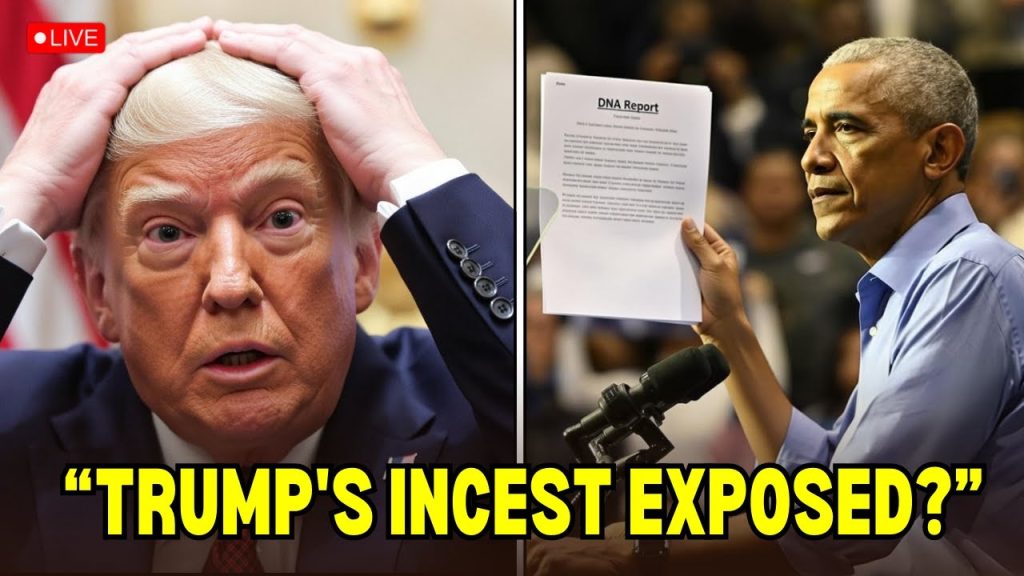
What followed, however, did not.
The exchange unfolded before an audience primed for spectacle. Trump, speaking with the confidence that has defined his political persona, pivoted from policy remarks to a personal critique of his predecessor. The insult landed audibly in the room. Applause did not immediately follow. Instead, a pause settled in — brief, but noticeable.
Obama did not respond at once.
He stood quietly, expression neutral, allowing the moment to breathe. In a political culture accustomed to instant rebuttal and escalating rhetoric, the delay itself became part of the message. When he did speak, his tone was measured and calm.
“Strength,” Obama said, “is not measured by volume. It’s measured by judgment — particularly when the consequences are real.”
The line was neither sharp nor theatrical. It did not reference Trump directly. Yet it altered the dynamic of the room. The audience, moments earlier attentive to Trump’s aggression, shifted its focus. The contrast between the two styles — confrontation versus restraint — became the central story.
For Trump, power has often been performative. His political instincts favor dominance through repetition, pressure, and spectacle. Obama’s approach has historically relied on a different currency: patience, institutional authority, and moral framing. In this exchange, those differences were placed side by side in real time.
Obama continued, elaborating on leadership as a practice rooted in discipline rather than attack. He spoke of decision-making when applause is absent, of responsibility that persists beyond television cameras. The remarks were general, but their relevance to the moment was unmistakable.
Trump did not interrupt.
That silence proved consequential. Accustomed to driving the rhythm of public exchanges, Trump appeared momentarily displaced from the center of the narrative. His earlier insult, intended to diminish Obama, now served to highlight the divergence between their political identities.
Political analysts later noted that the moment was not defined by what Obama revealed or accused, but by what he refused to do. There was no escalation, no counter-insult, no effort to dominate the exchange. The absence of retaliation reframed Trump’s attack as unnecessary rather than powerful.

The episode echoed a recurring theme in American political history: the tension between performative strength and institutional authority. Trump’s rise has been fueled by his ability to project confidence through conflict. Obama’s political capital has often rested on an ability to absorb pressure without responding in kind.
In the hours after the broadcast, clips of the exchange circulated widely. Commentators described the moment as emblematic of two competing visions of leadership. Supporters of Trump defended his bluntness as authenticity. Others argued that the restraint on display exposed the limitations of confrontation as a governing strategy.
What made the exchange notable was not that Trump criticized Obama — such attacks are hardly new — but that the attack failed to control the narrative. The power imbalance Trump sought to establish did not materialize. Instead, the moment underscored how silence, when deployed deliberately, can neutralize aggression.
This was not a policy debate, nor was it a turning point in electoral politics. It was, rather, a symbolic encounter, one that illuminated the psychological mechanics of power in public life. Trump’s style depends on reaction. Obama’s response denied it.
By the time Trump resumed speaking, the energy in the room had shifted. His remarks continued, but the earlier momentum was gone. The audience had already absorbed the contrast. The cameras, lingering on both men, captured the asymmetry: one figure animated by confrontation, the other anchored by composure.
Historians have often observed that moments like these matter less for their immediate consequences than for how they linger in public memory. This exchange will likely be remembered not for its content, but for its tone — a reminder that authority is not always asserted through force.
Obama left the stage without further comment. Trump remained, continuing his address. Yet the defining image of the event was already set: an insult met not with resistance, but with stillness.
In contemporary politics, where outrage often dominates the cycle, the episode stood out precisely because it resisted escalation. It suggested that restraint can be disruptive, that composure can function as a form of power.
Whether the moment alters perceptions in any lasting way remains uncertain. But for a brief interval on live television, the rules Trump has long relied upon failed to deliver their usual result.
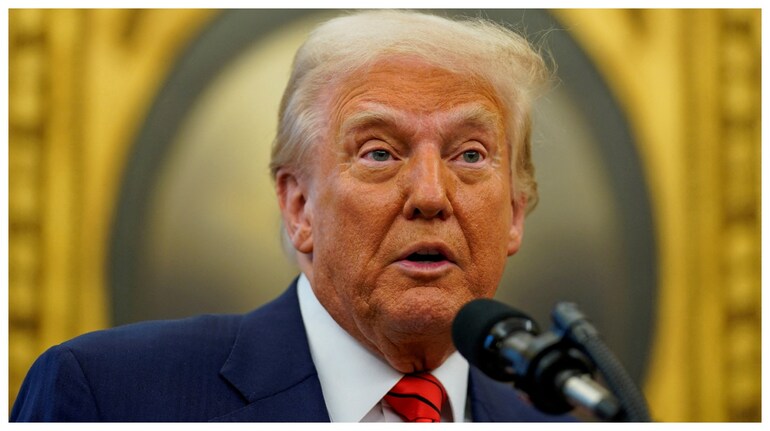
And in that quiet reversal, the limits of confrontation were exposed.






