Canada’s Steel Strategy Faces Its Biggest Test as U.S. Tariffs Remain Firm
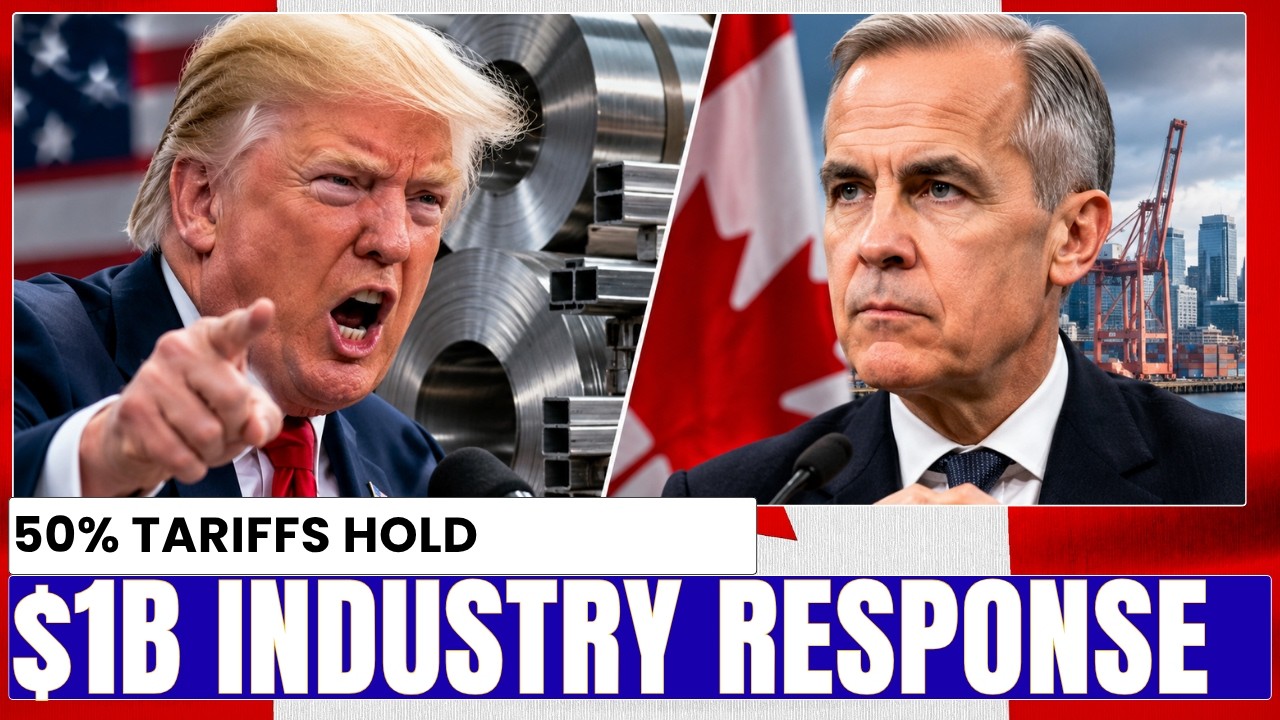
The trade conflict between Canada and the United States has entered a new and increasingly consequential phase. While disputes over tariffs have become familiar features of North American economic relations, few measures have had as much impact as the steep U.S. duties imposed on Canadian steel and aluminum.
With Washington maintaining tariffs of roughly 50% on key metal imports, Ottawa now finds itself confronting a difficult reality: the restrictions are unlikely to disappear anytime soon. Rather than waiting for relief, Prime Minister Mark Carney’s government is pursuing an ambitious strategy aimed at strengthening Canada’s economic resilience from within.
The dispute extends beyond trade statistics and political rhetoric. Steel and aluminum remain essential components of modern industrial economies, forming the backbone of automotive manufacturing, construction, infrastructure development, and countless consumer products.
For many Canadian communities, the stakes are deeply personal.
Steel-producing regions and forestry towns have long depended on access to the American market. Generations of workers have built careers in industries closely integrated with U.S. supply chains. When tariffs sharply increase the cost of Canadian exports, the consequences are felt directly in factories, mills, and small businesses across the country.
The economic pressure is particularly intense because the tariffs target specific sectors rather than broad categories of trade.
Unlike general trade disputes, industry-specific measures concentrate their impact on a relatively small number of communities. Production plans are delayed, investment decisions become uncertain, and workers face growing concerns about long-term job security.
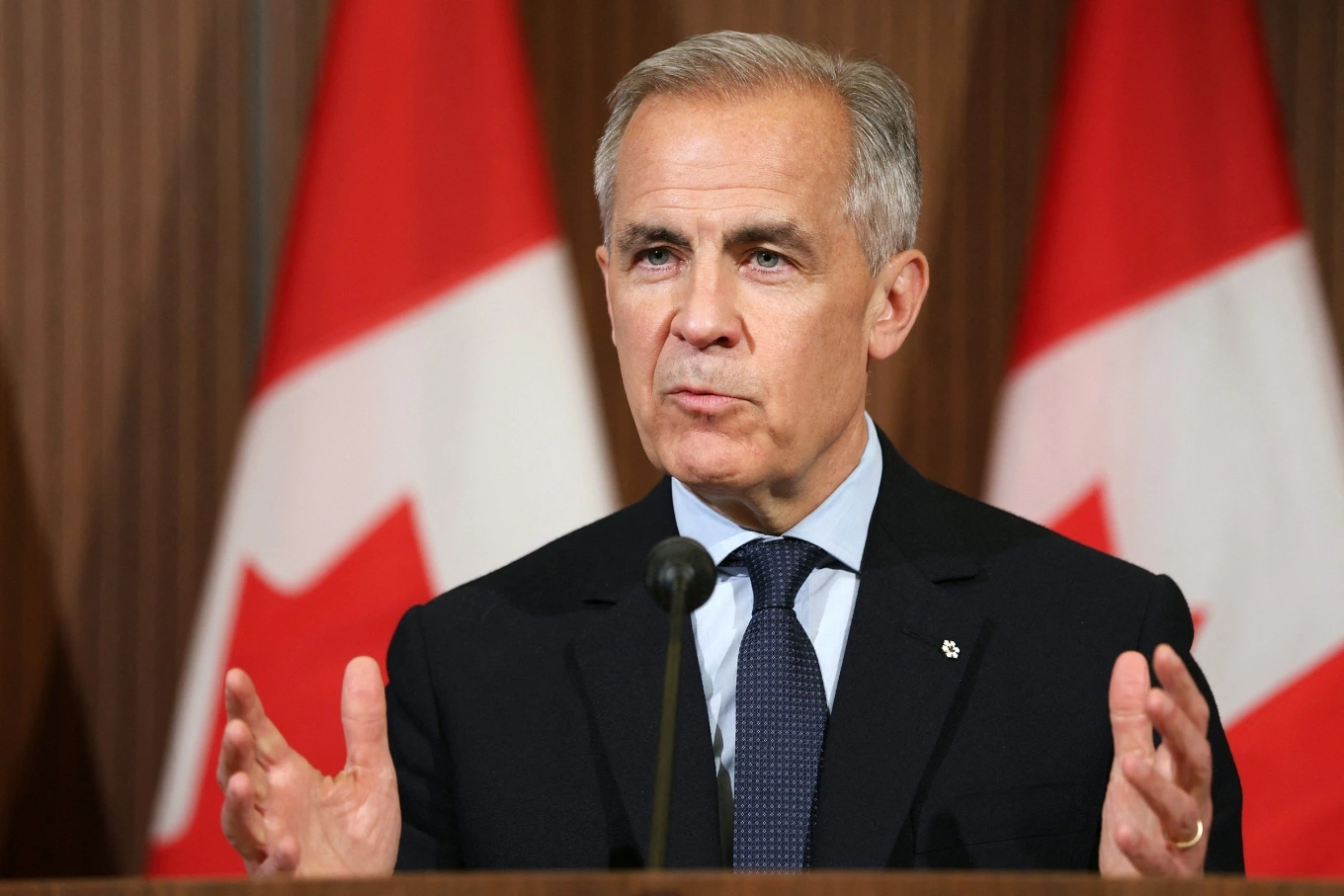
Prime Minister Carney has responded with a notably realistic assessment of the situation.
Rather than promising a quick resolution, he has repeatedly suggested that Canadians should prepare for a prolonged period of uncertainty. According to the government’s current position, disputes involving steel, aluminum, and softwood lumber are unlikely to be resolved through isolated negotiations.
Instead, Ottawa expects these issues to become part of a broader review of North America’s trade framework.
This represents an important strategic shift.
For years, policymakers hoped that individual disputes could be addressed separately, allowing progress in one area even when tensions remained elsewhere. Today, Canadian officials increasingly believe that comprehensive negotiations offer a more realistic path forward.
Their caution is rooted in recent experience.
Reports indicate that a potential agreement on metals was within reach during negotiations last year before talks unexpectedly collapsed. The failure reinforced concerns that political volatility could derail even advanced discussions.
As a result, Ottawa has adjusted its expectations and begun preparing for a much longer contest.
Rather than focusing solely on diplomatic negotiations, the government has launched a series of domestic initiatives designed to strengthen affected industries.
Central to this effort is a multi-billion-dollar Strategic Response Fund.
The fund aims to provide direct support to sectors facing the greatest pressure from U.S. trade measures. Officials view the initiative not only as emergency assistance but also as an investment in long-term competitiveness.
The strategy extends beyond financial aid.
Canada has expanded workforce training programs intended to help workers adapt to changing economic conditions. Government officials argue that increasing skills and mobility will provide employees with greater opportunities, even if traditional industries face prolonged challenges.
This emphasis on workforce development reflects a broader philosophy emerging from Ottawa.
Rather than attempting to preserve existing economic structures indefinitely, policymakers are seeking to prepare workers for an evolving industrial landscape.
Another significant component of the government’s response is its expanded “Buy Canadian” policy.
Federal procurement programs increasingly prioritize domestically produced steel, aluminum, and lumber. By directing public spending toward Canadian suppliers, Ottawa hopes to create a stable source of demand capable of offsetting some of the losses caused by reduced access to U.S. markets.
The policy serves both economic and symbolic purposes.
Economically, it provides manufacturers with a reliable customer base. Politically, it reinforces the government’s message that domestic industries deserve support during periods of external pressure.
Canada has also introduced measures designed to prevent market distortions caused by global trade shifts.
When the United States imposes tariffs on foreign metals, exporters often seek alternative destinations for their products. Canadian officials fear that an influx of heavily discounted imports could undermine domestic producers already struggling with U.S. restrictions.
To address this concern, Ottawa has implemented quotas and targeted trade measures aimed at preventing market flooding.

At the same time, policymakers have attempted to avoid creating unnecessary burdens for Canadian manufacturers that continue to depend on American inputs.
Certain exemptions and relief measures remain in place to protect supply chains that span both sides of the border.
The balancing act reflects the complexity of modern economic integration.
Canada cannot simply isolate itself from the United States. The two economies remain deeply interconnected, and many industries rely on cross-border production networks that have developed over decades.
Prime Minister Carney has summarized his government’s approach with a phrase that has become increasingly prominent in Canadian policy discussions: “from reliance to resilience.”
The concept captures a broader national objective.
For decades, Canada’s economic model was built around close integration with the American market. While that relationship generated enormous benefits, recent trade disputes have exposed vulnerabilities associated with heavy dependence on a single partner.
Today, Ottawa is attempting to build a more diversified and adaptable economy.
Whether that strategy succeeds remains uncertain.
The government must ensure that support funds reach businesses efficiently, training programs produce meaningful opportunities, and domestic procurement policies generate sufficient demand to sustain employment.
Yet regardless of the outcome, one reality is already clear.
Canada is no longer waiting for trade tensions to disappear on their own. Faced with persistent tariffs and an uncertain negotiating environment, the country is undertaking one of its most significant efforts in decades to strengthen economic resilience and reduce vulnerability to external shocks.
The coming years will reveal whether that transformation is enough to protect Canadian industries in an era of increasingly unpredictable North American trade relations.