Carney Signals Strategic Shift Toward Europe as Trade Tensions Reshape Canada’s Global Position
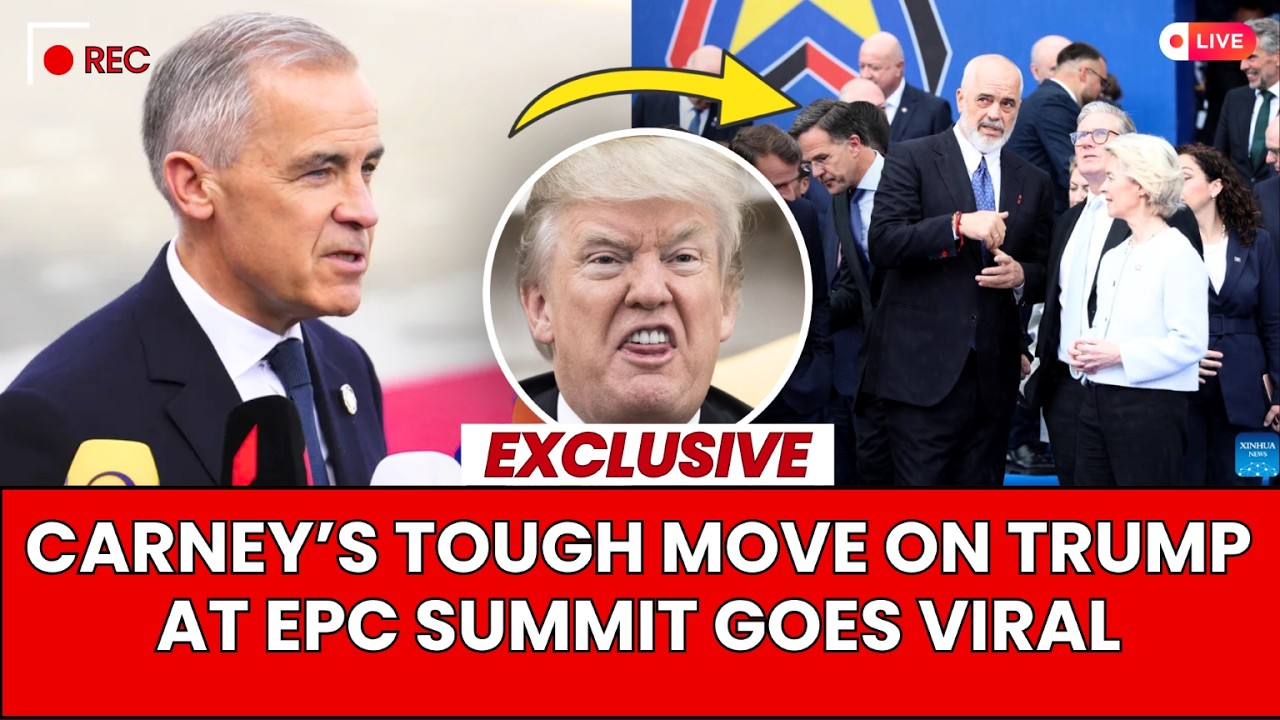
Prime Minister Mark Carney has placed Canada at the centre of an emerging debate over the future of international alliances, using remarks at a European Political Community summit in Armenia to argue that global stability can no longer be taken for granted. His comments come as Ottawa continues responding to expanding U.S. tariffs and reassesses long-standing assumptions about trade, security, and economic cooperation.
The speech attracted significant attention across Canada because it touched on issues that increasingly affect both policymakers and businesses. With U.S. President Donald Trump expanding tariff measures affecting Canadian steel, aluminum, and related products, questions about Canada’s long-term economic strategy have moved to the forefront of national discussion.
At the summit, Carney argued that integration and established rules-based systems are facing unprecedented challenges. He suggested that countries must adapt to the realities of a changing international environment rather than rely on assumptions that previously shaped global economic relationships.
His remarks came amid growing concerns about predictability in international trade. For decades, many allied countries viewed the United States as a stable anchor for both economic and security arrangements. According to the discussion presented at the summit, that confidence has come under increasing strain as tariff policies have expanded across multiple sectors.
Canada’s response has so far been measured. Ottawa introduced a reported $1.5 billion support package aimed at helping affected industries while simultaneously accelerating efforts to diversify trade relationships beyond traditional North American markets. The approach reflects a broader attempt to reduce vulnerability to sudden policy shifts originating outside Canada.
At the same time, European industries have faced similar pressures. Manufacturing sectors across Europe have also encountered uncertainty linked to U.S. trade actions, creating conditions that have prompted renewed debate across Canada’s political landscape about where future economic partnerships should be strengthened.
Critics of the diversification strategy argue that geographic proximity and economic integration continue to make the United States Canada’s most important trading partner. They contend that efforts to shift commercial relationships elsewhere may be costly, gradual, and difficult to achieve on a significant scale.
Carney, however, framed the issue differently. His comments suggested that the challenge is not merely about tariffs themselves but about the broader question of reliability. When agreements, exemptions, and policy directions can change rapidly, governments must reconsider how heavily they depend on any single partner.
He pointed to Canada’s participation in the European Union SAFE initiative and highlighted approximately $18 billion worth of critical minerals agreements involving some of the world’s leading strategic resources. Those developments were presented as evidence of growing cooperation with like-minded partners.
Rather than presenting Europe as a replacement for the United States, Carney described it as a source of stability in a period marked by uncertainty. His comments emphasized government-to-government partnerships, particularly among G7 nations and other close allies.


The discussion also highlighted a broader pattern emerging among U.S. allies. According to the arguments presented at the summit, pressure intended to reinforce economic dependence may instead be encouraging countries to develop alternative markets, supply chains, and strategic relationships.
Canada’s export sector remains deeply connected to the United States, with substantial volumes of trade crossing the border every year. Nevertheless, speakers at the event argued that even modest diversification could redirect significant economic activity toward new destinations and reduce long-term exposure to political uncertainty.
Recent trends cited during the discussion suggested that exports to non-U.S. markets have been expanding, while Canadian companies increasingly explore opportunities in Europe, India, Southeast Asia, and South America. These developments were described as part of a gradual rather than abrupt transformation.
Foreign investment patterns were also referenced as evidence of change. The summit discussion noted that Canada attracted substantial non-U.S. investment commitments in sectors including clean energy, battery supply chains, and critical minerals, areas that are becoming increasingly important to future industrial development.
Investment decisions often create long-term economic relationships, making diversification efforts more durable than short-term trade adjustments. As a result, Ottawa’s strategy is increasingly being viewed as a structural response rather than a temporary reaction to current disputes.
Carney’s focus on Europe reflects that long-term perspective. European institutions may move more slowly than some counterparts, but supporters of closer cooperation argue that policy frameworks often remain stable once established, providing businesses and governments with greater certainty.
The conversation extended beyond trade. Germany’s decision to require public institutions to transition toward open document standards was cited as an example of growing interest in technological sovereignty across Europe. The underlying theme was reducing dependence on systems controlled by external actors.
Supporters of these initiatives argue that control over digital infrastructure, critical minerals, energy supplies, and advanced manufacturing capacity increasingly shapes geopolitical influence. From this perspective, economic resilience and national sovereignty are becoming closely linked.
Canada’s approach differs from Europe’s in several respects, but the transcript suggested that both are pursuing similar objectives. Europe is focusing heavily on technological and digital autonomy, while Canada is emphasizing strategic resources, energy development, and diversified trade partnerships.
The broader political significance lies in how these developments may affect Canada’s place within the international system. As Ottawa expands partnerships across Europe and other regions, policymakers face growing scrutiny in Ottawa over how best to balance traditional alliances with emerging opportunities. While no definitive outcome has yet emerged, the debate remains unresolved within Canada’s broader political landscape.






